How Many Sensors Are in a Car? The Complete List
Modern vehicles rely heavily on sensors for various purposes, such as safety, performance, efficiency, intelligent features, monitoring, comfort, and control. As
Get 20% off Vehicle History Reports & Window Stickers: Use code: FRIDAY2025 on checkout [Get 20% off ]
You've received DISCOUNT!
Get the facts before you buy. Use the VIN to instantly access vehicle history reports and window stickers with details on ownership, accidents, theft records, original specs, and more.
A VIN check gives you a clear look into a vehicle’s past. You can view accident records, ownership changes, title issues, and similar details that help you understand whether the car is reliable.
A window sticker lookup shows the vehicle exactly as it was built. You’ll see the original features, factory options, MSRP, packages, trims, and even paint colors.
If you don’t have the VIN, look up the US license plate by state. Access comprehensive history and detailed vehicle specs using just the license plate number.
Purchasing a vehicle without checking its history can lead to costly surprises. Issues like odometer fraud, hidden damage, or previous accidents might not be evident at first glance. Always verify the vehicle history to make informed and confident decisions.
A proper vehicle history report lets you understand the car you’re considering. It supports transparency and protects you from common types of auto fraud. With detailed history reports, you can:
A vehicle history report is a detailed record of a car’s past. It includes details such as changes in ownership, accident history, title condition, mileage records, maintenance logs, theft records, and other relevant information.
This report allows you to understand the vehicle’s usage, its maintenance quality, and if there are any concealed issues prior to purchasing or selling it.
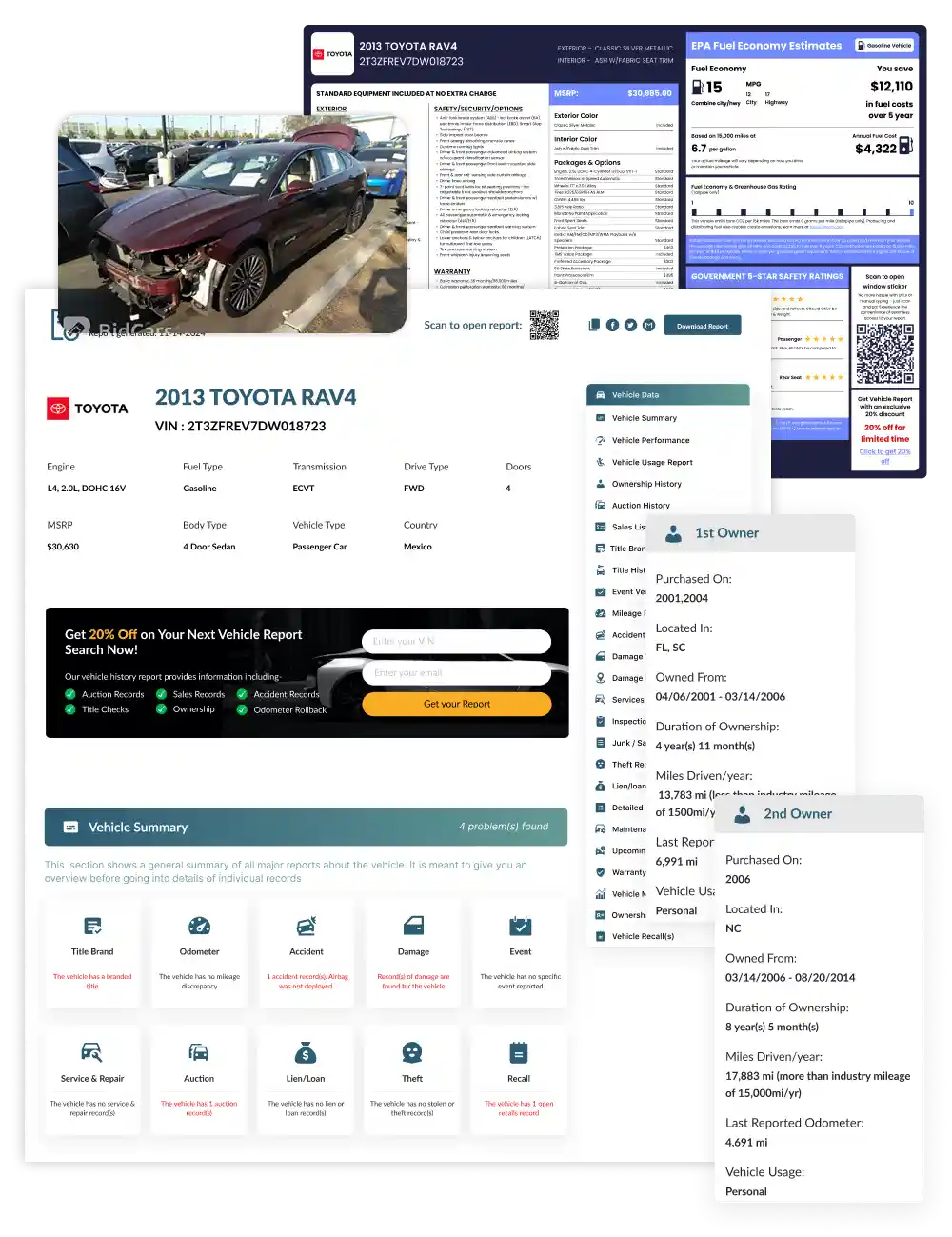
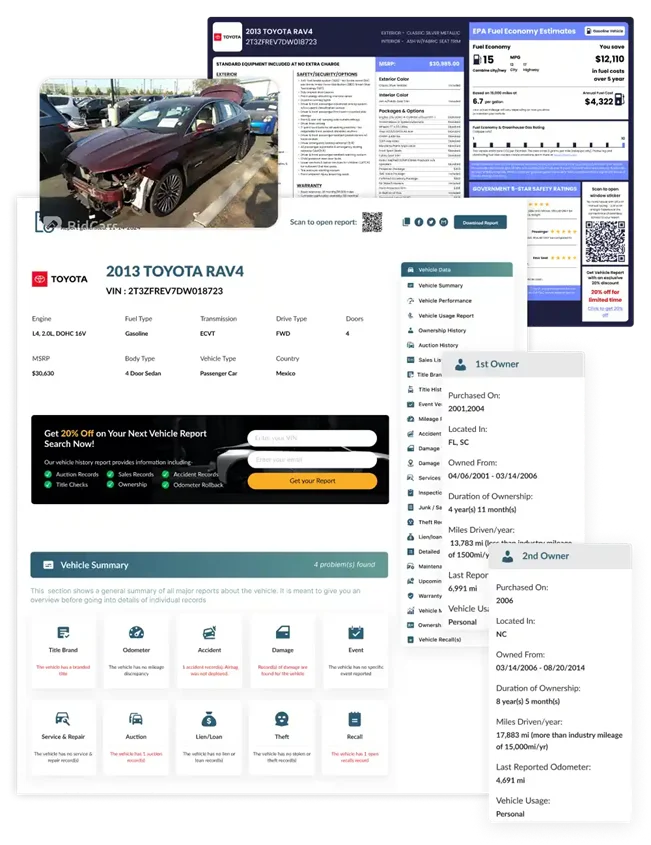
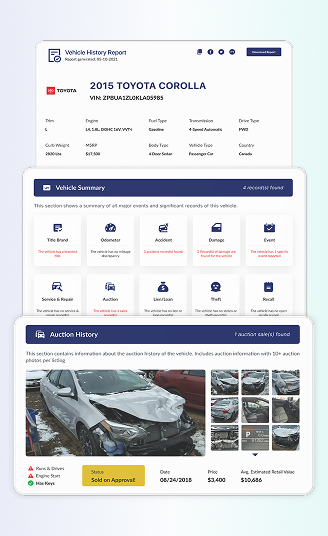
A vehicle history report offers a closer look at important events that shaped the car’s condition. It includes details like accident records, title information, mileage, theft records, ownership history, and more. Here’s what you can find in a vehicle history report:
Incorrect specifications sometimes come from miscommunication or even intentional misrepresentation. These errors can affect insurance, resale value, and general expectations. Seeing the original specifications helps you understand the true configuration of the vehicle.
Gain insights into the vehicle’s factory build, including trims, features, and options. It ensures you’re looking at the exact configuration the manufacturer produced.
See the original engine, transmission, drivetrain, body style, trim, and factory-installed features.
View all manufacturer-installed packages and options to confirm the true configuration of the car.
Verify the exact build using the VIN to avoid mislisted or incorrectly advertised vehicles.
There are over 482,000 water-damaged cars already on U.S. roads at the start of 2025 (before mid-year storms). A vehicle history report helps buyers avoid these hidden risks by showing if a car has ever been flood-damaged, salvaged, lemon branded, or rebuilt.
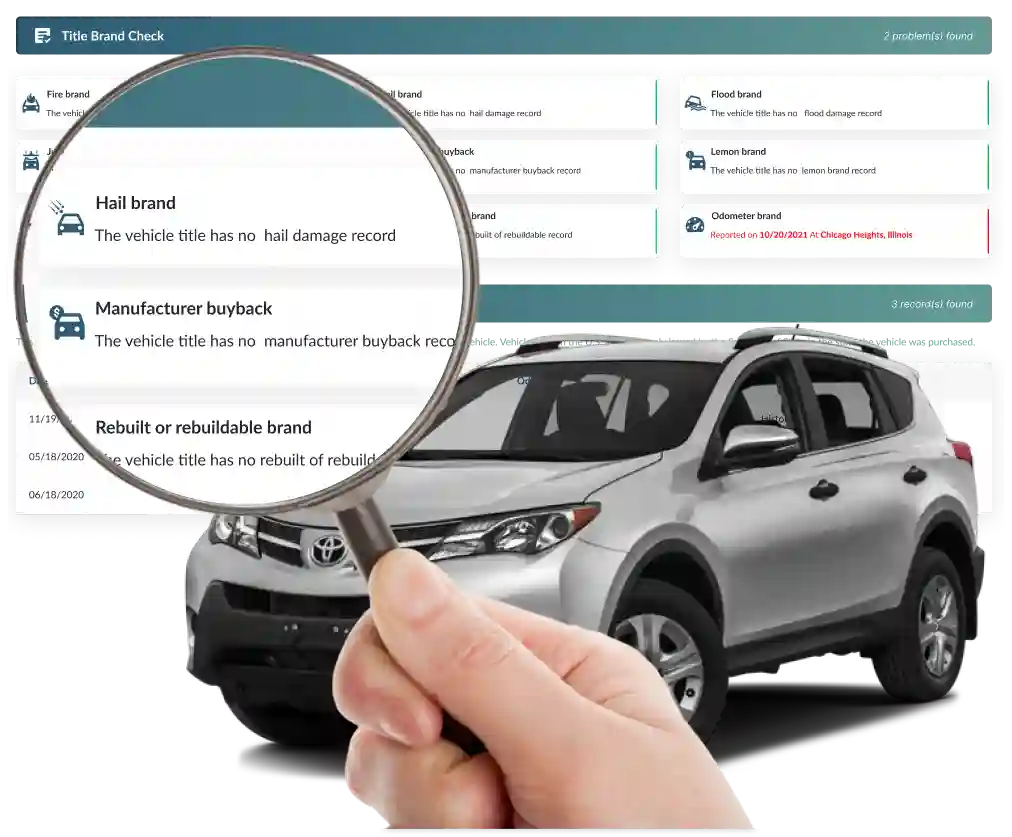
Verify the true title status of any vehicle before purchase with a vehicle history report.
See whether the title is clean, branded, rebuilt, salvage, lemon, junk, or flood-damaged.
Check previous title states and dates to identify unusual or risky title movements.
Spot warnings like flood damage, repossession, hail damage, and manufacturer buybacks.
Victims of odometer fraud typically lose about $4,000 in vehicle value along, with unforeseen repair expenses. Odometer fraud is a problem that can distort a vehicle’s true condition and worth.
Ensure the mileage of a vehicle you’re considering is accurate and hasn’t been tampered with with a vehicle history report.
Review mileage documentation from inspections, registrations, maintenance, and auctions. This helps confirm that the car showed a mileage increase throughout the timeframe.
Understand how variations in mileage can influence resale value and reliability. An analysis highlights how these inconsistencies may affect costs during the period of ownership.
Discover the number of owners the vehicle has had. Numerous changes in ownership could indicate issues with the car. Additionally, you can learn if the vehicle was utilized personally, rented out, or employed for business purposes.
Check the number of owners the vehicle has experienced throughout its life. A consistent ownership record usually indicates maintenance and fewer undisclosed issues.
Identify whether the car was used personally, for business, rental fleets, taxis, police, or as a lease. This helps you understand how the vehicle was driven and maintained.
Short ownership periods can be signs of recurring issues. This section helps you spot them early. Long, consistent ownership can also point to a well-kept vehicle.
A vehicle that’s been in a major or minor accident can lose 10-15% or 5-10% of its value, respectively.
To ensure you’re buying a safe and reliable car, confirm details about past accidents, their severity, and the repairs undertaken. This helps gauge the vehicle’s structural integrity and safety.
View accidents reported by police, insurance companies, or repair facilities. This gives you a complete picture of what the vehicle has gone through.
See damage location (front, rear, sides), severity levels, and airbag deployment. These details help you judge whether the vehicle’s safety systems were compromised.
Identify frame damage, structural repairs, and safety concerns. Structural issues can affect alignment, stability, and long-term durability.
Review the vehicle’s condition at previous auctions to understand its true history. Detailed photos and records from these events can show hidden damage, repairs, or modifications not mentioned elsewhere.
See when and where the vehicle appeared at auctions and how often. Frequent auction activity can indicate high turnover or past issues.
Access damage notes, grading, and mechanical or cosmetic condition summaries. This section helps you understand its condition before it changed hands.
View photos showing the true condition during previous sales. This is important for spotting hidden repairs. These images offer clarity that regular listings often hide.
A car with a clean sales history indicates fewer potential problems and higher resale value. Track where and when the car was sold, including previous sale prices, and view up to 10 photos if available.
With this information, you can have better negotiations and set realistic expectations.
Track where and when the vehicle was sold throughout its lifespan with a vehicle history report. This helps you see movement patterns that may reveal regional risks like flood zones.
View recorded sale prices to understand value changes over time. This can help you negotiate a fair price when buying or selling.
Identify who sold the vehicle and how often it changed hands. Dealer sales can offer more documentation compared to private transactions.
Verify that there are no outstanding loans tied to the vehicle. Selling or buying a car with an unresolved lien can lead to car repossession and financial and legal complications.
View lien and loan details and confirm the vehicle’s full financial status before purchase or sale.
See if there are outstanding loans tied to the vehicle that could put buyers at risk. Buying a car with an active lien can create financial and legal trouble.
Check if banks, lenders, or finance companies still hold interest in the car. This confirms whether the seller legally has the right to transfer ownership.
Confirm whether previous liens were properly cleared. A clean release means the vehicle is safe to purchase without hidden obligations.
A car with a clean sales history indicates fewer potential problems and higher resale value. Track where and when the car was sold, including previous sale prices, and view up to 10 photos if available.
With this information, you can have better negotiations and set realistic expectations.
Track where and when the vehicle was sold throughout its lifespan with a vehicle history report. This helps you see movement patterns that may reveal regional risks like flood zones.
View recorded sale prices to understand value changes over time. This can help you negotiate a fair price when buying or selling.
Identify who sold the vehicle and how often it changed hands. Dealer sales can offer more documentation compared to private transactions.
Verify that there are no outstanding loans tied to the vehicle. Selling or buying a car with an unresolved lien can lead to car repossession and financial and legal complications.
View lien and loan details and confirm the vehicle’s full financial status before purchase or sale.
See if there are outstanding loans tied to the vehicle that could put buyers at risk. Buying a car with an active lien can create financial and legal trouble.
Check if banks, lenders, or finance companies still hold interest in the car. This confirms whether the seller legally has the right to transfer ownership.
Confirm whether previous liens were properly cleared. A clean release means the vehicle is safe to purchase without hidden obligations.
Look for records of maintenance and significant repairs. A thorough service record indicates how properly the vehicle has been maintained. This aids in evaluating the vehicle’s condition, mileage, and resale worth.
Track oil changes, tire rotations, brake service, and scheduled maintenance. Regular maintenance suggests responsible ownership and fewer future repairs.
Spot evidence of engine, transmission, or structural repairs. Knowing these repairs upfront helps you judge long-term dependability.
See where services were completed and whether they follow recommended intervals. Consistent service at reputable locations adds confidence to the vehicle’s condition.
According to the NICB, in 2024, there were 850,708 stolen vehicles. Some of these vehicles may have been sent into the used car market for sale. Verify if a vehicle was ever reported stolen in the past and if it was recovered.
Don’t end up with a stolen vehicle and legal issues.
Verify if the vehicle has been reported as stolen at any point and if it has been retrieved. This assists in preventing complications associated with unconfirmed or unrecovered theft cases.
Detect vehicles that were stolen but never recovered or had incomplete records. These cases can lead to ownership complications after purchase.
In the year 2024, over 29 million cars were recalled within the U.S. while, over 58 million vehicles continue to have recalls. Obtain a vehicle history report now to verify any car’s recall condition and confirm safety and adherence.
See if the manufacturer has issued safety recalls that were never addressed. Unfixed recalls can pose serious safety risks on the road.
Identify high-risk recalls involving airbags, brakes, electrical systems, fuel systems, or fire hazards. These categories help you prioritize repairs and protect your safety.
Prior to purchasing or selling a used vehicle, understanding more than its appearance is important. A car’s history report, along with its original window sticker, provides the details beyond the exterior finish, enabling you to make informed and assured choices.
Below are the four important factors you ought to verify before purchasing or selling a used vehicle:
A vehicle history report can show accidents, fixes, or water damage that sellers may fail to disclose. This assists you in avoiding vehicles with expensive or hazardous issues.
You need to check if the car has ever had a salvage, rebuilt, or flood title. These are signs of major past issues that can affect value, insurance, and safety.
Odometer rollbacks still happen. History reports track mileage over time, so you can confirm the reading is accurate before you buy or list your car for sale.
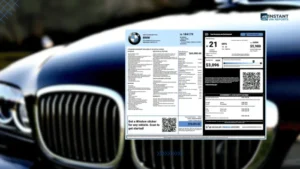
The original window sticker shows exactly what the car came with, including the color, features, and the original MSRP. It helps you see its true value and spot any errors in listings.
A window sticker provides valuable information about the car, from its color to its safety ratings. Understanding what’s on this sticker helps buyers and sellers make smarter choices before purchasing or selling a vehicle.
Here’s what you can find with a window sticker by VIN lookup:
The window sticker clearly shows the exact paint color of the vehicle’s exterior and interior. With this, buyers can confirm if a vehicle matches their personal taste and can tell if the color of the vehicle has been altered in the past.
You will find full details of the options and packages that came with a vehicle from the factory. This part matters because it shows what upgrades are included and how they affect the total cost. It also helps you compare different trims or models easily.
A sticker shows the MSRP, which is the base cost of the vehicle and covers the options and packages added from the factory. It also shows the total price, which includes shipping and delivery. With this, you can see the full cost before any discounts and have better budgets.
Provided by the National Highway Traffic Safety Administration, these ratings show how the car performs in crash tests, usually scored from one to five stars. They show how safe a vehicle is and can be useful for buyers interested in high protection levels.
This part tells how many miles the car can drive per gallon of fuel in the city and on the highway. It is important because it shows how much money you will spend on fuel. Vehicles with better fuel economy save you money and help the environment.
A window sticker shows what’s beneath the surface. It displays details, like engine type, transmission, drivetrain, and other performance parts. This allows you to confirm a vehicle’s power, towing capacity, and fuel efficiency to determine if it suits your requirements.
This indicates features related to comfort, style and practicality such as seats, LED headlights, touchscreen interfaces, or alloy wheels. Such details are important for car purchasers, enabling them to evaluate the driving comfort and experience offered by different cars.
This shows the amount of carbon dioxide the vehicle emits into the atmosphere. It is significant because it allows you to gauge how environmentally friendly the car is. A car with a higher rating is cleaner and better for nature.
You can also find details on airbags, brake systems, lane warning, alarms, and other safety features on a window sticker. With these features, you can easily determine which vehicle improves safety and protects against theft.
This shows what parts of the car are covered by the company and for how long. This includes powertrain, bumper-to-bumper, and corrosion warranties, and more. With warranty information, you can see if a vehicle is still covered and what repairs are free.
Many online sources lack reliable data. Instant VIN Reports uses trusted databases to deliver accurate and comprehensive vehicle history reports. Rely on us for dependable information.
Follow these simple steps to get your vehicle history report
Enter the VIN (Vehicle Identification Number) or License plate number into the form above.
Choose a report package, and tick the window sticker box if you want both the vehicle history report and the window sticker, and make payment.
View your vehicle history report or window sticker instantly from the members area or download it as a printable PDF.
Our vehicle history reports are powerful tools for decision-making:
Confirms essential details like title status and mileage.
Uncovers hidden aspects of the car's history.
Discloses information such as accidents and liens.
Helps determine accurate market prices based on the vehicle's history.
Validates the vehicle's identity and historical records.
Provides the confidence to make informed buying or selling choices.
Access history reports for:
While Instant VIN Reports, Carfax, and AutoCheck provide accurate vehicle history reports, Instant VIN Reports has been considered to offer more detailed records and information at affordable prices.
Here are the additional features that distinguish us from others:
Feature |
Carfax |
InstantVINReport |
AutoCheck |
|---|---|---|---|
| Price per Report |
$49.99
Expensive
|
$19.99
Affordable
|
$29.99
Fair
|
| Auction Record Photos | No | Yes | No |
| Vehicle Market Value | Yes | Yes | Yes |
| Full Vehicle Specifications | Partial Data | Complete Details | Partial Data |
| Original Window Sticker | No | Yes | No |
| Classic & Vintage Vehicle Support | No | Yes | No |
| Maintenance & Service Insights | Yes | Yes | Yes |
| Ownership Record History | Yes | Yes | Yes |
| Accident Records | Yes | Yes | Yes |
| Title Brand Check | Yes | Yes | Yes |
| Salvage Title Report | Yes | Yes | Yes |
| Ownership Timeline Map | No | Yes | No |
| Recall Notices | Yes | Yes | Yes |
| Heavy-duty truck and trailer VIN support | No | Yes | No |
| ATV and Motorcycle VIN support | No | Yes | No |
Start now and make smarter car-buying decisions. Access accurate and up-to-date reports to buy, sell, or verify with confidence.
Our users trust us for reliable and user-friendly vehicle history reports. Join thousands of satisfied customers today!
“I am rely impressed with the services provided to me. all the information I needed is just at my finger tip and this make my work lot more easier now. I am also impressed with the quick and immediate responses.”
“The report was comprehensive and helped me avoid a car with hidden damage. Worth every penny!”
“Easy to use and incredibly detailed. I was able to negotiate a better price after showing the seller the vehicle’s history.”
We offer additional services to cater to all types of vehicle data consumers:
Discover a car's original specifications
Access manufacturing details for vintage cars
Explore the unique histories of classic cars
Need the original window sticker for a specific car brand? Choose a make from the list below to instantly view factory-installed features, options, packages, MSRP, and full vehicle specifications.
Looking for a vehicle history report for a specific car brand? Select any make below to instantly access ownership details, accident records, title status, mileage updates, service history, and more.
Stay informed with expert tips on buying, selling, and maintaining vehicles. Read our latest posts for valuable insights and fine essential information on popular used car topics.

Modern vehicles rely heavily on sensors for various purposes, such as safety, performance, efficiency, intelligent features, monitoring, comfort, and control. As

There are times when you may need to find the registered owner of a vehicle for any particular reason, and you’d

There are times when certain information becomes required, and you just find yourself asking how you can get such information. Some
The VIN is a unique 17-character code that identifies a vehicle, showing its manufacturer, model, year, and history, including ownership, recalls, and accidents. It’s essential for verification and tracking.
You can locate the VIN on the driver’s dashboard, door frame, under the hood, or in documents like registration or title. Check the owner’s manual for specific guidance if it’s not easily found.
An “Invalid VIN” message often results from typos, incomplete VINs, older, non-standard codes, or VIN codes not supported by the VIN decoder. Double-check for errors, and confirm the vehicle’s VIN meets the 17-character standard established in 1981. To decode vehicles with 5-14 digit VINs, simply use our classic car VIN decoder to verify the original specs, transmission, engine information, and more.
A VIN check uses a vehicle's 17-character Vehicle Identification Number (VIN) to access its history report, which includes details like title history, accident records, and recall information. It’s important for buyers and sellers to confirm a car’s reliability, authenticity, and market value before any transaction.
A free VIN check service provides only basic information, like year, make, model, engine specs, and transmission, but usually lacks accident records, title status, or mileage records. Our paid yet affordable VIN check service offers more accurate, comprehensive data for informed decisions.
A VIN decoder breaks down the VIN to reveal a vehicle’s specifications (engine type, body style, transmission, and more), while a VIN check includes history details like accidents, liens, theft, ownership history, and more. They are both required to provide a complete picture of the vehicle’s true identity and condition.
You should run a VIN lookup to check a vehicle's history before buying it to gain full access to important information like title issues, accident history, odometer readings, recalls, theft records, and more. A VIN check ensures buyers avoid scams and sellers verify the car’s reliability and market value.
A free vehicle history report offers basic details, including the vehicle specifications, engine details, and more. They typically lack important information, such as accidents, title records, or ownership. To view these, you will need to get a paid service.
Yes, you can legally perform a VIN search for any vehicle to access information like vehicle specifications, accident records, theft records, ownership records, and more. However, you cannot get personal information of past owners with a VIN search, as this is illegal.
You can view window stickers by VIN using our instant window sticker lookup tool. All you need to do is find the VIN and fill out the form on the page, After submitting the VIN, it will be decoded immediately, and your window sticker will be provided. Note that you can also get a window sticker with the license plate number or the vehicle’s year, make, and model.
You can perform an original MSRP lookup by VIN by using our specialized online window sticker lookup tool that provides a digital window sticker showing the MSRP. All you need is to find the VIN and enter it into the form on the window sticker lookup page. You will instantly get the vehicle’s original MSRP.