
McLaren VIN Decoder – Check Engine Info for Free
Purchasing a used McLaren can be tricky if you do not check everything thoroughly. Use Instant VIN Reports’ McLaren VIN Decoder to check specs like engine, transmission, body type, origin, MSRP, and market value. Click on the form below to begin!
What is a McLaren VIN Decoder?
A McLaren VIN decoder is a tool that decodes a vehicle's Vehicle Identification Number (VIN) into detailed information about the vehicle. By decoding the VIN, you can verify factory details such as the model, model year, engine, body style, manufacturing information, and other original specifications.
Because every modern McLaren road car uses the internationally standardized 17-character VIN format, decoding the VIN is one of the fastest ways to confirm the vehicle's identity and factory configuration. In addition to that, our service can decode a classic McLaren VIN to check specs and origin.
Why Should You Decode a McLaren VIN?
McLaren vehicles are high-performance supercars where originality, factory options, and documented history can significantly affect value. Decoding the VIN helps verify that the vehicle is exactly as represented by the seller before you decide to purchase the vehicle.
Verify the Original Factory Configuration
Confirm important build details such as the model, production year, engine, transmission, body style, and factory-installed equipment.
Confirm the Vehicle's Identity
Ensure the VIN matches the vehicle's specifications and identify any discrepancies before buying or selling.
Protect Your Investment
Factory options, limited-production variants, and original specifications can have a major impact on a McLaren's resale and collector value.
Buy With Greater Confidence
Whether you're purchasing from a dealership, a private seller, or an auction, VIN decoding provides reliable information to support a more informed decision.
What Information Can You Get From the McLaren VIN Decoder
Instant VIN Reports’ McLaren VIN Decoder helps you to quickly decode your VIN to show its identification, such as specifications, product information, and market value. Always run a quick VIN Decoder before you decide to purchase the car.
Manufacturer Information
Identify the manufacturer and review production details associated with the vehicle.
Country of Origin
Verify where the McLaren was originally manufactured and assembled.
Model & Production Year
Determine the exact McLaren model, variant, and model year encoded within the VIN.
Engine Specifications
Access detailed engine information, including engine configuration, displacement, fuel type, horsepower, and other factory performance specifications.
Transmission Information
Review the original transmission and drivetrain configuration installed by the factory.
Body Style
Identify the vehicle's body configuration, including Coupe, Spider, GT, or other variants.
Factory Equipment & Options
View trim information, optional equipment, and factory-installed features.
Original MSRP & Market Value
Compare the McLaren's original manufacturer's suggested retail price (MSRP) with its current market value.
How to Use McLaren VIN Decoder
To use the McLaren VIN Decoder, you can start by finding the VIN, and then you just need to follow these simple steps to get it done.
Enter the VIN
Click the form above and write the VIN of any McLaren vehicle.
Submit the Form
Then, click on the button to submit the form.
Check the Vehicle Specs
Check the preview page to see the complete vehicle’s specifications, like engine, transmission, model year, and country of origin.
How to Read a McLaren VIN
A modern McLaren VIN is assigned a 17-digit code consisting of numbers and letters. This VIN was already standardized in 1981, and they are classified into three different things: WMI, VDS, and VIS.
Digits 1–3: SBM
S = Country of origin (United Kingdom)BM = McLaren Automotive
Digits 4–8: 13FAA
1 = Model line (570S / Sports Series platform)3 = Body style (2-door Coupe)F = Engine type (3.8L twin-turbocharged V8)A = Trim level (Standard configuration)A = Series or equipment package
Check Digit
9th digit
2 = Check digit
Digits 10–17: LW009121
L = Model year (2020)W = Woking, Surrey, United Kingdom Assembly Plant009121 = Production sequence number
Reading a Classic McLaren VIN
A McLaren classic VIN has different digits from modern ones, as the VINs weren’t standardized yet. Take a look at the section below to see how a McLaren VIN is decoded.
Sample: M6GT2R
Digits 1–4: M6GT
M6GT = McLaren M6GT
- Identifies the vehicle as a McLaren M6GT.
- Based on the McLaren M6 Can-Am race car chassis.
- Designed by Bruce McLaren as the company's first road-going supercar.
- Features a lightweight monocoque chassis and Chevrolet V8 power.
Prototype Designation
Digit 5: 2
2 = Second Prototype
- Indicates the second M6GT chassis produced.
- One of only three M6GT prototypes completed.
- Used to distinguish the vehicle from the other prototype examples.
Steering Configuration
Digit 6: R
R = Right-Hand Drive
- Identifies the vehicle as a right-hand-drive model.
- Built primarily for use in the United Kingdom.
- Differentiates it from the left-hand-drive prototype.
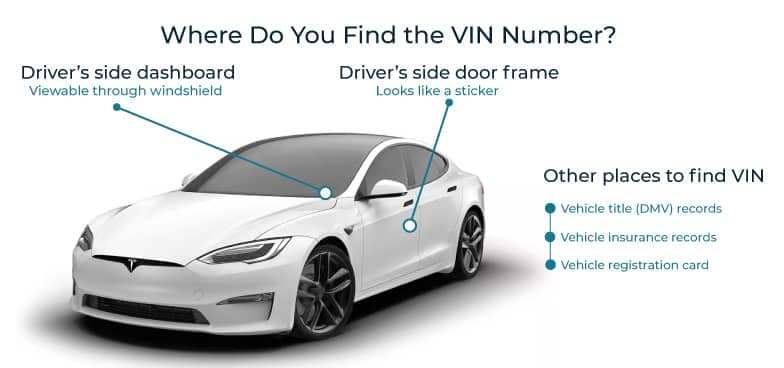
Where to Find the VIN On a McLaren?
You can examine these locations to find the VIN on a McLaren vehicle. Check a few spots on the car and the vehicle’s paperwork, like service records or the bill of sale.
- Driver-side dashboard
- Driver-side door jamb/door frame label
- Vehicle paperwork (registration/insurance/service records)
- Engine bay labels
Need the Full Vehicle Information? Get a McLaren Vehicle History Report
A free McLaren VIN decoder provides the vehicle's basic specifications, including the model, engine, and production year. A full McLaren vehicle history report reveals important ownership, title, damage, and maintenance records before you buy.
Vehicle Specifications
Verify how the McLaren left the factory, including its model, engine configuration, horsepower, transmission, body style, drivetrain, manufacturing details, and other original specifications.
Ownership History
Review available ownership records, including the number of previous owners, registration history, and ownership duration. Personal information, such as names and addresses, is never included.
Title Status & Branding Records
Check whether the vehicle has a clean title or has ever been branded as salvage, rebuilt, flood-damaged, junked, or otherwise affected. This information is essential when assessing a McLaren's value, insurance eligibility, and long-term reliability.
Lien & Financial Records
Determine whether a lender still holds a financial interest in the vehicle. Identifying active or historical liens helps ensure the McLaren can be legally transferred without unexpected financial obligations.
Theft & Recovery Records
Find out whether the vehicle has ever been reported stolen or later recovered. When available, the report includes relevant dates, locations, and reporting sources to provide additional confidence before purchase.
Safety Recall Information
View manufacturer-issued safety recalls associated with the VIN, including affected components, recall dates, and repair status. This helps confirm whether important factory updates have already been completed.
Service & Maintenance History
Access available maintenance records, including scheduled servicing, inspections, brake work, fluid changes, and other repairs. A documented service history is especially valuable for high-performance McLarens, where proper maintenance directly affects reliability and resale value.
Accident & Damage History
Review reported collisions and damage events, including structural damage, flood damage, fire, hail, or other insurance-related incidents. Available records may include dates, severity, and repair-related information to help identify potential concerns.
Odometer Readings & Mileage Timeline
Track recorded mileage throughout the vehicle's history to identify consistent usage patterns or possible odometer discrepancies. Unexpected mileage changes may indicate reporting errors or potential rollback issues.
Auction & Sales Records
Review previous auction appearances and sales listings, including sale prices, condition reports, listing history, and available photos. When records are available, you may also view up to ten auction images showing the McLaren's condition before its most recent sale.
Free McLaren VIN Decoder vs. Paid McLaren VIN Check
A free McLaren VIN decoder is a good first step. However, if you are planning to purchase the car, get a vehicle history report to check the records.
Feature | Free VIN Decoder | History Report (Paid) |
|---|---|---|
VIN decoding for all vehicle types | ||
Year, make, model, trim | ||
Full vehicle specifications / detailed car specs | ||
Market value snapshot | ||
Sales listings (current/online ads) | ||
Sales history (timeline of past listings/sales) | ||
Auction records (when available) | ||
Auction history with photos | ||
Mileage during auction/sales (when available) | ||
Odometer rollback checks | ||
Ownership history | ||
Vehicle usage type (personal, fleet, rental, commercial) | ||
Title brand records (salvage, rebuilt, flood, lemon, etc.) | ||
Lien & loan records | ||
Accident & damage history | ||
Theft / stolen records | ||
Flood/hail/fire damage checks | ||
Service/repair records | ||
Warranty status & coverage | ||
Recall information |
Why Getting a McLaren Vehicle History Report is Important
Timothy wanted to purchase a used 2020 McLaren 570S from a private exotic car dealer in Las Vegas. Before he decided to purchase the car, he ran a quick VIN check to see its records.
Initial Impression
The car looked nice with a few dents; however, the salesperson said the car had no additional damage aside from the dents. Timothy sensed something was wrong, so he decided to put the buying process on hold and referred to the McLaren vehicle history report to see the car details.
What Timothy Sees on the Report
Timothy was surprised when he saw that the car had many damages:
- 1 accident record
- 1 Record(s) of damage
- 4 sales records
- The vehicle title has a salvage brand record
- The vehicle title has a rebuilt or rebuildable record
- The vehicle has an insurance loss record
- The vehicle has been titled to an insurance company record
The Outcome
Timothy decided not to purchase the car because it had too much damage and the salesperson did not entirely disclosed them during the negotiation.
Why Use the Instant VIN Reports for a McLaren VIN Decode?
The Instant VIN Reports’ VIN decoder helps McLaren owners, buyers, and sellers access detailed vehicle information in seconds.
Frequently Updated Data
Vehicle information is refreshed using trusted sources such as Vehicle Databases.
Simple Pricing Structure
The VIN decoder is available at no cost. In comparison, a VIN check comes at an affordable price.
24/7 Customer Support
Support is available 24/7—our customer service team is available all night and all day.
Fast and Efficient Process
Get the vehicle details and history information in just a few seconds.
Who Can Benefit From the McLaren VIN Decoder?
Whether you're buying a pre-owned McLaren, selling an exotic vehicle, managing dealership inventory, or verifying a collector car, a McLaren VIN decoder helps confirm factory specifications and supports more informed decisions.
Buyers
Verify the McLaren's model, production year, engine specifications, body style, and factory-installed options before purchasing. VIN decoding also helps confirm the vehicle matches the seller's description and original build.
Sellers
Provide verified factory information to prospective buyers, increasing transparency, strengthening buyer confidence, and supporting a smoother, faster sales process for high-value McLaren vehicles.
Dealerships & Exotic Car Brokers
Quickly verify McLaren specifications, evaluate trade-ins, validate inventory records, and ensure every vehicle is accurately represented before being offered for sale.
McLaren Collectors & Enthusiasts
Confirm original production details, factory equipment, and build specifications for rare, limited-production, and special-edition McLaren models to help preserve authenticity and collector value.
Restoration Specialists
Access original factory build information to support accurate restoration work and ensure the vehicle remains faithful to its original production specifications.
Insurance Companies & Vehicle Appraisers
Use VIN-based vehicle data to support accurate valuations, underwriting decisions, claims assessments, and documentation for exotic, high-performance, and collectible McLaren vehicles.
Supported McLaren Models
Our McLaren VIN decoder supports a wide range of modern McLaren road cars to help verify factory specifications, production details, and original vehicle information.
| MP4 12c | 650s | 570s | 720s | GT | 570GT | 675LT |
| 600LT | 765LT | M1A | M1B | M1C | M6A | M6B |
| M6GT | M8A | M8B | M8C | M8D | M8E | M8F |
FAQs on McLaren VIN Decoder
Where is the VIN/chassis number located on a McLaren (720S, 570S, etc.)?
On most modern McLarens, you can usually find the VIN in common manufacturer locations such as the dashboard area near the windshield, the driver-side door area, and on official paperwork.
For older or rarer models, the chassis identifier may be located differently. If you are buying, verify it in more than one place, then run a McLaren VIN lookup with Instant VIN Reports to confirm what you copied.
What do the letters in a McLaren chassis number prefix mean (e.g., SBM, LAU)?
Prefixes like SBM are commonly used as manufacturer identifiers in VIN-related systems, and they help link the vehicle to the maker in databases. The exact meaning of every prefix style can vary by format and era, especially when people loosely say “chassis number” for older identifiers.
If you want clarity, decode the McLaren VIN number (or identifier) with Instant VIN Reports so you are not guessing from forum snippets.
Is there an official McLaren VIN decoder from the manufacturer?
Manufacturers and official systems may provide VIN-based tools for specific purposes, but buyers often still use independent decoders to get a clean, readable output in one place. Instant VIN Reports gives you a free McLaren VIN decoder for quick checks, plus a paid history report when you need title, mileage, accident indicators, and other records.
How do I verify the authenticity of a McLaren (e.g., special edition like a Senna or LT model)?
Authenticity is usually confirmed by combining VIN decoding with documentation and physical inspection. Start by decoding the McLaren VIN to confirm the base identity and specifications. Then match that against seller paperwork, option lists, and visible vehicle details.
A full vehicle history report also helps by showing recorded events and timelines that can support or challenge the story you are being told.
Can I check the production number and build date of my McLaren using the VIN?
The VIN can support production-related identification, but exact build dates and production numbers are not always shown in every public dataset. Your best first step is still a McLaren VIN check with Instant VIN Reports, because it helps confirm model year and other identifiers.
What is a McLaren "Certificate of Authenticity" and how do I get one?
A certificate of authenticity is generally a document intended to confirm a vehicle’s identity and configuration, often used for collector value and provenance. Availability and process vary. Before you chase paperwork, run a McLaren VIN lookup to confirm the identity details you already have.
What's the difference between a VIN and a chassis number on a McLaren?
A VIN is the standardized identifier used on modern vehicles, while “chassis number” is sometimes used as a general term, especially for older or non-standard formats. People mix the terms a lot, honestly. If the identifier is shorter than 17 characters, it may be a classic-style number rather than a modern VIN.
How can I check the ownership and service history of a used McLaren with the VIN?
Use a vehicle history report based on the VIN. A free McLaren VIN decoder can confirm the basics, but ownership signals and service/repair records (when available) are usually part of a full report. With Instant VIN Reports, you can screen the car first, then upgrade to review owner count indicators, mileage entries, and service history records where they exist.
How do I find out the original factory options and specifications for my McLaren?
Start by decoding the McLaren VIN number to confirm core specifications and identity. Factory options can be more complex, especially with special trims and bespoke configurations. A full Instant VIN Reports vehicle history report may provide richer specification data, and it also gives you a document you can keep for your files, resale, or insurance conversations.
What’s the difference between a VIN and a chassis number on a classic McLaren?
On a McLaren, the 17-character VIN serves as the vehicle's official identifier for registration and ownership records, while the chassis number is a factory-assigned production identifier used to distinguish each individual carbon-fibre monocoque. Both are important for verifying a McLaren's authenticity and production history.
How to decode a classic car VIN number?
Modern McLaren road cars use the internationally standardized 17-character VIN, making them straightforward to decode. Simply locate the VIN on the dashboard, driver's door jamb, or registration documents, then use a trusted VIN decoder to verify the vehicle's model, production year, factory specifications, and other key details.
Do classic cars have different VIN numbers?
Yes. Every McLaren road car has a unique 17-character Vehicle Identification Number (VIN) assigned during production. Because McLaren began producing road cars after VIN standardization was introduced in 1981, all production models use the modern VIN format, making them easier to identify and verify.