
Free Eagle VIN Decoder For Any VIN Length and Era
If you own, collect, or plan to buy an Eagle vehicle, the VIN is your starting point. It may look like a random mix of numbers and letters, but it tells a serious story. Our free Eagle VIN decoder helps you check specifications and build data in seconds.
What is an Eagle VIN Decoder?
An Eagle VIN Decoder is a tool that reads and interprets the Vehicle Identification Number assigned to every Eagle vehicle. Since 1981, VINs have followed a standardized 17-character format regulated in the United States by the National Highway Traffic Safety Administration (NHTSA). Each character has meaning.
Our decoder translates those characters into understandable details such as model year, engine type, and manufacturing country location. Instant VIN Reports performs this check quickly and can also assist with older, pre-1981 classic VIN formats.
Why Eagle VIN Decoding Matters Before Buying a Car
An Eagle VIN number contains valuable information about the vehicle's identity and factory specifications. Running our free VIN decoder helps verify key details before you spend money on a purchase, compare listings, restore a classic AMC Eagle, or evaluate an Eagle Talon project car.
Make Confident Decisions
Knowing exactly what vehicle you're viewing reduces uncertainty during the buying process.
Confirm the Model
Some Eagle models look similar. VIN decoding helps distinguish them accurately.
Check Engine Information
Check the Eagle engine configuration by VIN before discussing repairs, upgrades, or maintenance.
Support Restoration Projects
Classic Eagle owners can use VIN data to understand original vehicle specifications.
What Information Does an Eagle VIN Decoder Show?
Decoding an Eagle VIN reveals the core information used to identify and classify the vehicle during production. Here’s what you’ll find:
Manufacturer
See which manufacturer produced the vehicle based on its VIN.
Vehicle Origin
See the country where the vehicle was assembled, based on the VIN.
Eagle's Model Type & Year
See the original Eagle model and model year decoded from the VIN.
Engine Specifications
View the original engine specifications associated with the VIN.
Transmission Setup
See the transmission information linked to the VIN.
Body Style
Identify the original body style, whether it's a hatchback, sedan, wagon, coupe, or another configuration.
Trims
Find the original trim level assigned to the vehicle.
MSRP & Market Value
Check the original MSRP and market value estimates based on the VIN.
How to Use the Eagle VIN decoder
Using our free Eagle VIN Decoder is straightforward. You do not need technical knowledge. Just follow these simple steps.
Step 1: Enter the VIN
Type the Eagle VIN into the form above. If you don’t have the VIN, you can also use the U.S. license plate to start the search.
Step 2: Submit the Form
Once you’ve entered the data into the form, we will retrieve the data in seconds.
Step 3: Check the Vehicle Specs
Review the results, including vehicle specifications, engine details, trim information, body style, model year, and manufacturer data.
How To Read a 17-Digit Eagle VIN Number
The VIN is divided into three main sections. These are WMI, VDS, and VIS. Together, they explain where the vehicle was built and how it was configured. It is not random. There is a system behind it.
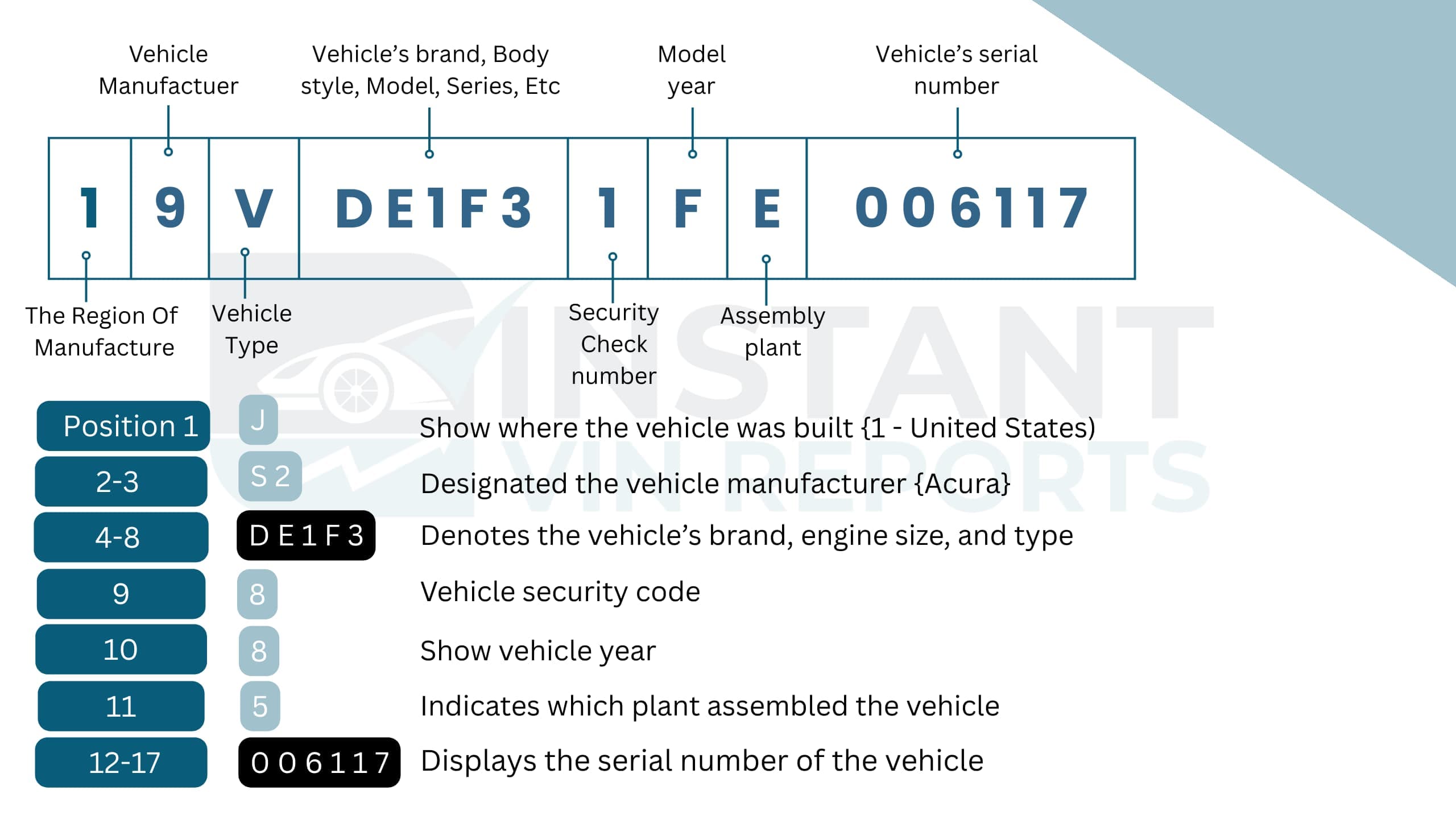
Eagle VIN Positions Explained For: **4E3AL54F4TE246735**
WMI (World Manufacturer Identifier)
Position 1 (4)
United States manufacturer country
Position 2 & 3 (E3)
Eagle passenger vehicle
VDS (Vehicle Descriptor Section)
Positions 4 to 8 (AL54F)
Vehicle attributes (body, restraint, engine, series)
Position 9 (4)
Check digit
VIS (Vehicle Identifier Section)
Position 10 (T)
1996 model year
Position 11 (E)
Assembly plant
Positions 12 to 17 (246735)
Sequential production number
Classic Eagle VIN Decoder (Pre-1981)
Before VIN standardization became mandatory, Eagle and American Motors Corporation (AMC) vehicles often used shorter VIN formats that varied by model, production year, and manufacturing location.
Owners of AMC Eagles and Eagle Talons often use VIN decoding to verify factory specifications before purchasing parts, restoring a vehicle, or confirming authenticity. This is especially useful when evaluating modified vehicles, engine swaps, drivetrain conversions, or trim-level claims.
We can decode many classic old VINs with 5 to 14 characters, helping owners research older vehicles that cannot be decoded by many modern VIN tools.
1980 AMC Eagle VINs (13 Digits)
The 1980 AMC Eagle used a 13-digit VIN rather than the 17-character format used today. These VINs typically contain information about:
- Manufacturer
- Model series
- Body style
- Engine designation
- Transmission type
- Production sequence
Because the coding structure differs from modern VIN systems, many standard VIN decoders cannot interpret them correctly. Instant VIN Reports can decode many classic Eagle VINs automatically, eliminating the need to manually match factory code charts.
AMC Eagle vs Eagle: What's the Difference?
Not every Eagle vehicle comes from the same manufacturer. The AMC Eagle was introduced before Chrysler acquired AMC, while later Eagle vehicles were sold under Chrysler's Eagle brand. This distinction matters when researching specifications, ordering parts, or restoring a vehicle. Our VIN lookup helps remove the guesswork.
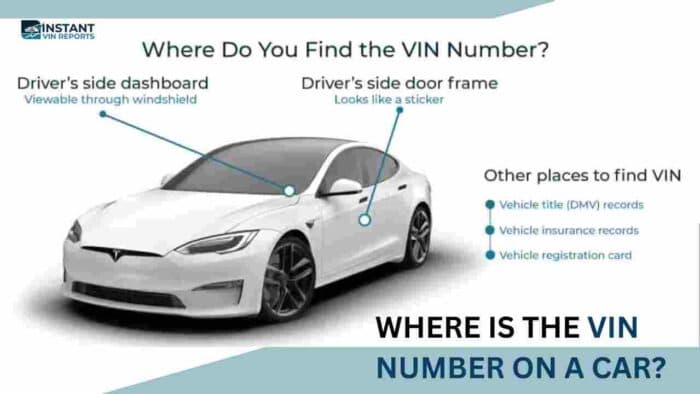
Where to Find the VIN on an Eagle?
Finding the VIN on your Eagle vehicle is usually simple. Most manufacturers place it in visible and consistent locations for safety and inspection purposes.
- Dashboard (Driver’s Side): Visible through the windshield at the lower corner. Most common location.
- Driver’s Side Door Jamb: Printed on a certification label or sticker.
- Engine Bay: Stamped on the firewall or inner fender area in some models.
- Vehicle Registration Documents: Also listed on the title, registration, and insurance papers.
Need To See More? Get the Full Eagle Vehicle History Report
Use our Eagle vehicle history reports to pull up details tied to the VINs. It is a practical way to confirm what an Eagle vehicle is and what it has been through before you buy, sell, or restore it.
Vehicle Specifications
Get a clear snapshot of the Eagle’s identity, including model, year, body style, engine, and basic factory specs. This helps you confirm the vehicle matches the listing and paperwork, especially on older Eagle models where details are often mixed up.
Past Ownership History
Ownership history helps you understand how long previous owners kept the vehicle and how often it changed hands. Long-term ownership can suggest stable use, while frequent ownership transfers may justify additional inspection before purchase.
Vehicle Usage
See possible usage patterns when reported, such as private use, fleet use, or commercial use. How the Eagle was used matters because heavy-duty or high-mileage use can affect wear, even if the car looks clean today.
Title Status
Check the legal standing of the title. This can include clean title indicators or title brands such as salvage, rebuilt, or other title issues when reported. Title status is one of the first things serious buyers should verify.
Accident Reports
When accident details are available, this section may include dates, record types, and supporting notes. It helps you understand the timeline of incidents, not just whether an accident happened.
Damage Records
Look for reported damage events such as flood, hail, fire, or other damage indicators. Some damage is not obvious in photos, so this section can help you avoid surprises when inspecting an Eagle in person.
Auction History
Find out if the Eagle was listed or sold through auctions when reported. Auction records can sometimes include listing information and condition notes, which are helpful for understanding the vehicle’s past market activity.
Loan and Lien Records
A lien check reveals whether an Eagle vehicle still has an outstanding loan attached to it. If a lien exists, ownership cannot be legally transferred until it is cleared. This is serious. Many buyers overlook this step. Our Eagle VIN check can flag reported lien or loan records, helping you avoid financial complications before purchase.
Theft Records
Theft record checks identify whether the Eagle vehicle has been reported stolen. Buying a stolen car can result in serious legal consequences. A VIN check reduces that risk by flagging reported theft entries when available. It is a simple but very important verification step.
Service History
Review reported service and maintenance records when available. This may include maintenance events, dates, and repair-related entries. A consistent service trail often supports better reliability and stronger resale value.
Free Eagle VIN Decoder vs Vehicle History Report
A free VIN check is useful for early screening. But when money is involved, deeper information becomes essential.
Feature | Free VIN Decoder | History Report (Paid) |
|---|---|---|
VIN decoding for all vehicle types | ||
Year, make, model, trim | ||
Full vehicle specifications / detailed car specs | ||
Market value snapshot | ||
Sales listings (current/online ads) | ||
Sales history (timeline of past listings/sales) | ||
Auction records (when available) | ||
Auction history with photos | ||
Mileage during auction/sales (when available) | ||
Odometer rollback checks | ||
Ownership history | ||
Vehicle usage type (personal, fleet, rental, commercial) | ||
Title brand records (salvage, rebuilt, flood, lemon, etc.) | ||
Lien & loan records | ||
Accident & damage history | ||
Theft / stolen records | ||
Flood/hail/fire damage checks | ||
Service/repair records | ||
Warranty status & coverage | ||
Recall information |
How David Used an Eagle VIN Decoder Before Buying
David found a 1996 Eagle Talon listed for sale online. He used our free Instant VIN Reports Geo VIN Decoder to verify the VIN. He then upgraded to the full vehicle history report for a more complete look at the car's history. Here is what he found out:
VIN: 4E3AL54F4TE246735
Initial Impression
- David found a 1996 Eagle Talon TSi AWD Hatchback listed online.
- The seller described it as mostly original and showed the vehicle photos in good condition.
Critical Findings
- Free VIN decoding confirmed the model, engine, drivetrain, and body style matched the listing.
- The vehicle has accident-related records and title-related information that appeared in the report.
- Additional ownership and mileage history became available.
Outcome
David contacted the seller with more informed questions and used the report. He relied on the vehicle's recorded history instead of the listing alone, and he got the car at a lower price because of it.
Why 1 Million+ Drivers Choose Instant VIN Reports
Instant VIN Reports helps drivers access vehicle data quickly, whether they are decoding a modern Eagle VIN or researching a classic VIN that many other tools cannot process.
High Accuracy, Cross-Checked Results
Data is compiled from multiple sources and cross-checked whenever possible to improve reliability.
No Hidden Fees or Subscriptions
You only pay for the products you choose. There are no surprise charges added during the VIN decoding process.
24/7 Customer Support
Questions can come up at any stage of vehicle research. Our customer support is available to help users understand reports and navigate the process.
Supports Modern and Classic Eagle VINs
Many VIN tools only support standardized 17-character VINs. We can decode not only standard VINS, but also many Eagles with 5 to 14-character chassis numbers.
Who Should Use an Eagle VIN Decoder?
Buying or selling an Eagle vehicle involves responsibility. Restoration projects require accuracy. Dealers must protect their reputation. Even long-time owners may want to confirm vehicle history. Decoding the Eagle VIN supports all these situations.
Buyers
Gain confidence by confirming factory specifications before making a purchase decision.
Sellers
Provide verified vehicle information to potential buyers and improve listing transparency.
Dealers
Verify inventory details quickly and improve listing accuracy across multiple vehicles.
Classic Car Collectors
Research vintage Eagle vehicles before purchasing or adding them to a collection.
Restorers
Verify engine, trim, and model details when sourcing parts for a project.
Insurers & Appraisers
Verify vehicle identity and specifications before issuing coverage or conducting valuations.
Decode Any Era of the Eagle Models
Whether you're researching a rare AMC Eagle wagon or a later Eagle Talon, our decoder supports a wide range of Eagle vehicles. These examples highlight some of the most searched models.
| AMC Eagle Wagon | AMC Eagle SX/4 | AMC Eagle DL | AMC Eagle Sport Wagon |
| AMC Eagle 4WD Wagon | Eagle Talon | Eagle Talon TSi | AMC Eagle Kammback |
| AMC Eagle Sedan | Eagle Talon AWD | Eagle Vision | Eagle Summit |
| Eagle Summit Wagon | Eagle Premier | AMC Eagle Coupe | AMC Eagle Limited |
| Eagle Premier ES | Eagle Medallion | Eagle Vista |
Frequently Asked Questions about Eagle VIN Decoder
What is an Eagle VIN Decoder?
An Eagle VIN Decoder is a tool that reads and interprets the Vehicle Identification Number assigned to Eagle vehicles. It translates the 17-character code into readable specifications and history data. Our Instant VIN Reports tool provides both free VIN lookup and detailed reports.
How do I check an Eagle VIN number?
You can check an Eagle VIN number by entering the 17-digit code into our online VIN decoder form. The system processes the code and generates vehicle details instantly.
Can I decode a classic Eagle VIN with fewer than 17 digits?
Yes, you can decode a classic Eagle VIN with fewer than 17 digits. While the 17-digit VIN became standard in 1981, older vehicles may have shorter VINs. Our platform supports classic VIN decoding for pre-1981 Eagle-related vehicles.
Where can I find the VIN on my Eagle vehicle?
The VIN is typically located on the dashboard near the windshield, on the driver’s side door jamb, or on official registration documents.
How to Confirm the Model Year of a Classic Eagle?
Model-year identification on classic AMC vehicles differs from modern VIN systems. Unlike post-1981 vehicles that use a dedicated model-year position, earlier VIN formats may encode production information differently.
Our classic VIN decoder helps match the VIN to the correct production year without manually interpreting factory code charts.
Can an Eagle VIN number show accident history?
Yes, when reported. A full Eagle vehicle history report may include accident records, damage indicators, and title branding details.
Can I check if an Eagle vehicle has a lien or loan?
Yes. A premium Eagle VIN check may reveal reported lien or loan records, helping buyers avoid legal complications.
Is the free Eagle VIN Decoder enough before buying?
The free decoder confirms identity and specifications. However, for purchase decisions, the premium Eagle vehicle history report provides deeper information such as mileage, title status, and accident records.