
Polestar VIN Decoder
A Polestar may look perfect on the outside, but the VIN tells the real story. Use our Polestar VIN check to verify model details, title status, mileage records, and reported incidents. Whether you are buying, selling, or simply verifying, our tool gives you structured information fast and clearly.
What is a Polestar VIN Decoder?
A Polestar VIN decoder is a tool that reads your vehicle’s VIN number and breaks it into meaningful pieces, so you do not have to interpret the code manually. In the U.S. and Canada, modern Polestar VIN numbers typically follow the 17-character format.
When you decode it, you can confirm key basics like manufacturer identifier, vehicle line, model year code, assembly plant, and sequence number. If you are working with older or classic vintage vehicles that do not use a standardized 17-character VIN number, we can still decode many pre-1981 formats as well, which helps collectors keep accurate records.
What is a Polestar VIN (Vehicle Identification Number)?
A Polestar VIN (Vehicle Identification Number) is the vehicle’s unique identification code. For most Polestar vehicles in the U.S. and Canada, it is a 17-character mix of letters and numbers assigned during manufacturing.
Checking the VIN is usually the first step when buying a used car. It ensures the vehicle matches the paperwork and reduces the risk of confusion. While you can decode the VIN manually, using a decoder is quicker and minimizes errors, especially when comparing multiple vehicles.
Here is the kind of information that VIN decoding can help you confirm:
- Country/region and manufacturer identifier
- Vehicle line and certain configuration indicators
- Model year code and assembly plant code
- Production sequence number for that vehicle
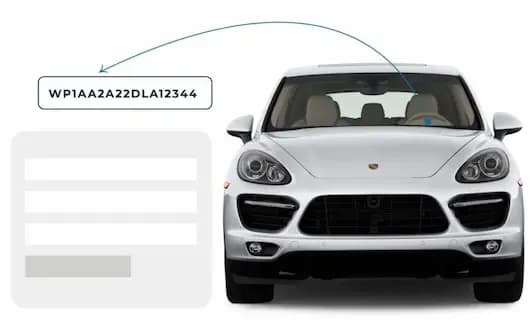
How to Read a Polestar VIN Number?
Reading a Polestar VIN is easier when you treat it like a structured ID, not a random string. The WMI sets the manufacturer context, the VDS describes the vehicle configuration, and the VIS identifies the specific vehicle unit. In the sections below, we show what each position typically represents for Polestar in North America.
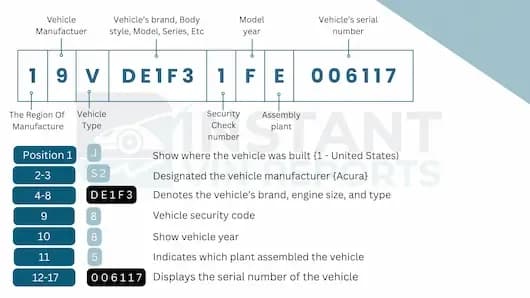
World Manufacturer Identifier (WMI)
Position 1–3 = Manufacturer code (WMI)
- LPS = Passenger cars made in China
- YSM = Passenger cars
- YSR = Multipurpose passenger vehicle (MPV)
7SY = Multipurpose passenger vehicle made in the USA
Vehicle Descriptor Section (VDS)
Positions 4–5 = Engine or motor code
- BE = B4204T25 / B4204TSH (Polestar 1, 2020–2021)
- EJ = E400V1 (Polestar 3 RWD, 2025)
- EA = E400V30 (Polestar 3 AWD, 2025)
- EE = E400V11 (Polestar 3 AWD Performance, 2025)
- ED = E400V6 (Polestar 2 AWD long range, 2021–2023)
- EG = E400V9 (Polestar 2 FWD long range, 2022–2023)
- ET = E400V35 (Polestar 2 AWD long range with Performance Pack / BST editions, 2023)
- FD = E400V26 (Polestar 2 AWD long range, 2024)
- FE = E400V20 (Polestar 2 RWD long range, 2024)
- FF = E400V36 (Polestar 2 AWD long range with standard Performance Pack, 2025)
- FG = E400V36 (Polestar 2 AWD long range with Performance Pack, 2024)
- PB = E400P02 (Polestar 4 RWD, 2026–)
- PA = E400P01 (Polestar 4 AWD, 2026–)
Position 6 = Emissions code/version divider
- 0 = ULEV (Polestar 1, 2020–2021)
- 3 = BEV (Polestar 2, Polestar 3, Polestar 4)
Position 7 = Vehicle code
- Y = Polestar 1 (2020–2021)
- K = Polestar 2 (2021–2025)
- Y = Polestar 3 (2025–)
- A = Polestar 4 (2026–)
Position 8 = Trim level/safety equipment / GVWR
- L = Polestar 1 (2020–2021)
- A = Polestar 2 (2021–2025)
- B = Polestar 3 (2025–)
- 4 = Polestar 4 (2026–)
Position 9 = Check digit
- A validation character used in the U.S./Canada VIN system.
- Special case: the check digit can be a number 0–9 or the letter X.
Vehicle Identifier Section (VIS)
Position 10 = Model year code
- This is a standardized North American year code system.
- The year codes repeat in cycles, so the same character can represent different decades depending on context.
Position 11 = Plant of assembly
- B = Chengdu, Sichuan Province, China (Polestar Chengdu Plant)
- F = Hangzhou Bay, Zhejiang Province, China
- G = Charleston Plant, Ridgeville, South Carolina, USA (Volvo Car U.S. operations)
- K = Renault Korea Pusan Plant, Busan, South Korea
- L = Luqiao District, Taizhou, Zhejiang Province, China (Volvo AELQ plant)
Positions 12–17 = Production sequence number
- A serial sequence assigned to that specific vehicle.
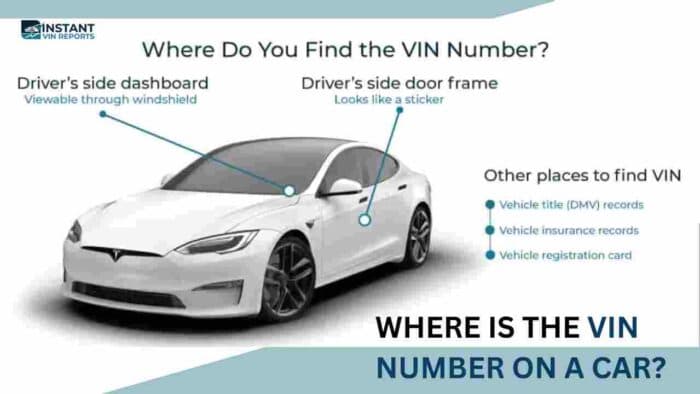
Where to Find the VIN on a Polestar?
If you are not sure which number is the VIN, look for a long string of letters and numbers (typically 17 characters for modern vehicles). It is commonly displayed where it can be read without tools.
- Dashboard near the windshield (driver’s side) Usually visible from outside through the lower corner of the windshield.
- Driver-side door jamb/door frame label Often printed on a manufacturer’s label with tire and weight information.
- Vehicle paperwork (registration, title, insurance) Helpful for matching the physical VIN to your documents.
- Service and inspection records Frequently printed on invoices or service documentation.
- Under-hood labels (varies by model/market) Some vehicles include secondary labels in the engine bay area.
What Information Can You Get from a Polestar VIN Decoder?
A free Polestar VIN decoder gives you basic data about the car, like year, model, engine, and trim. A full vehicle history report goes deeper, helping you understand how the vehicle was used, maintained, and valued over time.
Vehicle Specifications
Understand exactly what your Polestar was built with. A VIN decode shows important factory details such as motor configuration, trim level, body style, drivetrain, and production plant. This helps you confirm the vehicle matches the listing and meets your expectations before making a decision.
Ownership History
See how many previous owners the vehicle has had and how long it stayed with each one. Frequent ownership changes can raise questions. A clear ownership timeline helps you understand how the Polestar was used and whether it reflects stable, long-term care.
Accident Reports
Review reported accident and damage records, including collision, flood, or fire events. For electric vehicles like Polestar, water or structural damage may affect battery systems, safety modules, and long-term resale value. Identifying these risks early can prevent costly surprises.
Damage Records
Identify past sales activity and reported damage events such as flood, fire, or collision damage. This section gives you context about how the vehicle changed hands and whether it experienced serious incidents that could impact long-term reliability.
Mileage Records
Compare odometer readings across time. Irregular mileage patterns may indicate reporting gaps or inconsistencies. Reviewing recorded mileage dates helps confirm whether the Polestar’s usage history makes sense for its model year.
Auction History and Photos
If the vehicle was sold at auction, you may see auction records and available photos. These images can provide insight into prior cosmetic or structural conditions. Sometimes, auction photos reveal details not mentioned in a standard listing.
Lien and Loan Records
Check whether the vehicle has active lien or loan obligations. An unresolved lien means a lender may still have a legal claim over the vehicle. If you purchase a Polestar with an active lien, the ownership transfer could be delayed or even blocked until the debt is cleared.
Title Information
Confirm the title status, whether clean, salvage, rebuilt, or branded. Title branding affects value, insurance eligibility, and resale potential. Understanding this clearly helps you avoid complications when registering or insuring your Polestar.
Theft Records
Review theft-related records associated with the VIN. This helps you avoid purchasing a stolen vehicle, which may be subject to seizure by authorities. A quick check today can prevent serious trouble later.
Warranty Coverage
Check whether any original manufacturer warranty may still apply. You can review time and mileage limits related to factory coverage. While many Polestar vehicles are newer models, warranty status still depends on usage and ownership history.
Service and Maintenance History
Review reported service and maintenance entries. Seeing when and where the vehicle was serviced helps you understand how it was maintained. Consistent service records often indicate responsible ownership and better long-term reliability.
Recall Information
Verify whether open recalls are associated with the vehicle. Safety recalls are issued to correct manufacturer-identified issues. Checking recall status ensures that necessary repairs have been addressed for your peace of mind.
Why Use a Polestar VIN Decoder?
A Polestar is not an ordinary vehicle purchase. It represents advanced electric engineering and a distinct brand identity. Our Polestar VIN decoder does more than confirm year and model. It connects VIN data to ownership, title, mileage, lien, accident, and auction records when available.
Instead of checking multiple sources separately, everything appears in one structured report. This saves time and reduces uncertainty, especially for buyers who value clarity. We also support classic VIN formats, not only modern 17-character codes. This makes Instant VIN Reports useful for collectors handling older vehicles.
Who Can Benefit from Using a Polestar VIN Decoder?
Decoding a Polestar VIN number is not only for buyers. It matters for owners, sellers, dealers, restorers, and enthusiasts. The VIN connects factory identity with real-world history, and that information supports better decisions.
Buyers
- Confirm the exact Polestar model, motor configuration, and trim level to ensure the vehicle matches the listing description.
- Verify the model year accuracy using the VIN’s standardized year code instead of relying only on seller claims.
- Review reported accident records to understand whether the Polestar was involved in collisions that may affect safety or resale value.
- Check the title status to confirm whether the vehicle has a clean, salvage, rebuilt, or other branded title history.
- Understand estimated market value ranges to negotiate more confidently and avoid overpaying for the vehicle.
Sellers
- Provide confirmed vehicle specifications directly linked to the VIN, showing the exact Polestar configuration and production details.
- Show clean title verification to reassure potential buyers that the vehicle does not carry hidden branding issues.
- Demonstrate accident-free status when applicable by referencing structured vehicle history records tied to the VIN.
- Improve buyer trust by presenting an organized Polestar vehicle history report during discussions.
- Speed up the transaction process because informed buyers are more confident and decisive.
Dealers
- Verify incoming inventory accuracy by confirming each Polestar’s model year, trim, and motor configuration before listing.
- Reduce financial risk exposure by identifying title brands, damage indicators, or reported accidents early.
- Support compliance documentation by maintaining organized VIN-based vehicle history records for audits or internal review.
- Protect dealership reputation by presenting transparent vehicle history data to retail customers.
- Support customer transparency initiatives by offering structured Polestar VIN reports during the sales process.
How to Use the Free Polestar VIN Decoder?
Using the Polestar VIN decoder is simple. Just follow these steps:
Find the VIN
Locate the 17-character VIN on the dashboard near the windshield, driver-side door frame, or registration documents.
Fill in the Form
Enter the Polestar VIN number into the search field on our decoder page carefully, without spaces.
Get the Report
Receive instant basic vehicle details. For deeper insights, upgrade to the full Polestar vehicle history report.
Free Polestar VIN Decoder vs. Paid Polestar VIN Decoder
A free Polestar VIN lookup is helpful for quick identity checks. However, buyers who need deeper history often require more than basic data.
Feature | Free VIN Decoder | History Report (Paid) |
|---|---|---|
VIN decoding for all vehicle types | ||
Year, make, model, trim | ||
Full vehicle specifications / detailed car specs | ||
Market value snapshot | ||
Sales listings (current/online ads) | ||
Sales history (timeline of past listings/sales) | ||
Auction records (when available) | ||
Auction history with photos | ||
Mileage during auction/sales (when available) | ||
Odometer rollback checks | ||
Ownership history | ||
Vehicle usage type (personal, fleet, rental, commercial) | ||
Title brand records (salvage, rebuilt, flood, lemon, etc.) | ||
Lien & loan records | ||
Accident & damage history | ||
Theft / stolen records | ||
Flood/hail/fire damage checks | ||
Service/repair records | ||
Warranty status & coverage | ||
Recall information |
Decode VIN by Other Manufacturers
Frequently Asked Questions about Polestar VIN Decoder
Where is the VIN located on a Polestar 2?
The VIN is commonly found on the dashboard near the windshield on the driver’s side, inside the driver’s side door frame, and on registration documents. You can use our Polestar VIN decoder to verify it once located.
How can I decode my Polestar VIN to find the battery size and range?
The VIN helps identify the model variant and motor configuration. While battery capacity details are tied to model specifications, our Polestar VIN lookup confirms the vehicle configuration first, which supports understanding the expected range.
How do I check my Polestar's warranty status and remaining coverage using the VIN?
Warranty coverage depends on the vehicle’s in-service date and recorded mileage. The VIN helps confirm the model year and identity, which are necessary to determine warranty timelines. A Polestar VIN check allows you to confirm production details and mileage records when available. This gives you a clearer idea of whether factory warranty coverage may still apply.
Can I tell if my Polestar 2 has the Performance Pack, Plus Pack, or Pilot Pack from the VIN?
The VIN identifies core configuration and trim indicators. For detailed factory build data, decoding the VIN through a structured system helps confirm trim-level information when available.
How do I find the model year and build date of my Polestar from the VIN?
To find the model year of your Polestar, check the 10th character of the VIN. The 10th character of a modern 17-character VIN represents the model year under North American VIN standards. This coding system is regulated and consistent across manufacturers.
By entering your VIN into our Polestar VIN lookup tool, the system automatically interprets the year code and provides production-related details, saving you from manual decoding errors.
Can I get a vehicle history report for a used Polestar with just the VIN?
Yes. The VIN alone is enough to generate a Polestar vehicle history report when records are available.
With our decoding system, you can run a Polestar VIN check tool to access reported accident data, title brand records, mileage entries, lien indicators, and more. This is especially important before purchasing a used electric vehicle.
How do I identify if my Polestar has a single motor or dual motor setup from the VIN?
Motor configuration codes are embedded in the VIN structure. Decoding the VIN allows you to confirm whether the Polestar is a single motor or dual motor configuration based on manufacturer coding.