
Free Subaru VIN Decoder
Checking a used Subaru before buying? Run a quick Subaru VIN Decoder to check detailed specifications like transmission, engine information, and country of origin, and you can also get the current market value information for free.
What is a Subaru VIN Decoder?
A Subaru VIN number decoder is a simple online tool that decodes the VIN number from a Subaru and turns it into clear information about the car. A VIN Number is a 17-character code that every modern road vehicle must carry, and it’s designed to be unique for each Subaru vehicle.
When you run that code through a Subaru VIN decoder or Subaru VIN number decoder, you get details like model, trim, body style, and even engine and transmission. And if you’re dealing with an older Subaru with a shorter chassis number (pre-1981), our Instant VIN Reports VIN decoder for Subaru is built to read many of those classic codes too.
Why Decode a Subaru VIN?
Whether you're shopping for a used Subaru, checking your own car, or researching a particular model, a VIN lookup helps you understand its recorded factory details before making a decision.
Verify Original Factory Specifications
Check available details about your Subaru’s model year, engine, transmission, body style, drivetrain, and original factory configuration.
Confirm the Vehicle’s Identity
Compare the decoded VIN information with the vehicle and its paperwork to spot differences that may need further investigation.
Check the Trim and AWD Configuration
Many Subaru models offer different trims, engines, and equipment. VIN decoding can help clarify the vehicle’s recorded configuration, including available drivetrain details.
Make a More Informed Decision
Before buying from a dealership, private seller, or auction, use a Subaru VIN lookup to check the vehicle’s specifications and identify details worth verifying.
What Can You Get From Decoding a Subaru VIN?
Decode your Subaru VIN in seconds with Instant VIN Reports to explore available factory specifications, from engine details to drivetrain configuration.
Manufacturer
Identify Subaru as the manufacturer and review available production details associated with your vehicle’s VIN.
Vehicle Origin
Discover the recorded manufacturing country and assembly location associated with your Subaru’s VIN.
Model & Production Year
Confirm the exact Subaru model, model year, generation, and other production details encoded within the VIN.
Engine Specifications
View factory engine information, including engine type, displacement, aspiration, fuel system, horsepower, and other original specifications.
Transmission & Drivetrain
Check available transmission details and drivetrain configuration, including Symmetrical All-Wheel Drive where applicable.
Body Style
Identify the original body configuration, such as Sedan, Wagon, Hatchback, Coupe, SUV, or other Subaru body styles.
Trim Level & Factory Equipment
Review available trim information and original equipment details to better understand your Subaru’s factory configuration.
MSRP & Market Value
Compare available original MSRP and estimated market value information to better understand your Subaru’s pricing and resale potential.
How to Use the Subaru VIN Decoder
Using the Instant VIN Report free Subaru VIN Decoder is quick and easy. Follow these instructions to decode the Subaru VIN.
Enter the Subaru VIN
Click the form above and enter the VIN of any Subaru vehicle.
Submit the Form
Then, click the button to submit the form.
Check the Vehicle Specs
Check the preview page to see the complete Subaru vehicle specifications for free.
How to Read a Modern Subaru VIN
A modern Subaru VIN consists of a 17-digit code that consists of numbers and letters. A modern VIN is classified into three different categories: WMI, VDS, and VIS.
Digits 1 to 3: WP1
- 4 = Country of origin (United States)
- S4 = Subaru (U.S.-built Subaru)
Digits 4 to 8: BSAEC
- B = Model line (Outback platform)
- S = Engine type (2.5L BOXER inline-4 engine)
- A = Body style (5-door wagon/crossover)
- E = Drivetrain (All-Wheel Drive – standard Subaru Symmetrical AWD)
- C = Trim level (Premium / mid-range configuration)
Check Digit
- 6 = Check digit
Digits 10 to 17: F3231127
- F = Model year (2015)
- 3 = Assembly plant in Subaru of Indiana Automotive (SIA), Lafayette, Indiana, United States
- 231127 = Production sequence number
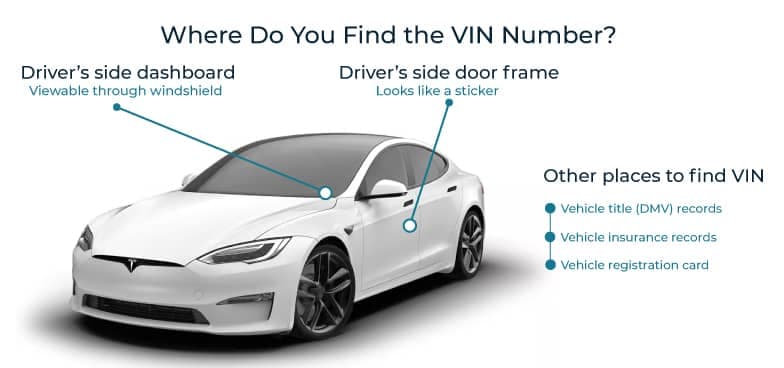
Where to Find the VIN on a Subaru?
Subaru usually places the VIN in several standard spots so you (and inspectors and law enforcement) can read it without tearing the car apart. Regulations also require the VIN to be readable from outside the vehicle in normal markets like the U.S.
- Dashboard, driver’s side: Stand outside the car and look through the lower corner of the windshield on the driver’s side.
- Driver’s door jamb / B-pillar: Open the driver’s door and check the label on the door frame (B-pillar).
- Engine bay: On many Subaru models, especially imports and older cars, the VIN or chassis number appears on a metal plate in the engine bay, often near the strut tower or firewall.
- Other body locations on older vehicles: Some classic Subaru cars may have the VIN stamped on inner fenders or other body panels.
- Paperwork and records: You’ll also find the Subaru VIN printed on the registration, title, insurance documents, and in dealer or service records.
Need More Than the VIN? Get a Subaru Vehicle History Report
A Subaru VIN decoder verifies the vehicle's original factory specifications. A full Subaru vehicle history report provides a deeper look into the vehicle's past. See what you’ll get below:
Vehicle Specifications
Review your Subaru’s recorded engine, transmission, drivetrain, and factory equipment. Since many models feature Symmetrical All-Wheel Drive, confirm the specific configuration rather than assuming every Subaru has identical specifications.
Ownership History
Explore available ownership changes and registration records to understand your Subaru’s background. For vehicles advertised for winter driving or outdoor adventures, ownership records provide context but cannot confirm how the vehicle was actually used.
Title Status & Branding Records
Check available salvage, rebuilt, flood, junk, or other title brands. If a Subaru has sustained collision or flood damage, verify its title records carefully because previous repairs can affect safety, value, and insurability.
Lien & Financial Records
Verify whether any lender currently holds, or previously held, a financial interest in the vehicle. This helps ensure the Subaru can be transferred without unexpected liens or outstanding financial obligations.
Theft & Recovery Records
Check available theft and recovery records associated with your Subaru’s VIN. If a record appears, verify it with the appropriate authorities, since a history report cannot guarantee that a vehicle has never been stolen.
Recall Records
Review manufacturer-issued and regulatory recall information associated with the VIN, including affected components, recall dates, and available repair status, to determine whether outstanding safety recalls have been addressed.
Service & Maintenance History
Explore available maintenance and repair records, including oil changes, inspections, tire rotations, and drivetrain servicing. Subaru’s maintenance requirements vary by model and year, making service documentation useful when evaluating an older vehicle’s condition.
Accident & Damage History
Review reported incidents involving the Subaru vehicle, including collision damage, flood damage, fire, hail, or structural repairs. Available records include dates, locations, and damage severity information.
Odometer Readings & Mileage Timeline
Compare recorded mileage over time to identify inconsistencies or possible odometer discrepancies. Check available readings against service invoices and inspection records to better understand your Subaru’s mileage history before completing a purchase.
Auction & Sales Records
Review available auction appearances and historical listings, including sale dates, prices, condition notes, and photos. Previous Subaru listings may reveal disclosed damage or changes in condition, but historical descriptions cannot replace a current vehicle inspection.
Free Subaru VIN Decoder vs. Paid Subaru VIN Check
A free Subaru VIN decoder helps you to get the basic yet detailed information of the vehicle, like engine, transmission, country of origin, and much more. In addition, the paid VIN check can be used to check the vehicle’s past.
Feature | Free VIN Decoder | History Report (Paid) |
|---|---|---|
VIN decoding for all vehicle types | ||
Year, make, model, trim | ||
Full vehicle specifications / detailed car specs | ||
Market value snapshot | ||
Sales listings (current/online ads) | ||
Sales history (timeline of past listings/sales) | ||
Auction records (when available) | ||
Auction history with photos | ||
Mileage during auction/sales (when available) | ||
Odometer rollback checks | ||
Ownership history | ||
Vehicle usage type (personal, fleet, rental, commercial) | ||
Title brand records (salvage, rebuilt, flood, lemon, etc.) | ||
Lien & loan records | ||
Accident & damage history | ||
Theft / stolen records | ||
Flood/hail/fire damage checks | ||
Service/repair records | ||
Warranty status & coverage | ||
Recall information |
How a Vehicle History Report Helps a Buyer in Real Life
Killian wanted to purchase a used 2015 SUBARU OUTBACK from a private seller in Michigan. He decided to purchase the vehicle history report to check the vehicle history and overall condition.
First Impressions
The car looks proper with no visible dents, scratches, or signs of repainting. However, the selling price was way under the market, and this is why it's a bit suspicious.
What He Sees on the Report
This is what he saw on the report.
- 1 Record(s) of damage
- 6 lien or loan records
- 1 sales record
- The vehicle has a corrected title record
The Outcome
Killian decided not to purchase the vehicle and to find another one that has a better price and history.
Why Use Instant VIN Reports for a Subaru VIN Decode?
Instant VIN Reports make it easy to verify important information about any Subaru. Whether you're researching a used vehicle, confirming factory specifications, or checking its history before making a purchase.
Frequently Updated Data
Vehicle information is continuously refreshed using trusted automotive databases like Vehicle Databases.
Simple Pricing
Basic Subaru VIN decoding is free. If you need additional insights, a vehicle history report is available through a simple one-time purchase.
24/7 Customer Support
Have questions about your VIN or report? Our customer support team is available 24 hours a day.
Fast Results
Enter any Subaru VIN to access factory specifications and available vehicle information in less than a minute.
Who Can Benefit From a Subaru VIN Decoder?
Whether you're purchasing a used Subaru, selling your current vehicle, managing dealership inventory, or restoring a classic model, decoding the VIN helps verify factory information and supports more confident decisions.
Buyers
Check the model year, engine, transmission, trim, and drivetrain before buying. Confirm that the Subaru’s decoded details match the seller’s description.
Sellers
Share accurate factory specifications with potential buyers to create clearer listings, answer questions, and build confidence when selling your Subaru.
Dealerships
Verify Subaru specifications, check inventory records, evaluate trade-ins, and prepare accurate listings across different models, trims, and drivetrain configurations.
Subaru Owners & Enthusiasts
Explore factory specifications for everyday models, WRX performance cars, and classic Subarus to better understand original equipment and vehicle configurations.
Restoration Specialists
Use available factory details to identify original configurations, guide parts selection, and help preserve the authenticity of classic Subaru models.
Insurance Companies & Vehicle Appraisers
Use available VIN-based specifications to support vehicle identification, valuations, claims assessments, and documentation for Subaru cars with different trims and equipment.
Decode Classic and Modern Subaru Models
Our Subaru VIN decoder supports a wide range of classic and current Subaru models, helping owners, buyers, sellers, and enthusiasts verify factory specifications, production details, trim information, and other original vehicle data.
| Outback | Forester | Crosstrek | Impreza | WRX | WRX STI |
| Legacy | Ascent | BRZ | Baja | XV | Tribeca |
| 360 | Sambar | R-2 | BRAT | Leone | XT |
| Legacy | Impreza | SVX | Outback |
Find Out What a Subaru VIN Reveals
Review recorded specifications, verify vehicle details, and explore additional history records when a closer look is needed.
FAQs About Subaru VIN Decoder
How to decode a VIN older than 1980?
VINs used before 1981 were not standardized, so their length and format varied by manufacturer, typically ranging from 5 to 13 characters. To decode a classic VIN, you'll need to know the vehicle's make, model, and approximate year of manufacture, then use a trusted decoder or reference database such as Instant VIN Reports.
What does the 6th digit in a Subaru VIN number mean?
On many Subaru vehicles, the sixth character of the VIN helps identify the engine configuration. However, VIN character assignments vary by model and production year, meaning the same character may represent different engines across different Subaru models.
Do classic cars have different VIN numbers?
Classic cars generally have a single VIN or serial number assigned by the manufacturer. In some cases, however, a replacement VIN or secondary identification number may have been issued by a government agency or during a restoration, importation, or title correction process.