
Free Aston Martin VIN Decoder Tool - Lookup Any Modern & Classic Aston Martin Now
Buying an Aston Martin should feel exciting, not risky. With Instant VIN Reports, you can decode an Aston Martin VIN number to confirm key details, then upgrade to a full vehicle history report if you want deeper records and a clearer picture.
What is an Aston Martin VIN Decoder?
An Aston Martin VIN decoder is a tool that reads the characters in a VIN number and turns them into plain information, like manufacturer, vehicle attributes, and other coded details. In the U.S., VIN rules require a 17-character VIN on on-road vehicles sold for the standardized era, which is why decoding can be consistent for newer cars.
Because Aston Martin produces relatively low-volume, handcrafted vehicles with numerous bespoke options, verifying the VIN is especially important. Two cars that appear nearly identical may have different engines, trim packages, interior configurations, or factory equipment.
Instant VIN Reports also supports many classic Aston Martin VINs and chassis numbers from 5 to 14 characters, helping owners and collectors identify pre-1981 vehicles.
Why Decode an Aston Martin VIN?
Decoding your Aston Martin Vehicle Identification Number (VIN) is essential to instantly verify authenticity and catch fraudulent listings (such as modified models or "VIN cloning"). Here are some other reasons why you must decode your Aston Martin VIN:
Verify the Original Factory Configuration
Luxury grand tourers are often ordered with bespoke colors, interior materials, carbon fiber packages, and optional performance upgrades. Our VIN lookup helps confirm the vehicle's original factory specification.
Confirm the Correct Model
Many Aston Martin models share similar styling across generations. Decoding the VIN helps distinguish between Vantage, DB11, DB12, DBS, Vanquish, Rapide, DBX, and special editions.
Verify the Original Engine
Aston Martin has produced vehicles with V8, V12, and hybrid powertrains. The VIN helps confirm which engine the vehicle originally received before you buy.
Compare Against the Listing
A free VIN lookup lets you compare factory specifications with an online listing and identify incorrect model years, engine descriptions, or trim claims before contacting the seller.
What Information Does an Aston Martin VIN Decoder Show?
Every Aston Martin VIN contains factory information recorded during production. Here is what you’ll see when you run our free VIN lookup:
Original Model
Confirm the exact Aston Martin model before comparing listings or ordering replacement parts.
Engine Specifications
Verify the original engine family, displacement, fuel type, and factory configuration.
Body Style
Identify whether the vehicle left the factory as a coupe, roadster, SUV, convertible, or sedan.
Trim
Review the factory trims and other basic production information.
Transmission
Identify the original factory-installed transmission.
Production Year
Confirm the exact model year before evaluating pricing or compatibility.
Country of Manufacture
Verify the vehicle was manufactured in the United Kingdom.
Original MSRP & Market Value
Compare the original MSRP with today's estimated market value before negotiating.
How to Use the Aston Martin VIN decoder
Using the tool is simple, even if you’ve never decoded a VIN in your life. You just need the VIN (or a classic identifier for older Astons), then follow a short step-by-step flow below:
Enter the VIN
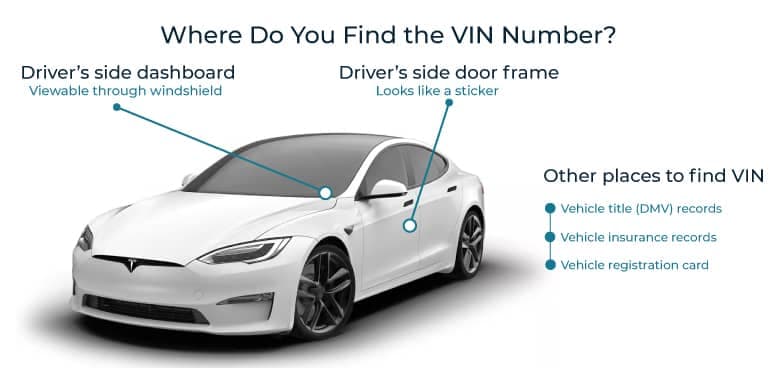
The first step to run the decoders is to enter the VIN in the form above. You can find the VIN on the dashboard near the windshield, the driver door jamb, or your documents. For older Aston Martins, look for the chassis/ID number on plates or stamped areas.
Fill Out the Form
After you find the VIN, enter the Aston Martin VIN carefully. One wrong character can change the result, so it’s worth a second look.
Check the Vehicle Specs
In seconds, you will see the free decode for the basics. If you need deeper checks like title brands, mileage records, accidents, or liens, continue to the full vehicle history report.
How To Read a 17-Digit Aston Martin VIN Number
If you’ve never read a VIN before, you’re not alone. Most people only look at it when they’re about to buy, sell, insure, or ship a car. With Aston Martin, it’s worth the extra minute. The VIN splits into three sections: WMI, VDS, and VIS. Once you see that pattern, the rest feels less mysterious. Below are examples of one of the Aston Martin VINs.
Aston Martin VIN Positions Explained For: SCFSMGAW9LGN04181
WMI (World Manufacturer Identifier)
Position 1 (S)
Country of manufacture: United Kingdom
Position 2 & 3 (CF)
Aston martin
VDS (Vehicle Descriptor Section)
Positions 4 to 8 (SMGAW)
Identifies the model, engine, body style, restraint system, and factory specifications.
Position 9 (9)
Check digit used to validate the VIN.
VIS (Vehicle Identifier Section)
Position 10 (L)
Model Year: 2020
Position 11 (G)
Assembly Plant
Positions 12 to 17 (N04181)
Sequential production number
Classic Aston Martin VIN Decoder (Pre-1981)
Many Aston Martin vehicles built before 1981 don't use today's standardized 17-character VIN. Instead, they typically carry 5- to 14-character chassis numbers, with formats that vary depending on the production era and model.
Whether you're researching a vintage DB2, DB4, DB5, DB6, V8 Vantage, Lagonda, or another classic Aston Martin, decoding the original chassis number is essential for verifying authenticity, production details, and restoration accuracy.
Instant VIN Reports supports both modern 17-character Aston Martin VINs and eligible classic chassis numbers from 5 to 14 characters. Simply enter your VIN or chassis number to retrieve available factory information and identify the original specifications of your Aston Martin.
Where to Find the VIN on an Aston Martin?
Most VIN searches fail for a simple reason: people copy the wrong number from the wrong label. Check these common locations first.
- Driver-side dashboard (visible through the windshield): Common on modern vehicles.
- Driver-side door jamb or B-pillar label/plate: Often used for official labeling.
- Engine bay identification plate: Useful when exterior labels are missing.
- Chassis stamping (older/classic cars): May be on the frame or a stamped chassis area.
- Vehicle documents: Title, registration, insurance paperwork (good for cross-checking).
Need To See More? Get the Full Aston Martin Vehicle History Report
An Aston Martin VIN is not just paperwork. It’s a shortcut to the car’s identity, its patterns, and the stuff sellers forget to mention.
Vehicle Specifications
With an Aston Martin VIN decoder, you can usually confirm the basics like year, make, model line, and general configuration. With the premium Aston Martin vehicle history report, you may see deeper factory-style details too, like engine type, body class, drivetrain notes, and other identifiers that help you compare the listing to the real build.
Ownership History
Ownership history is about tracking the chain of custody. It won’t magically tell you a person’s full story, but it can show patterns that matter, like how often the Aston Martin changed hands and when. A car that bounces owner-to-owner quickly can be fine, or it can be a quiet warning.
Mileage History
Mileage history helps protect you from overpaying. On high-value Aston Martins, even small mileage inconsistencies can affect long-term value, service planning, and resale confidence. Reviewing recorded mileage entries gives you a clearer picture before you commit.
Lien/Loan Check
A lien or loan flag can matter more than people realize. If there’s an outstanding financial interest reported, the vehicle can be harder to transfer cleanly, and that can turn into a headache later.
Title Brand Records
Title brands are labels tied to major events in a vehicle’s life, like salvage, rebuilt, junk, or lemon branding, depending on what’s recorded. This section matters because title brands can impact value, insurability, financing, and resale. With luxury brands like Aston Martin, a branded title can also affect collector interest.
Theft Records
Theft checks look for theft-related records that may be available through reporting systems. It’s not about paranoia, it’s about basic protection. If a car is flagged stolen, you don’t want to be the person who finds out after money changes hands. For Aston Martin buyers, this matters even more because high-end vehicles can move across borders quickly.
Accident and Damage Records
If an Aston Martin has accident entries in available records, this section can show that something happened, and the available record of the event type. Accidents can affect safety systems, alignment, and long-term reliability even when the exterior looks perfect.
Recalls Check
Recall info is about safety and compliance, not gossip. A recall check can show whether the vehicle has had recall activity recorded and what recall categories may apply. For an Aston Martin owner, this can help you plan the next steps with the proper service channel. It also reduces stress, because you’re not guessing.
Service & Maintenance Records
Service and maintenance entries can show reported service moments, like routine maintenance or repair notes recorded by participating sources. For Aston Martin, service history is a big deal because upkeep is part of ownership, not an optional hobby.
Auction and Sales History
Auction and sales history can show if the Aston Martin appeared at auction events or online listings activity over time. It can show when the Aston Martin was listed, when it may have changed hands, and how the vehicle moved through the market (when available). This is useful for spotting sudden price swings or repeated selling cycles.
Free Aston Martin VIN Decoder vs Vehicle History Report
A free decode is like reading the cover of a book. It’s useful and fast. But if you’re spending Aston Martin money, you may want to read a few chapters before you commit.
Feature | Free VIN Decoder | History Report (Paid) |
|---|---|---|
VIN decoding for all vehicle types | ||
Year, make, model, trim | ||
Full vehicle specifications / detailed car specs | ||
Market value snapshot | ||
Sales listings (current/online ads) | ||
Sales history (timeline of past listings/sales) | ||
Auction records (when available) | ||
Auction history with photos | ||
Mileage during auction/sales (when available) | ||
Odometer rollback checks | ||
Ownership history | ||
Vehicle usage type (personal, fleet, rental, commercial) | ||
Title brand records (salvage, rebuilt, flood, lemon, etc.) | ||
Lien & loan records | ||
Accident & damage history | ||
Theft / stolen records | ||
Flood/hail/fire damage checks | ||
Service/repair records | ||
Warranty status & coverage | ||
Recall information |
How Charlotte Used an Aston Martin VIN Decoder Before Buying
Charlotte had been searching for a 2020 Aston Martin Vantage and found one advertised through an online luxury car marketplace. So to make sure she entered the VIN into the free Instant VIN Reports Aston Martin VIN Decoder to make a better purchase.
VIN: SCFSMGAW9LGN04181
Initial Impression
- Found a competitively priced 2020 Aston Martin Vantage listed online.
- Seller claimed it had low mileage and was exceptionally well-maintained.
- The vehicle appeared to have its original factory configuration.
- Used the free VIN Decoder before arranging a viewing.
Critical Findings
- The free VIN Decoder confirmed the car was a 2020 Aston Martin Vantage (AM6) equipped with a 4.0L twin-turbocharged V8, Automated Manual Transmission (AMT), and built in the United Kingdom, matching its original factory specifications.
- After upgrading to the full Vehicle History Report, Charlotte discovered the Aston Martin had a salvage title, a rebuilt history, two reported accidents, an insurance loss record, damage records, and three previous owners.
Outcome
The free VIN Decoder verified the Aston Martin's original factory configuration before Charlotte contacted the seller. The premium Vehicle History Report uncovered important ownership and damage history, giving her stronger negotiating leverage and helping her avoid paying collector-level pricing for a vehicle with a significantly different history.
Why 1 Million+ Drivers Choose Instant VIN Reports
Whether you're purchasing your first Aston Martin, adding a collector car to your garage, or verifying a rare limited-production model, Instant VIN Reports helps you make informed decisions before investing.
Decode Modern & Classic Aston Martin VINs
Support for modern 17-character VINs and many classic Aston Martin chassis numbers from 5 to 14 characters.
No Hidden Subscriptions
Run free Aston Martin VIN decodes anytime. Upgrade only when you need the complete Vehicle History Report.
24/7 Customer Support
Need help understanding your Aston Martin VIN or Vehicle History Report? Our support team is available to assist.
Luxury Vehicle History You Can Trust
Our reports combine trusted vehicle history sources to uncover records that may significantly affect a luxury vehicle's value.
Who Should Use an Aston Martin VIN Decoder?
An Aston Martin VIN Decoder is valuable for anyone buying, selling, maintaining, or collecting Aston Martin vehicles. Verifying the VIN helps confirm originality before making important financial decisions.
Luxury Car Buyers
Verify the original engine, model, transmission, and factory configuration before purchasing a pre-owned Aston Martin.
Aston Martin Owners
Confirm factory specifications before ordering replacement parts, scheduling maintenance, or documenting your vehicle.
Collectors
Verify production details and factory originality for limited-production Aston Martin models, helping support authenticity and long-term collector value.
Dealers
Verify inventory, identify original factory equipment, and create more accurate listings for luxury vehicles.
Restorers
Decode pre-1981 chassis numbers to identify original factory specifications before beginning a restoration or authenticity verification.
Sellers
Increase buyer confidence by confirming the vehicle's original specifications before listing it for sale.
Supported Aston Martin Models
Our Aston Martin VIN Decoder supports nearly every modern Aston Martin, along with many classic Aston Martin chassis numbers built before 1981.
| DB7 | DB9 | DB11 | DB12 | DBS |
| DBS Superleggera | Virage | Vanquish | Vanquish S | Vantage |
| V8 Vantage | V12 Vantage | Vantage Roadster | One-77 | Valour |
| Victor | DBX | DBX707 | DBX S | Valkyrie |
| Valkyrie Spider | Valhalla | AM-RB 001 | CC100 Speedster Concept | Rapide |
| Rapide S | Lagonda Taraf | Lagonda | DB2 | DB2/4 |
| DB Mark III | DB4 | DB5 | DB6 | DBS |
| V8 | V8 Vantage | Lagonda Series 2 |
Frequently Asked Questions about Aston Martin VIN Decoding
Where is the VIN/chassis number located on an Aston Martin?
On most modern Aston Martins, the VIN is commonly shown at the lower edge of the windshield on the driver’s side, and also on the driver’s side door area (a label or plate). Some models also have VIN markings or plates in the engine bay.
For certain Aston Martin models, the VIN may also be stamped in a body or floor area. If you want the quick route, use Instant VIN Reports after you find the number, and we’ll decode what it says.
How do I decode the VIN on a classic Aston Martin (e.g., DB5, DB6)?
Many classic Aston Martins do not use the modern 17-character VIN format, so decoding usually means working with a chassis number and period-specific numbering rules. That’s normal for collector-era cars.
The safest move is to copy the chassis number exactly as stamped or plated, then run it through a decoder that supports classic formats. Instant VIN Reports can help decode many classic Aston Martin identifiers, and then you can use the paid report when records exist for deeper checks.
Can I check the provenance and ownership history of an Aston Martin with the VIN?
You can often check ownership-related patterns and reported events with the VIN, but it depends on what has been recorded and what is legally available in datasets. You typically won’t see personal private details, but you may see useful signals like the available owner count, title events, and timeline patterns.
For a high-value Aston Martin, this is one of the most practical reasons to run a premium report on Instant VIN Reports.
How do I verify the authenticity of an Aston Martin using the VIN/chassis number?
Start by matching the VIN/chassis number across multiple places: the physical car, the title/registration, and any seller documents. If the numbers don’t match perfectly, pause. Next, decode the number to confirm the identity details make sense for the model and year being claimed.
For classics and rare editions, official authentication services may exist, but for day-to-day screening, Instant VIN Reports helps you spot obvious mismatches fast.
What's the difference between a VIN and a chassis number on an Aston Martin?
A VIN usually refers to the standardized 17-character format used on modern on-road vehicles. A chassis number is often what you’ll see on older and classic Aston Martins, and it may be shorter and structured differently.
People mix the terms because both are “the car’s ID,” just from different eras. If you have a modern Aston, use our Aston Martin VIN decoder. If you have a classic, you can still use Instant VIN Reports for many chassis-style formats.
How do I find the production date and original factory specs of my Aston Martin?
A VIN can help confirm model year and other identifiers, but the exact production date and full original spec list are not always guaranteed from basic decoding alone. Use the Aston Martin window sticker lookup tool by Instant VIN Reports and see the exact specifications, standard features, optional upgrades, color choices, fuel economy, and pricing when the car left the factory.
How do I decode the VIN for a modern Aston Martin (post-2001) with the 17-digit format?
Modern Aston Martins use the 17-character VIN structure. In simple terms, the first section identifies the manufacturer, the middle describes the vehicle type/config, and the last section identifies the specific car, including model year code and serial sequence.
The easiest way is to enter the VIN into Instant VIN Reports for an Aston Martin VIN lookup. You’ll get quick results, and you can move to the premium report for deeper history checks.
How can I use the VIN to check if an Aston Martin has been in an accident or has salvage history?
Enter the VIN into a vehicle history report tool that checks recorded events. Accident records and salvage/title brand history are not typically shown in a basic free decode. That’s exactly why the full Aston Martin vehicle history report exists.
Use Instant VIN Reports to run the initial VIN check, then upgrade to see reported accident entries, damage indicators, and title brand records when available.