

Get 20% off Vehicle History Reports & Window Stickers: Use code: on checkout [Get 20% off ]

Honda VIN Decoder

Free Honda VIN Decoder for cars, motorcycles, and ATVs. Get model, trim, engine, year, and other core specs instantly. Classic Hondas? We read many pre-1981 numbers, too.  Need accidents, mileage timeline, title brands, or liens? Upgrade in one click.

10% OFF
question-mark Why do we need your phone number?
Why do we need your phone number?
We'll send your vehicle report or sticker link via text for easy access.
Our support team may contact you if we find issues with your report or sticker.
Your data is never shared with third parties.
Get 10% off your purchases by providing your phone number.

What is a Honda VIN Decoder?

A Honda VIN decoder is a tool that reads your Vehicle Identification Number (the standardized 17-character ID used since 1981) and turns it into easy details, including the model, engine, body, year, and more. It’s the sensible first step before buying or selling. Have an older Honda with a shorter ID? We can read many of those, too.

What is a Honda VIN (Vehicle Identification Number)?

A Honda VIN is a unique code assigned to each vehicle. Since the early 1980s, road vehicles have used a standardized 17-character VIN that encodes the maker/region (WMI), the vehicle attributes (VDS), and model year/plant/serial (VIS). 

Checking the VIN is usually the first step when buying a used Honda, as it confirms the vehicle’s true identity and helps identify potential issues early (e.g., titles, mileage discrepancies, recalls, accidents). Typical facts you can read from a Honda VIN:

  • Country of origin, manufacturer, and vehicle type
  • Core specs: engine and transmission family, body class, drivetrain
  • Model year, assembly plant, and serial sequence
Free vin decoder

How to Read a Honda VIN Number?

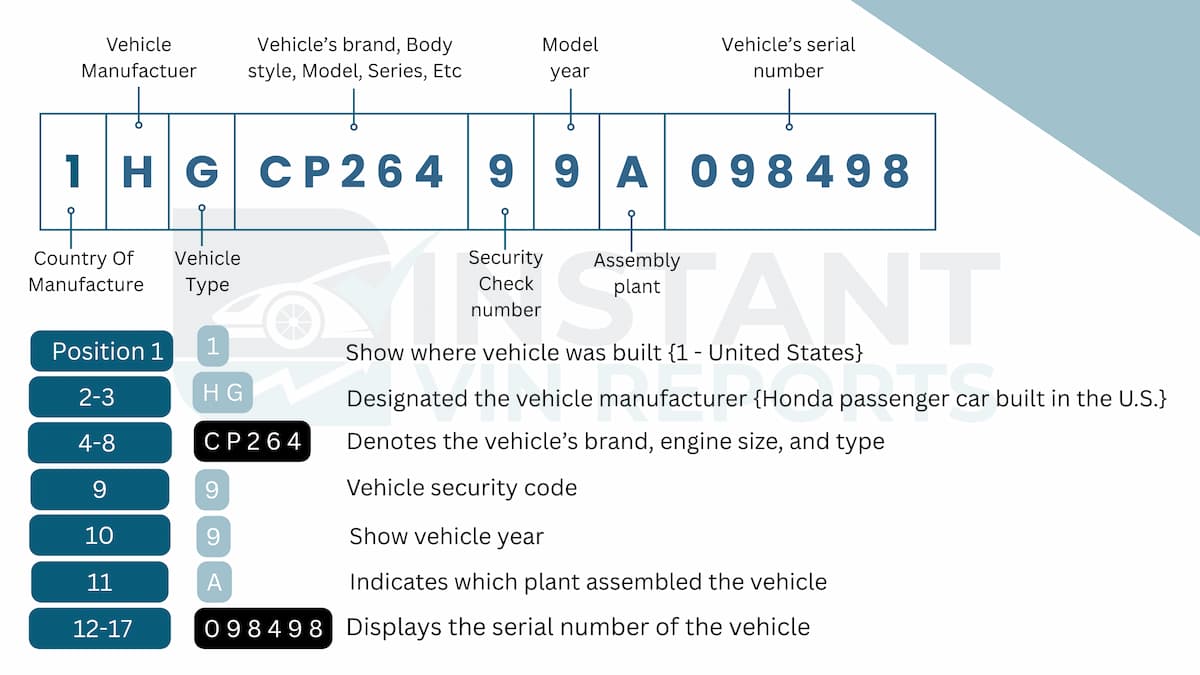
A modern VIN has 17 characters split into three parts. You don’t need to memorize them, but it helps to know what each chunk roughly means. 

How to Read a Honda VIN Number?

WMI (World Manufacturer Identifier)

The first three characters of the VIN are the vehicle origin story. It confirms the maker (Honda) and the broad build region/type. Great first check for authenticity.

Typical Honda patterns you might see (varies by model/market/year)

  • 1HG – Honda passenger car built in the U.S.
  • 2HG – Honda passenger car built in Canada
  • 5J6 – Honda multipurpose/SUV built in the U.S.
  • JHM – Honda passenger car built in Japan
  • JH2 – Many Honda motorcycles (Japan-origin WMI)

Why it matters

  • Confirms seller claims (made-in-region, vehicle type).
  • Helps parts counters choose the right spec (some regions use different components).

VDS (Vehicle Descriptor Section)

This part is the personality profile, containing the 4th to 9th digits. It captures what the Honda is, mechanically and structurally. So, you can confirm the exact trim/engine you’re paying for, and guide parts, fluids, and service choices, making it fewer wrong orders, fewer headaches.

What it covers:

  • Series/body class (sedan, hatch, MPV, motorcycle frame style)
  • Engine family (e.g., L15, R18, K24, etc. as applicable)
  • Transmission/drivetrain (manual/automatic/CVT; FWD/AWD where encoded)
  • Safety/Restraint systems (airbags, ABS/ESC indicators by code set)
  • Check digit (position 9) – a math checksum that catches typos or tampering

VIS (Vehicle Identifier Section)

These parts are the remaining digits (10th-17th). This is the time stamp and the unique serial, making it your Honda’s fingerprint. Here are the details:

  • 10th character = Model Year code
    examples:

    • 2018=J, 2019=K, 2020=L, 2021=M, 2022=N, 2023=P, 2024=R, 2025=S
      (I, O, Q, U, Z aren’t used as year codes.)

  • 11th character = Assembly plant code
    A letter/number assigned by Honda; it ties to the specific factory.

  • 12th–17th = Serial sequence
    The production number that makes your Honda unique.

Why it matters:

  • Verifies the true model year (handy when listings round up or down).
  • Plant codes can explain minor spec differences.
  • The serial lets recalls and service bulletins pinpoint your exact unit.

If you have an older Honda, such as a car, motorcycle, dirt bike, or ATV, the ID might not be a modern 17-character VIN. Many classics use a shorter chassis number and a separate engine number. They’re usually stamped into metal, not printed, so they can be faint under paint, rust, or grime.

Where to Find the VIN on a Honda?

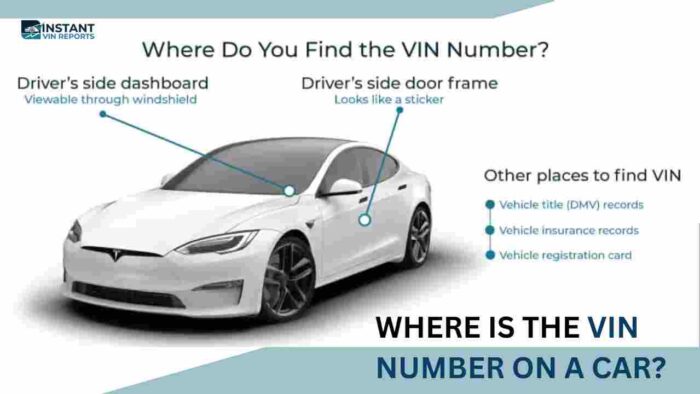
Modern and older Hondas usually display the VIN in these spots:

  • Windshield plate (driver side): Look through the glass at the base of the dashboard
  • Driver-door jamb/B-pillar label: Open the door; the certification label shows the VIN (plus tire/weight info).
  • Engine bay/chassis (older models, some motorcycles/ATVs): Stamped on the frame, steering head, firewall, or radiator support.
  • Paperwork: Registration, title, insurance card, service invoices.

Tip for classics: bring a flashlight and check inner fenders or frame rails. Older stampings can be hidden.

Where is the VIN Number On A Car

What Information Can You Get from a Honda VIN Decoder?

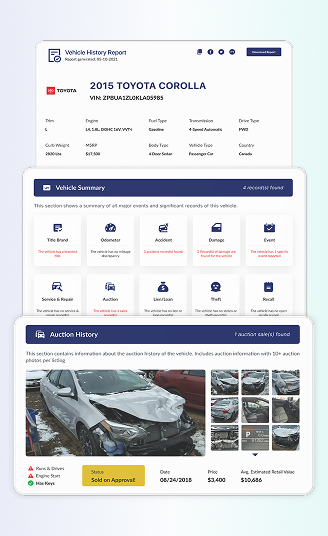
Curious what the numbers actually mean? This Honda VIN Decoder turns that 17-character code into plain facts, such as specs, history signals, and the works, tied to the VIN. Below are the details of what you can get from a Honda VIN decoder by Instant VIN Reports:

Vehicle Specifications

This is the identity card, you can see the model/series (e.g., Civic, Accord, CR-V, Pilot, Odyssey), body style, engine family, transmission, drivetrain, curb data, and more. It answers “What exactly am I looking at?” and helps match parts, fluids, and service procedures.

Mileage History

We line up recorded odometer readings from inspections, registrations, and auctions. Smooth increases are normal; sudden drops can flag a potential rollback or data error. Worth asking about before cash changes hands.

Auction History

If the Honda crossed an auction block, you’ll see the records, including the date, locations, run/sale status, lane/lot, and sometimes up to 10 auction photos. Super handy for comparing past and present conditions.

Accident & Damage History

See the reported crashes, dates, locations, and severity class. For older Hondas, this can explain repaint, panel work, or alignment notes. Good to know before pricing or before a long road trip.

Recalls Check

View the manufacturer recall entries tied to the Honda VINs, including the dates and brief reasons. If a remedy is open, book the fix with a Honda dealer. Make sure that the Honda vehicle is safe for the road.

Title Brand Records

Our Instant VIN Reports check the vehicle title brands like clean, salvage, rebuilt, flood, lemon/buyback, and more (when available). Title brands change value, insurability, and sometimes safety considerations. Better to see them upfront.

Theft Records

If a Honda was reported stolen, we will show you the records details, including the status, date, and reporting location. By knowing this information, you can avoid legal headaches and paperwork traps.

Warranty Status

For newer Hondas, you may see whether standard factory coverage appears active or expired (based on model year/mileage markers or provided data). Always confirm specifics with a Honda dealer.

Market Value

This section shows you a quick snapshot of comparable sales and recorded listings. You can use it to negotiate confidently. Pair it with condition, mileage, and any title notes for a fair number.

Service & Maintenance Records

View the recorded service and maintenance of the Honda, including the oil changes, brake jobs, tires, and fluids. These maintenance lines give a view of real care. Gaps don’t always mean neglect, but a consistent trail is reassuring.

Ownership History

When available, you’ll see how many prior owners, approximate durations, and registration regions (e.g., coastal vs. dry climate). Long, steady ownership often signals consistent care; frequent flips may invite deeper questions.

Why Use a Honda VIN Decoder?

Many tools stop just viewing the specs or throw “invalid” or a blank screen on classic VIN/ chassis numbers. We interpret numerous pre-1981 Honda chassis formats and pair them with modern records where coverage exists. That means fewer dead ends for any classic Honda vehicles, whether it’s cars, bikes, or ATCs.

Who Can Benefit from Using a Honda VIN Decoder?

If you’re buying, selling, restoring, or just keeping a beloved Honda healthy, decoding the VIN is your shortcut to the truth.

For Buyers

  • Confirm the true model year from the VIN.
  • Scan title brands before test drives.
  • Catch mileage rollbacks or data gaps.
  • Check open recalls for safety.
  • Spot lien/loan issues early.

For Sellers

  • Build trust with VIN-backed specs.
  • Answer questions fast with a shareable report.
  • Prove no outstanding lien.
  • Support your asking price with data.
  • Reduce tire-kickers and low-ball offers.

For Dealers

  • Reduce listing errors across DMS/feeds.
  • Check odometer consistency at a glance.
  • Verify recall status for reconditioning.
  • Validate lien/loan status before payoff.
  • Use auction/sales traces to anchor appraisals.

How to Use the Free Honda VIN Decoder?

To use the Honda VIN Decoder, get the VIN (or classic chassis number) ready. Then follow these steps:

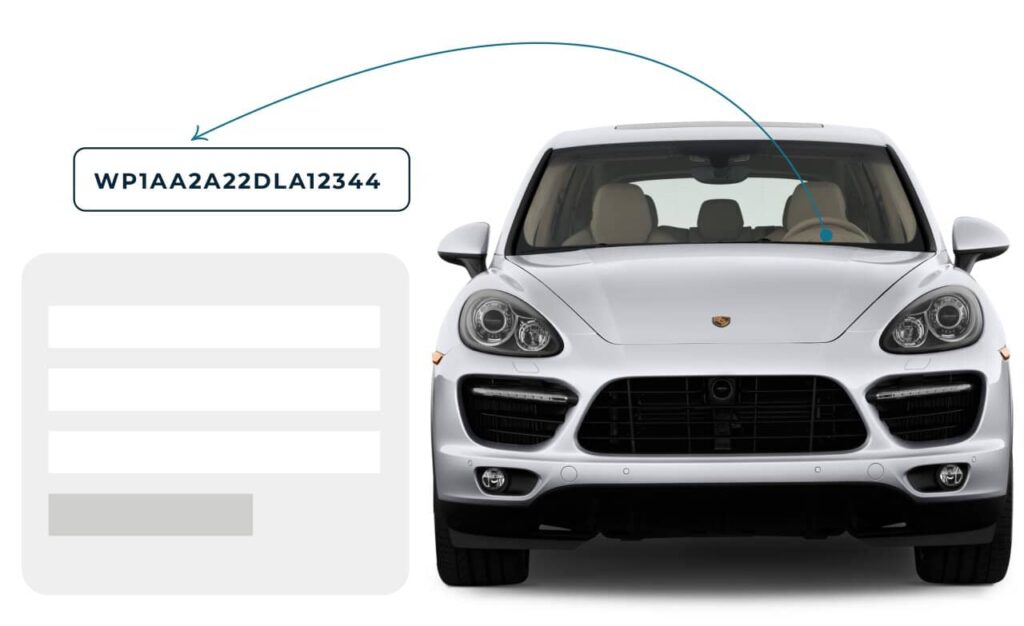
1) Find the VIN

Check the windshield plate, driver-door jamb, engine bay/frame on older vehicles, or your paperwork. For motorcycles/ATVs, look at the steering head or frame stamp.

2) Fill in the Form

Enter the full 17 characters (no spaces). For pre-1981 classics, type the shorter number exactly as stamped. Take your time! One wrong character can change the result.

3) Get the Report

You’ll see core specs for free. Need the full story (title brands, accidents, mileage, liens, theft, recalls, service, auction photos)? Upgrade to the paid history report.

Free Honda VIN Decoder vs. Paid Honda VIN Decoder

The free Honda VIN Decoder is perfect for quick checks. The paid history adds the important context that moves deals forward (or saves you from a bad one). Here’s a side-by-side:

Feature Free VIN Decoder History Report (Paid)
VIN decoding for all vehicle types
Year, make, model, trim
Full vehicle specifications / detailed car specs
Market value snapshot
Sales listings (current/online ads)
Sales history (timeline of past listings/sales)
Auction records (when available)
Auction history with photos
Mileage during auction/sales (when available)
Odometer rollback checks
Ownership history
Vehicle usage type (personal, fleet, rental, commercial)
Title brand records (salvage, rebuilt, flood, lemon, etc.)
Lien & loan records
Accident & damage history
Theft / stolen records
Flood/hail/fire damage checks
Service/repair records
Warranty status & coverage
Recall information

Frequently Asked Questions about Honda VIN Decoder

Is a Honda VIN lookup really free?

Yes. Instant VIN Report shows you the core specs for free; if you need the Honda vehicle’s full history (e.g., title checks, accidents, liens, mileage, theft, recalls, service, auction photos), upgrade to the paid vehicle history report.

Can I use this tool to decode Honda chassis numbers?

Yes. We support numerous Honda chassis numbers. Just type the chassis number ito the form andd submit it. In seconds we will show you any available records history of your Honda.

Where can I find the VIN on a Honda motorcycle or ATV?

You can find the VIN on a Honda motorcycle or ATV, in common place like the steering head or frame (near the handlebars) and on documents. For older units, check the engine case and stamped frame rails.

Does IVR VIN Decoder cover motorcycles, ATVs, and side-by-sides, or only Honda cars and SUVs?

Yes. Our Honda VIN Decoder works for Honda cars, SUVs, and many motorcycles, dirt bikes, ATVs, and side-by-sides (coverage varies by year/market). You can start free for specs, then add history (titles, liens, mileage, theft, recalls, auctions) when needed. Try it at Instant VIN Reports: instantvinreports.com /vin-decoder.

Can a Honda VIN lookup show open campaigns?

A Honda VIN lookup can surface manufacturer recalls and sometimes service campaigns tied to that VIN. If a remedy is open, book it with a Honda dealer. We show what’s reported; the dealer can confirm completion status on the spot.

Will the VIN decode reveal my Honda’s factory specs and options?

Yes, our Honda VIN Decoder returns year, model, trim, body class, engine, transmission, drivetrain, and more. For some vehicles, we also show build data or window-sticker details when available. It’s a fast way to verify what the Honda really is before you negotiate.

How do I decode a Honda Civic VIN number?

To decode the Honda Civic VIN number, you can follow this guide:

  1. Find the VIN (windshield plate or driver-door jamb).
  2. Go to Instant VIN Reports and enter it in the Honda VIN Decoder.
  3. Review the preview. Need the full story, including title brands, mileage timeline, accidents, liens, recalls, and photos? Upgrade to the history report in one click.

How do I decode a Honda Quad VIN number?

To decode the Honda Quad VIN number, you can follow these steps:

  1. Locate the VIN on the frame, often on the steering head or front frame rail; also, check the paperwork.
  2. Enter it in our Honda VIN lookup at Instant VIN Reports.
  3. Get the specs, and other basic informations for free. If it’s older or pre-1981 with a shorter ID, we can interpret many legacy formats, including Honda.
  4. Add a paid report to see the usage/type, title brands, theft, mileage, recalls, any auction or sales records, and more.