


Freightliner VIN Decoder
Run the Freightliner VIN decoder, see the specs for free, and upgrade to the full history report that works for modern trucks and older classics, including those built before 1981 with shorter VIN numbers.
What is a Freightliner VIN Decoder?
A Freightliner VIN decoder is simply a tool that reads the vehicle’s VIN number and turns it into easily understandable facts about the truck. Since 1981, all road-legal vehicles must have a unique 17-character VIN that follows an international standard, detailing how the truck is built, and then pinpointing that single vehicle in the production line.
When you run a VIN lookup Freightliner truck through our decoder, you’re not just seeing basic specs. You’re tapping into data feeds that can show odometer readings reported over time, title and lien events, registration moves, damage and salvage records, safety recall information, and more, where it’s available.
And if your truck is older? Many Freightliner vehicles built before 1981 used shorter, non-standard VINs, but our system can still interpret many of those classic formats and attach history where records exist.
What is a Freightliner VIN (Vehicle Identification Number)?
A Freightliner VIN (Vehicle Identification Number) is a unique code assigned to each truck or chassis so it can be identified throughout its life. Checking the VIN is usually one of the first steps before buying a used Freightliner, because the VIN helps you avoid:
- paying for a truck that was badly damaged or written off in the past
- dealing with rolled-back mileage or “washed” titles
- buying a vehicle that still has unresolved safety recalls or serious mechanical issues
For older Freightliner trucks built before 1981, the identification number may be shorter and follow a different pattern, but it still serves the same purpose: to mark one specific vehicle so records can follow it over time.
How to Read a Freightliner VIN Number?
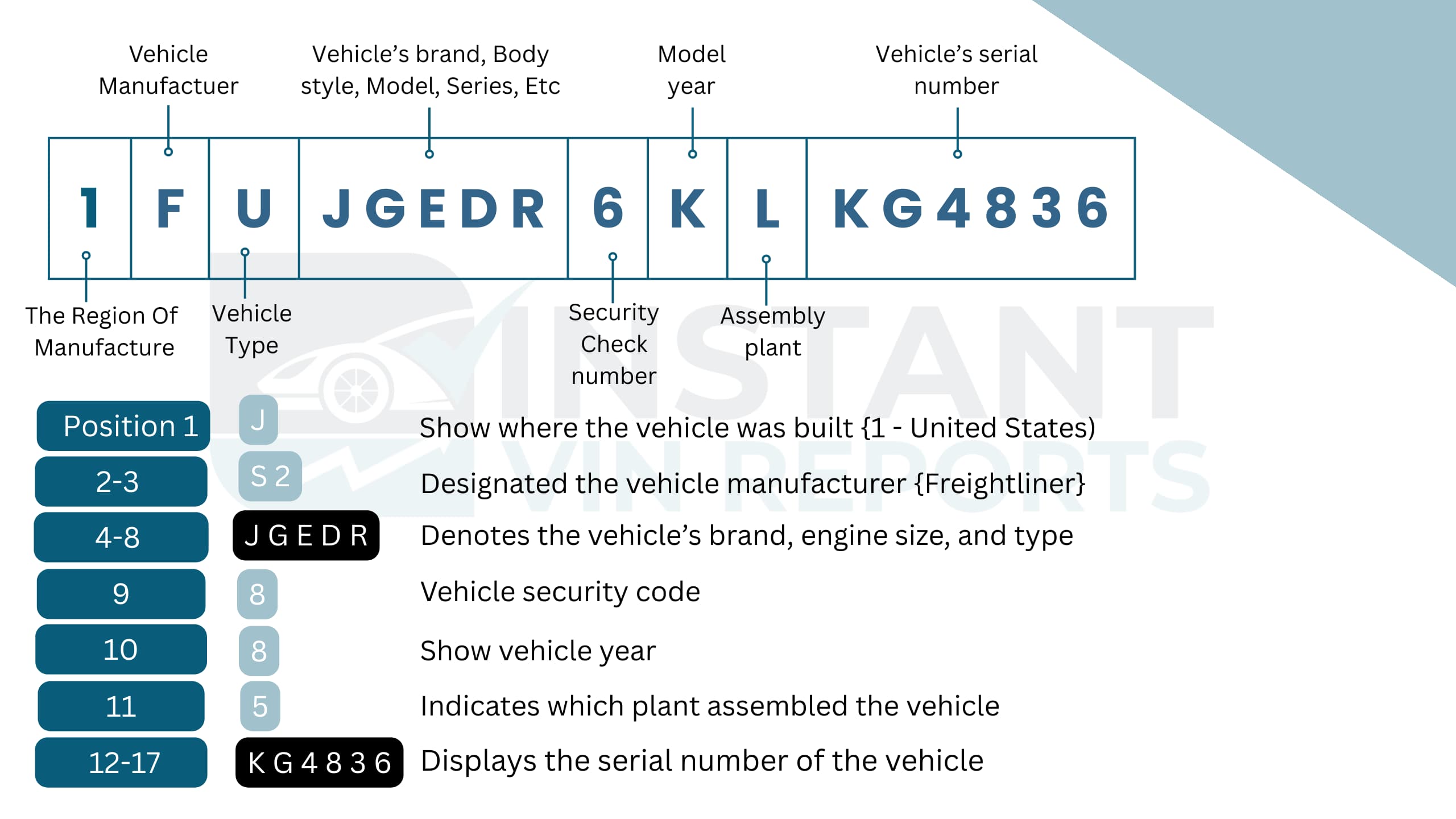
At first glance, a Freightliner VIN looks like random characters. But there’s actually a fixed layout behind it. If the truck was built for the 1981 model year or later, the VIN will have 17 characters and follow the same basic structure used across the industry.
You can think of it in three layers:
- Who built it and where
- How the truck is configured
- Which exact unit is it
Let’s break that down.
WMI (World Manufacturer Identifier)
The WMI is the first section of the VIN, made up of the first three characters. It’s assigned under international rules so that each combination points to a specific manufacturer and region.
For a Freightliner, these characters tell you that the vehicle belongs to the Freightliner brand within the Daimler Truck group and usually indicate whether it was built in North America or another market. Freightliner is a major division of Daimler Truck North America, whose parent company is Daimler Truck AG.
So when you look at those first three characters, you’re answering the “who built this truck and in which region?” question.
VDS (Vehicle Descriptor Section)
The VDS covers positions 4th through 9th. This section describes what kind of Freightliner you’re dealing with. On a Freightliner, this block can encode things like:
- model/series (for example, a highway tractor vs medium-duty)
- cab type and chassis configuration
- engine or weight class information
- restraint/brake/safety system details
- plus the check digit (often the 9th character), used to verify that the VIN is valid mathematically
On a Freightliner, the VDS is where you can distinguish, for example, a highway tractor from a medium-duty business-class truck or a specialized chassis. It’s also where the check digit lives (usually position 9 in North American VINs), which is used by official systems to confirm the VIN wasn’t mistyped or altered.
VIS (Vehicle Identifier Section)
The VIS is the last section, positions 10 through 17. This last block usually includes:
- 10th character: The model year code. You can see the model year code list in the table below:
| 10th Digit | Model Year | 10th Digit | Model Year | 10th Digit | Model Year | 10th Digit | Model Year |
|---|---|---|---|---|---|---|---|
| A | 1980 | M | 1991 | 2 | 2002 | D | 2013 |
| B | 1981 | N | 1992 | 3 | 2003 | E | 2014 |
| C | 1982 | P | 1993 | 4 | 2004 | F | 2015 |
| D | 1983 | R | 1994 | 5 | 2005 | G | 2016 |
| E | 1984 | S | 1995 | 6 | 2006 | H | 2017 |
| F | 1985 | T | 1996 | 7 | 2007 | J | 2018 |
| G | 1986 | V | 1997 | 8 | 2008 | K | 2019 |
| H | 1987 | W | 1998 | 9 | 2009 | L | 2020 |
| J | 1988 | X | 1999 | A | 2010 | M | 2021 |
| K | 1989 | Y | 2000 | B | 2011 | N | 2022 |
| L | 1990 | 1 | 2001 | C | 2012 | P | 2023 |
- 11th character: The assembly plant code
- 12th–17th characters: The truck’s unique serial number
For someone shopping for used Freightliner trucks, this is where you confirm that the advertised year and plant actually match what the VIN says. Fleet managers also rely on the VIS when tracking specific units, especially when safety recalls specify certain batches.
Of course, if you’d rather not decode these sections by hand, you can just plug the VIN into Instant VIN Reports’ Freightliner VIN number decoder and read everything in a simple, human-friendly layout.
Where to Find the VIN on a Freightliner?
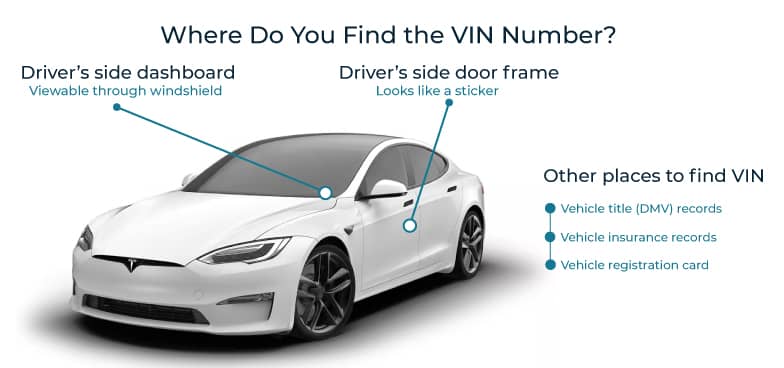
VIN locations can vary a bit by model and year, but Freightliner and industry documentation point to several common spots:
- Driver’s side door jamb or door frame: On many Freightliner trucks, the VIN appears on a printed or stamped label inside the driver’s door opening.
- Dashboard, near the windshield: Stand outside, look through the lower corner of the glass, and you may see the stamped number there.
- Left frame rail: The VIN can also be stamped into the left frame rail near the front axle, usually a couple of inches from the top edge.
- Under-hood sticker or partition area: Some models place an additional VIN label under the hood, on the top of the partition, or near the cowl area.
- Paperwork and digital records: If the physical VIN is hard to read, you can also find it on the vehicle title, registration papers, insurance documents, and many service invoices.
What Information Can You Get from a Freightliner VIN Decoder?
When you run a Freightliner VIN lookup with Instant VIN Reports, the VIN is used to pull data from large industry and official databases. That information is then organized into easy sections in your report.
Vehicle Specifications
This is the technical “ID card” of your Freightliner. The Freightliner VIN number decoder reads the VIN and brings back details like model line (like Cascadia, M2), engine family, transmission type, and other core specifications.
Accident Records
Here, the report gathers data on reported accidents, from minor fender-benders to serious damage claims. It may include dates, the state where it happened, and the severity indicators. For a heavy Freightliner truck, structural damage or frame issues can affect safety and long-term cost.
Damage History
Damage history goes beyond ordinary accidents. It looks for recorded damage like flood, fire, hail, or other serious events that may have been reported by insurance companies, auctions, or state agencies. Our Freightliner VIN number decoder pulls these warnings into one place, so you see hidden risks before they become expensive surprises.
Mileage History
Odometer rollbacks still happen, especially in high-mileage commercial vehicles. The mileage history section compares readings reported at different times, such as during registrations, inspections, or auctions. If the numbers jump backward or look suspicious, your Freightliner VIN decoder report will show it clearly.
Lien/Loan Check
This part shows if there are or were any recorded liens or loans tied to that specific Freightliner VIN. Buying a truck with an active lien can lead to serious trouble, including repossession battles. With a Freightliner VIN lookup, you can see if the title appears clear or if a finance company still has an interest in the vehicle, so you know if it is safe to buy.
Stolen Truck Records
Theft records show if the Freightliner has ever been reported stolen. Running a VIN lookup Freightliner check before handing over money is a simple way to avoid standing in the middle of a police dispute later.
Title Brand Records
Title brands are labels placed by state DMVs to show serious problems in a vehicle’s past, such as “salvage,” “rebuilt,” “flood,” or “lemon.” The title brand section of your Freightliner VIN decoder report tells you if the truck has carried any of these warnings. This directly affects insurance, value, and sometimes whether it can be used commercially.
Service & Maintenance Records
When available, this part lists reported service visits, such as oil changes, major repairs, and inspections. Regular maintenance records indicate that a Freightliner has been well-maintained. Long gaps or many emergency repairs may hint at hard use.
Vehicle Usage Record
Usage information looks at how the Freightliner was used in the past: personal use, commercial fleet, rental, or sometimes government/lease use, where that data is available. A lightly used owner-operator truck can be very different from a hard-working fleet tractor.
Auction History
Auction history shows if the truck appeared in wholesale or salvage auctions, with dates and the available information and photos. If a Freightliner has been through multiple auctions, that might signal heavy damage, repossession, or difficulty finding a buyer.
Sales History
Sales history tracks where and when the truck was sold, including the available data of sale type or price range, and photos. This helps you judge whether the current asking price makes sense and how the value has moved over time.
Recalls Check
This section compares the VIN with official recall data to see if your Freightliner is affected by any open safety campaigns. With one Freightliner VIN number lookup, you can see if the truck has ever been recalled and whether the record shows it as fixed or still outstanding. That is a big deal if you are putting the truck back into daily service.
Warranty Status
Some Freightliner trucks may still have the basic manufacturer warranty coverage, depending on age, mileage, and in-service date. Warranty status sections use VIN-based data to show whether any original coverage appears active.
Why Use a Freightliner VIN Decoder?
A Freightliner is often a serious investment, not just a random used car. Instant VIN Reports goes beyond a simple free Freightliner VIN decoder. Along with full specs, you get access to accident data, title brands, ownership changes, liens, theft checks, recalls, auction, and sales history, where available, all in one clean report.
For older trucks and classic Freightliner rigs with shorter VINs, we support dedicated “classic” decoding and show you the available records, so you are not left out just because your truck was built before the modern rules.
Who Can Benefit from Using a Freightliner VIN Decoder?
Whether you are restoring an older Freightliner, buying your first tractor for long-haul work, or managing a whole fleet, decoding the VIN helps you see what is really behind the paint. It reduces risk, supports fair prices, and keeps everyone honest.
For Buyers
- Confirm that the Freightliner’s exact model, trim, and engine match the ad.
- Check mileage history for signs of rollback or tampering.
- See any serious accidents or structural damage reported in the past.
- Spot title brands like salvage, rebuilt, or flood before it is too late
- Use market value data to negotiate a fair price for the Freightliner.
For Sellers
- Presenting a professional vehicle history to serious buyers.
- Showing clean title and lien status right away, reducing hesitation.
- Proving mileage accuracy with a documented odometer trail.
- Justifying your asking price with market value data and sales history.
- Reducing long back-and-forth arguments, because the Freightliner VIN lookup data is neutral.
For Dealers
- Screening trade-ins and auction purchases for title brands and major damage before bidding.
- Checking Freightliner VIN number lookup data across the whole inventory to avoid stocking risky units.
- Pricing trucks more accurately using market value and sales history.
- Creating transparent listings that build reputation and repeat business.
- Verifying mileage and usage patterns before offering warranties or in-house financing.
How to Use the Free Freightliner VIN Decoder?
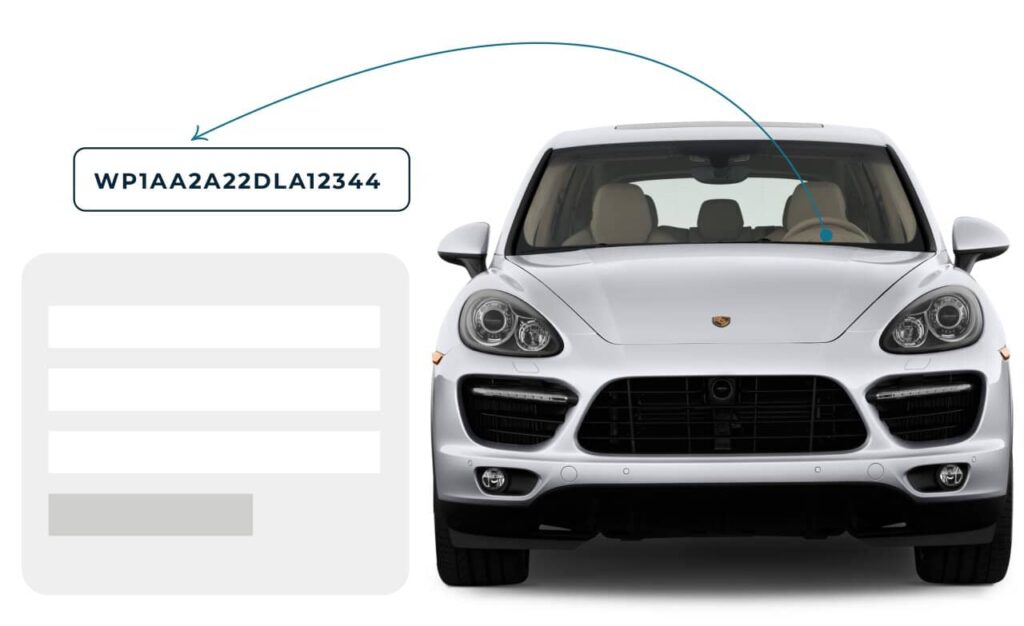
To use the free Freightliner VIN Decoder from Instant VIN Reports, you mainly need one thing: the VIN itself. After that, the process is very simple.
1) Find the VIN
On a Freightliner truck, the VIN is usually on the driver’s side door jamb, on a metal plate at the base of the windshield, or stamped on the left frame rail near the front.
2) Fill in the Form
Enter the VIN into the free Freightliner VIN decoder search box. Double-check each character and submit it.
3) Get the Report
In a few seconds, you'll see a preview of decoded specs and key checks from our Freightliner VIN decoder. Upgrade to access a full report with detailed information like accidents, title brands, and mileage history.
Free Freightliner VIN Decoder vs. Paid Freightliner VIN Decoder
A free Freightliner VIN decoder is a great starting point for checking VIN format and core vehicle specs. For a more in-depth analysis, Instant VIN Reports offers a full history report, which is essential when investing in a Freightliner or adding a truck to a fleet.
| Feature | Free VIN Decoder | History Report (Paid) |
|---|---|---|
| VIN decoding for all vehicle types | ||
| Year, make, model, trim | ||
| Full vehicle specifications / detailed car specs | ||
| Market value snapshot | ||
| Sales listings (current/online ads) | ||
| Sales history (timeline of past listings/sales) | ||
| Auction records (when available) | ||
| Auction history with photos | ||
| Mileage during auction/sales (when available) | ||
| Odometer rollback checks | ||
| Ownership history | ||
| Vehicle usage type (personal, fleet, rental, commercial) | ||
| Title brand records (salvage, rebuilt, flood, lemon, etc.) | ||
| Lien & loan records | ||
| Accident & damage history | ||
| Theft / stolen records | ||
| Flood/hail/fire damage checks | ||
| Service/repair records | ||
| Warranty status & coverage | ||
| Recall information |
Decode VIN by Other Manufacturers
Frequently Asked Questions about Freightliner VIN Decoder
How many digits does a Freightliner VIN include?
Most modern Freightliner trucks use a 17-character VIN, the same standard used for other vehicles built for the U.S. market since the 1981 model year, as required by federal and international VIN rules.
Older or classic Freightliners built before standardization may have shorter, non-17-digit numbers, but anything recent should have a full 17-character VIN.
Where is the Freightliner VIN?
On most Freightliner trucks, you can find the VIN:
- On a metal plate or sticker on the driver’s side door frame/jamb
- At the base of the windshield on the driver’s side, visible from outside
- Stamped on the left frame rail near or over the front axle
- On the engine-compartment panel or chassis label, depending on the model
These locations are confirmed in Freightliner and industry documentation.
How to decode Freightliner VIN?
To decode a Freightliner VIN, you must know that the VIN is split into three main parts:
- Positions 1–3 (WMI) – identify the manufacturer and country
- Positions 4–8 (VDS) – describe chassis configuration, model, cab, engine/brake group, and more
- Positions 9–17 (VIS) – include the check digit, model year, plant, and the serial number
You can read these positions by hand using official charts, but the easiest way is to run the number through a Freightliner VIN decoder (like Instant VIN Reports), which interprets the codes and shows you the build details and history in plain English
Which VIN digit reveals my Freightliner sleeper cab height?
There isn’t a universal VIN digit that indicates the exact sleeper cab height in inches. In Freightliner, the chassis configuration and cab type are found in positions 4th–6th of the VIN, which must be matched with a factory option chart or build sheet to determine if it’s a mid-roof or high-roof sleeper.
So to see the sleeper configuration or height, you usually:
- Decode the VIN with a professional tool or
- Pull a Freightliner build sheet/window sticker by VIN, which lists the sleeper cab configuration in clear text.