
Lexus VIN Decoder – Check Specs and Market Value
If you want to sell or buy a used Lexus, this Lexus VIN Decoder tool is for you. Enter a VIN (Vehicle Identification Number) in the form to decode a Lexus VIN and get detailed specs like engine, transmission, drive type, and more!
What is a Lexus VIN Decoder?
A Lexus VIN decoder is a tool that interprets a vehicle's VIN (Vehicle Identification Number) and turns it into easy-to-understand information. By decoding the VIN, you can verify important details such as the model, model year, engine, body style, trim level, manufacturing plant, and other factory specifications.
Instant VIN Reports supports modern and classic Lexus VINs while still showing detailed factory specification information to help buyers, sellers, and owners verify a vehicle's identity.
Why Decoding a Lexus VIN is an Important Step
When you plan to purchase a used Lexus, checking the actual specifications and market value is important, as the seller might unknowingly write the listing description wrong and put the listing price too high.
Verify Factory Specifications
Decode the VIN for free and get detailed information on any Lexus model specifications, like engine, transmission, body type, drive type, and more. This is crucial to ensure that the seller’s claim is correct.
Confirm the VIN Matches
A VIN can be tampered with and changed. You can run a quick VIN decoder tool to make sure the attached VIN has the correct information.
Understand the Vehicle's Market Value
Knowing the vehicle's original specifications makes it easier to compare with similar Lexus models and understand its estimated market value based on its condition and seller type.
Draw Better Decision
Knowing detailed information on the car’s specifications and market value helps you to draw better conclusions before deciding to purchase the vehicle.
What Information is Available on the Lexus VIN Decoder
Instant VIN Reports’ free Lexus VIN Decoder tool helps you get complete information on the vehicle’s specifications and more. Here’s what you’ll get from the service.
Manufacturer
Identify the manufacturer and view the available production details associated.
Country of Origin
Verify where the Lexus was manufactured and assembled.
Model & Production Year
Determine the Lexus model, generation, and model year encoded within the VIN.
Engine Specifications
Engine information, including configuration, displacement, fuel type, and other factory specifications.
Transmission & Drivetrain
Review the original transmission type, such as front-wheel, rear-wheel, or all-wheel drive.
Body Style
Identify the vehicle's configuration, including Sedan, Coupe, Convertible, SUV, Crossover, or other Lexus model variants
Trim Level & Factory Equipment
Discover the original trim level, optional packages, and factory-installed features equipped on the vehicle.
MSRP & Market Value
Compare the vehicle's original manufacturer's suggested retail price (MSRP) with its estimated current market value.
How to Use the Lexus VIN Decoder
To use the Lexus VIN Decoder, you can follow these steps and get the vehicle information in less than a minute.
Enter the VIN
Click the form above and write the VIN of any classic or modern Lexus model.
Submit the Form
Then, click on the button to submit the form.
Check the Vehicle Specs
Check the preview page to see the complete vehicle’s specifications, like engine, transmission, model year, and country of origin.
How to Read a Modern Lexus VIN
To read a modern Lexus VIN, the VIN is classified into three different categories: WMI, VDS, and VIS. This is how a VIN is classified into three:
Digit 1 to 3: JTH
- J = Country of origin (Japan)
- TH = Lexus
Digit 4 to 9: HP5BCX
- H = Model line (RC platform)
- P = Engine type (3.5L V6 engine, commonly used in RC 350 models)
- 5 = Series/grade within the model range (performance-oriented variant)
- B = Body style (2-door coupe)
- C = Trim level (base / standard configuration)
- X = Check digit
Digit 10 to 17: G5004958
- G = Model year (2016)
- 5 = Tahara Plant, Aichi, Japan
- 004958 = Production sequence number
Where Can You Find the VIN on a Lexus?
Finding the VIN on a Lexus is easy; you can check these locations on the vehicle’s body:
Lower Driver's Side Windshield
The easiest place to find the VIN is on the dashboard beneath the windshield on the driver's side. It can be viewed from outside the vehicle by looking through the glass.
Driver's Door Jamb
Open the driver's door and look for the certification label attached to the door jamb or B-pillar. This label typically includes the VIN along with other vehicle information.
Engine Compartment
Depending on the model, the VIN may also be stamped on a plate or directly onto the body within the engine bay, such as the firewall or strut tower.
Vehicle Documents
The VIN is also printed on official paperwork, including the vehicle registration, title, insurance documents, and other ownership records.
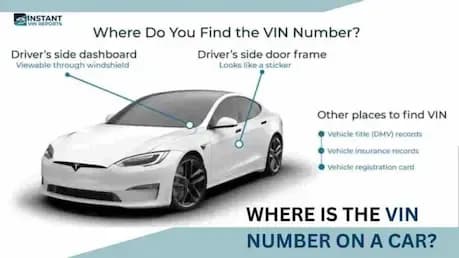
Need to See More Information? Get a Vehicle History Report
With a full Lexus vehicle history report, get a vehicle history report to check past ownership, auction records, accidents, damage, and service history. This is the information you’ll be getting on the vehicle history report.
Vehicle Specifications
Review the Lexus as it left the factory, including the model, engine, transmission, body style, drivetrain, manufacturing details, fuel system, and other original specifications.
Ownership History
Access available ownership records, including the number of previous owners, registration history, and ownership duration. Personal information, such as names and addresses, is never included in the report.
Title Status & Branding Records
Check whether the vehicle has ever received a clean, salvage, rebuilt, flood, junk, lemon, or other branded title. This information can help identify major events that may affect the vehicle's value or insurability.
Lien & Financial Records
Verify whether any lender currently holds, or previously held, a financial interest in the vehicle. This helps ensure the Lexus can be transferred without unexpected liens or outstanding obligations.
Theft & Recovery Records
Check available databases to determine whether the Lexus has ever been reported stolen or recovered. When available, the report includes incident dates, locations, and reporting sources.
Safety Recall Information
View manufacturer-issued and regulatory recall information linked to the vehicle, including affected components, recall dates, and available repair status.
Service & Maintenance History
Review available maintenance and repair records, including routine servicing, inspections, and major repairs. A documented service history can provide valuable insight into how well the Lexus has been maintained throughout its life.
Accident & Damage History
Check for reported accidents and damage caused by collisions, flooding, fire, hail, or structural impacts. Available records include incident dates, locations, and severity details.
Odometer Readings & Mileage Timeline
Track recorded mileage over time to identify consistent usage patterns and detect possible discrepancies. Significant gaps or unexpected decreases may indicate reporting errors or potential odometer rollback.
Auction & Sales Records
Review available auction appearances and historical sales listings, including auction dates, sale prices, condition reports, listing details, and vehicle photographs when available.
Free VIN Decoder vs. Paid VIN Check
The free VIN decoder helps you get basic information about the vehicle, such as engine information, body type, and much more. However, if you need more information, you can get the vehicle history report with our VIN check.
Feature | Free VIN Decoder | History Report (Paid) |
|---|---|---|
VIN decoding for all vehicle types | ||
Year, make, model, trim | ||
Full vehicle specifications / detailed car specs | ||
Market value snapshot | ||
Sales listings (current/online ads) | ||
Sales history (timeline of past listings/sales) | ||
Auction records (when available) | ||
Auction history with photos | ||
Mileage during auction/sales (when available) | ||
Odometer rollback checks | ||
Ownership history | ||
Vehicle usage type (personal, fleet, rental, commercial) | ||
Title brand records (salvage, rebuilt, flood, lemon, etc.) | ||
Lien & loan records | ||
Accident & damage history | ||
Theft / stolen records | ||
Flood/hail/fire damage checks | ||
Service/repair records | ||
Warranty status & coverage | ||
Recall information |
How a Lexus Report Helps a Buyer
Kai planned to purchase a used 2016 Lexus RC from a used car dealer. Before he decided to purchase the car, he ran a quick VIN check to get detailed information on the vehicle.
Sample VIN: JTHCK262285023224
First Impression
The car looked nice, and the seller said that it had minor damage, which is why the selling price is lower than the market price.
What Kai Sees on the Report
However, the report shows another thing, and that is concerning.
- 1 Record(s) of damage
- 1 stolen or theft record
- 2 lien or loan record
- 1 auction record
- 3 service & repair record
The Outcome
Kai decided not to purchase the vehicle because it had way too many bad records that could be dangerous.
Why Use Instant VIN Reports to Decode a Lexus VIN?
Instant VIN Reports make it easy for Lexus owners, buyers, sellers, and dealerships to verify important vehicle information in the simplest way.
Frequently Updated Data
Vehicle information is regularly refreshed using trusted automotive databases like the Vehicle Databases.
Great Value
The VIN decoder is available at no cost. In comparison, a VIN check comes at an affordable price.
24/7 Customer Support
Our customer support team is available around the clock to answer your questions.
Fast Results
Simply enter a Lexus VIN to receive factory specifications, market value insights, and vehicle records in less than a minute.
Who Can Benefit From the Lexus VIN Decoder?
Whether you're buying your first Lexus, selling a family vehicle, managing dealership inventory, or restoring an older model, a Lexus VIN decoder provides valuable information that helps you make more confident decisions.
Buyers
Verify the vehicle's model, year, engine, trim level, drivetrain, and factory-installed features before purchasing. VIN decoding also helps confirm that the vehicle matches the seller's description.
Sellers
Provide prospective buyers with verified vehicle information to increase transparency, build trust, and support a faster, smoother sales process.
Dealerships
Quickly verify Lexus specifications, validate inventory details, evaluate trade-ins, and ensure every vehicle is accurately represented before resale.
Lexus Enthusiasts & Collectors
Confirm production details, factory configurations, and original equipment for classic, limited-production, or special-edition Lexus models.
Restoration Specialists
Access original factory build information to help preserve authenticity and ensure restoration projects remain true to the vehicle's original specifications.
Insurance Companies & Vehicle Appraisers
Use VIN-based information to support vehicle valuations, underwriting decisions, claims assessments, and documentation requirements.
Decode Modern and Classic Lexus VINs
Whether you're checking an early Lexus model or a current-generation vehicle, Instant VIN Reports can decode both modern and many classic Lexus VIN formats.
| ES 300 | GS 300 | GS 400 | LS 400 | LX 470 | RX 300 | SC 300 | SC 400 |
| LS 400 | SC 300 | SC 400 | ES 300 | GS 300 | GS 400 | LX 450 | RX 300 |
FAQs on Lexus VIN Decoder
How to decode the Lexus VIN number?
To decode the Lexus VIN number, the first step you take is to enter the 17-character VIN into the Lexus VIN decoder. We read the three sections (WMI, VDS, VIS) and show you the specs and other basic information instantly for free.
Is a Lexus VIN decoder free to use?
Yes. Our free tool returns the core specs (e.g., model, year, engine, body, drivetrain). If you need historical records of the Lexus, such as title brands, accidents, mileage, liens, recalls, theft checks, service, auctions, and more, upgrade to the full report.
Can I look up vehicle specs with VIN?
Absolutely. You can look up vehicle specs with VIN, because the VIN contains coded details about your Lexus, including model year, engine family, and assembly plant. The decoder translates those into plain English.
What info does a Lexus VIN reveal?
The Lexus VIN can show you the specs (e.g., model, trim, engine, body), model year (10th character), plant (11th), and a unique serial number (last six). With a history report, you can also see past ownership, accidents, mileage patterns, title brands, liens, recalls, and more that are tied to the VIN.
Can my VIN number tell me what features my car has?
Yes. The VIN can identify trim and option groups by decoding it into the Lexus VIN decoder. Where trims share codes, we combine VIN decoding with recorded build data to pin features down.
Can I look up my vehicle specs by VIN number?
Yes, a vehicle's specifications can be identified by decoding its 17-character VIN. A VIN lookup can reveal important factory details, including the model year, make, model, trim level, engine type, transmission, and country of manufacture.
How do I decode my Lexus VIN number?
A Lexus VIN can be decoded by dividing its 17-character sequence into three standard sections: the World Manufacturer Identifier (WMI), Vehicle Descriptor Section (VDS), and Vehicle Identifier Section (VIS). Each section contains specific information about the vehicle's origin, specifications, and unique production details.
How can I tell if my Lexus was made in Japan?
To determine whether a Lexus was built in Japan, check the first character of the VIN. If it begins with the letter "J", the vehicle was manufactured in Japan. You can also verify the country of origin by reviewing the certification label located on the driver's side door jamb.
How to check the Lexus year of manufacture?
To check a Lexus model year, check the 10th character of its 17-digit VIN, which can be found on the dashboard near the windshield or on the driver's side door jamb. If you need the exact production date, refer to the certification label on the driver's door jamb, which typically includes the month and year of manufacture.