
Free Buick VIN Decoder For Any VIN Length
If you drive, buy, sell, or just admire Buicks, you’ll sooner or later run into that long code on the dash. That’s where a Buick VIN decoder comes in. It turns that code into real information you can actually use when you are checking the car.
What is a Buick VIN Decoder?
A Buick VIN decoder is an online Buick VIN lookup tool that reads the VIN number stamped on your car and pulls back the story behind it. Under international and U.S. standards, the VIN number is designed to be unique for a vehicle and to encode key data like the manufacturer, vehicle type, and important technical specs.
Type a Buick VIN into the decoder, and you’ll usually see: the correct model year, body style, engine group, transmission, drive type, and other basic information. This is why Buick VIN number checks matter so much when you’re buying or selling a used car. They let you verify that the Buick in front of you matches the story on the paper.
Instant VIN Reports runs a free Buick VIN decoder for the basics and allows users to upgrade to a full Buick vehicle history report for people who want to see title records, mileage timeline, and more. As a bonus for enthusiasts, our decoder can also interpret many shorter classic Buick VINs and chassis numbers (pre-1981) where the data is available.
Why Buick VIN Decoding Matters Before Buying a Car
Every Buick VIN number contains important information about the vehicle’s identity. Decoding it before making a purchase helps you understand exactly what you’re looking at and reduces the risk of surprises later. We provide free Buick VIN decoding for both modern and classic Buick vehicles.
Confirm Engine Information
Verify the engine originally associated with the vehicle.
Compare Multiple Vehicles
Decode several VINs to evaluate differences before buying.
Support Restoration Projects
Identify original configurations and factory equipment.
Decode Rare Models
Useful when researching like trims and engines on specialty Buick vehicles and collector cars.
What Information Does a Buick VIN Decoder Show?
Before purchasing a vehicle history report, many drivers start with a free VIN decode to confirm the vehicle’s identity, specifications, and factory configuration.
How to Use the Buick VIN decoder
To use the Buick VIN decoder from Instant VIN Reports, you mainly need one thing: the VIN itself. After that, it’s really just a three-step process.
Find the VIN
Enter the Buick VIN carefully. You can find the VIN at the lower corner of the windshield on the driver’s side, the driver’s door jamb, under the hood on the engine block, or on your title and insurance documents.
Fill in the Form
The free VIN decoder will provide basic details like the year, make, model, engine, and other basic information.
Get the Full VIN Report
Get the complete vehicle history report for your Buick, covering ownership, mileage, accidents, title brands, liens, theft records, auction photos, market value, and more.
How To Read a 17-Digit Buick VIN Number?
If you want to read a Buick VIN yourself, you need to read the VIN from left to right in three big chunks: WMI, VDS, and VIS. You can memorize this if you like, but honestly, most people just plug the number into a Buick VIN decoder and let the system handle the math and the tables in the background.
Buick VIN Positions Explained For: W04WH3N50HG009268
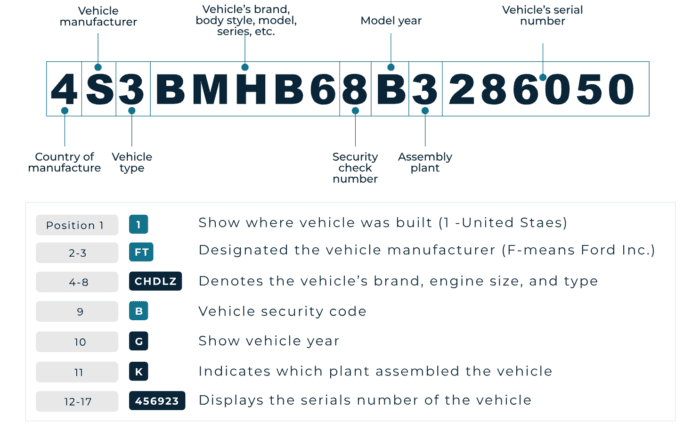
World Manufacturer Identifier (WMI)
Position 1 (W)
Indicates the European region of origin
Position 2 & 3 (04)
Opel/Buick Europe (manufactured by Opel for GM)
Vehicle Descriptor Section (VDS)
Positions 4 to 8 (WH3N5)
Vehicle attributes (Cascada convertible configuration)
Position 9 (7)
Check digit
Vehicle Identifier Section (VIS)
Position 10 (H)
2017 model year
Position 11 (G)
Assembly plant
Positions 12 to 17 (009268)
Sequential production number
Classic Buick VIN Decoder (Pre-1981)
Before 1981, there was no industry-wide VIN standard. Buick used several VIN formats that varied by production year, vehicle line, assembly plant, and manufacturing practices. Because of this, decoding classic Buick VINs requires specialized reference databases and historical production information.
Many Buick collector vehicles were built decades before the modern 17-character VIN standard. Whether you’re researching a Riviera, GS, Skylark, Electra, Wildcat, or another vintage Buick, our classic Buick VIN decoder can help identify vehicle details using many pre-1981 VIN formats ranging from 5 to 14 characters.
Pre-1980s Buick VIN Formats
Classic Buick VINs can range from as few as 5 characters to as many as 14 characters, depending on the production era. Before the universal 17-character standard was mandated for the 1981 model year, Buick utilized two primary numbering eras: the early serial number period and the standardized 13-character VIN era.
Early Buick VINs
Prior to 1965, Buicks did not utilize a modern VIN system. Instead, they relied on shorter frame/doorpost vehicle serial numbers (ranging from 7 to 11 digits) paired with separate engine numbers.
Standardized Classic Buick VINs
Starting in 1965, General Motors implemented a uniform 13-character VIN across all passenger cars. While the overall length remained exactly 13 characters throughout this era, the layout evolved.
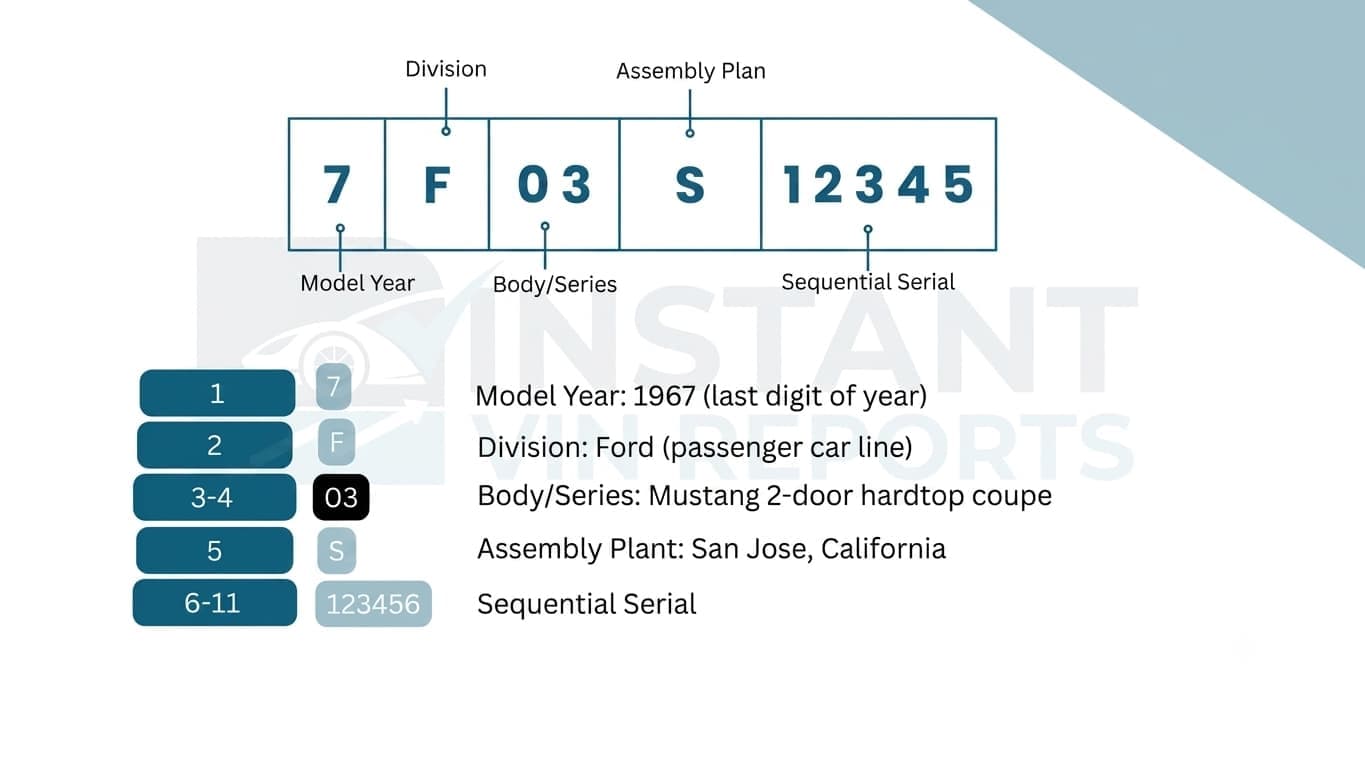
From 1965 to 1971, the code detailed the division, series, body style, model year, assembly plant, and sequential production number. In 1972, the system was revised to include a dedicated engine code in the 5th character position, shifting the sequence layout while maintaining the 13-digit length.
Always verify your VIN structure against year-specific charts, as the system changed drastically, especially in 1967.
Where to Find the VIN on a Buick?
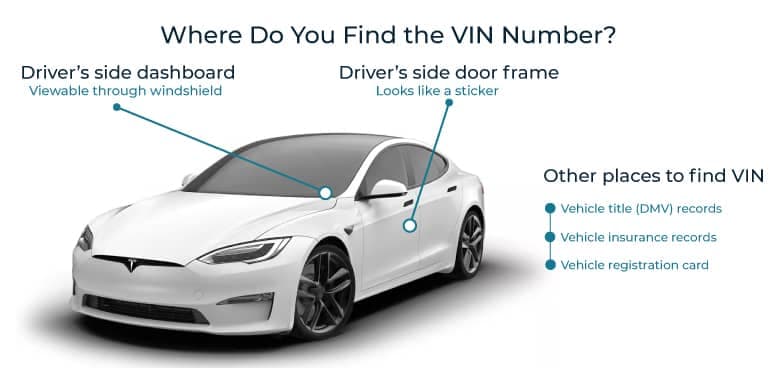
You can find the VIN on a Buick in a few key spots. Here are the most common spots to check:
- Driver’s side dashboard: Stand outside the car and look at the driver’s side corner of the windshield for the 17-character VIN on a small metal plate or printed strip.
- Driver’s door jamb/B-pillar: Open the driver’s door and look for a label where the door latches. This sticker often shows the VIN along with tire and weight information.
- Front of the engine bay: With the hood open, some Buicks show the VIN or frame number near the front of the engine block or on a visible cross-member or frame rail.
- Paperwork: Your registration card, title, and insurance documents should all display the same VIN that’s on the car.
- For older or classic Buicks (pre-1981 models): Mid-century Buicks have serial plates on the door jamb or dash for identification.
Need To See More? Get the Full Buick Vehicle History Report
A VIN number decoder Buick tool does much more than read the letters and numbers. Here’s what each section tells you:
Vehicle Specifications
This part of the report shows what your Buick was born with at the factory: model, trim, engine, transmission, drivetrain, fuel type, body style, and key options. Our Buick VIN number decoder reads the characters in the VIN and matches them with GM’s specification data.
Ownership History
If you are using a Buick VIN full history report to buy a used car, this part helps you see patterns. One long-term owner can be a good sign. Many owners in a short time can be a red flag. For collectors and enthusiasts, this history also adds a bit of story to the car.
Accident and Damage Records
This part lists any reported accidents, sometimes with severity, impact area, and insurance or DMV notes. Even if the bodywork looks perfect now, our full history Buick VIN search reports can reveal if the car was once in a major collision. That matters a lot for frame damage, resale value, and safety. Honestly, it’s one of the first things most buyers check.
Recalls Check
This section cross-checks the Buick VIN against recall and safety databases to see if there are any open or past recalls. For a modern Buick like Envision, Encore, or LaCrosse, recall repair status tells you if important safety fixes were done. With Instant VIN Reports, you can run a VIN lookup on a Buick and quickly see if you need to call a Buick dealer for recall service.
Title Brand Records
Title brands show how different states have legally classified the car over time: clean, salvage, rebuilt, flood, lemon, and so on. This part of a Buick VIN lookup helps you avoid cars with “washed” titles that were moved between states to hide a bad history. For collectors, clean historical title records also add strength to a classic Buick’s value.
Auction and Sales History
Auction and sales history shows if the Buick ever passed through major auctions, previous sale events, listing records, or transfer dates, often with sale dates, condition notes, damage codes, and even the available photos of the car on the auction lot. This is incredibly useful when you see a freshly detailed car on a lot and wonder what it looked like a year ago.
Service & Maintenance Records
Where available, you’ll see service and repair entries such as oil changes, major repairs, or inspection results. Steady maintenance history usually means a healthier Buick. Gaps or only emergency repairs might mean the car was neglected. For older Buicks, this can make or break your decision.
Theft Records
Theft records show if the Buick was ever reported stolen and whether it was recovered. You really don’t want to buy a Buick that still appears as stolen in a database. Our Buick VIN history reports decoder helps you stay on the safe side and avoid legal headaches.
Vehicle Usage Record
This part flags how the Buick was used: personal, commercial, rental, lease, fleet, or taxi, when such information is reported in the databases. A family-owned Buick that stayed in one household is different from one that served as a high-mileage rental or fleet vehicle. Knowing the usage type helps you read the wear on the car more realistically.
Lien / Loan Check
This section shows whether the Buick has or had an active lien or loan, often tied to banks or finance companies. Why should you care? If you buy a Buick that still has a lien, the lender could have a legal claim on it. Our full Buick VIN number report helps you avoid messy paperwork or losing the car later.
Free Buick VIN Decoder vs Vehicle History Report
A free Buick VIN decoder and a paid Buick vehicle history report are related, but they are not the same thing. Most people start with the free decoder just to see what Buick they’re dealing with. But if you’re about to spend serious money or sell a car you’re proud of, the paid report is where the real peace of mind lives.
Feature | Free VIN Decoder | History Report (Paid) |
|---|---|---|
VIN decoding for all vehicle types | ||
Year, make, model, trim | ||
Full vehicle specifications / detailed car specs | ||
Market value snapshot | ||
Sales listings (current/online ads) | ||
Sales history (timeline of past listings/sales) | ||
Auction records (when available) | ||
Auction history with photos | ||
Mileage during auction/sales (when available) | ||
Odometer rollback checks | ||
Ownership history | ||
Vehicle usage type (personal, fleet, rental, commercial) | ||
Title brand records (salvage, rebuilt, flood, lemon, etc.) | ||
Lien & loan records | ||
Accident & damage history | ||
Theft / stolen records | ||
Flood/hail/fire damage checks | ||
Service/repair records | ||
Warranty status & coverage | ||
Recall information |
From VIN Decode to Vehicle History: Ben's Buick Buying Journey
Ben had been searching for a convertible that could be used for weekend drives and summer road trips. While browsing a local online marketplace, he came across a 2017 Buick Cascada Premium that looked clean in the photos and was listed at an attractive price.
Before contacting the seller, Ben decided to run the VIN through the Instant VIN Reports Buick VIN Decoder to learn more about the vehicle.
VIN: W04WH3N50HG009268
Initial Impression
- 2017 Buick Cascada Premium
- 1.6L Turbocharged 4-cylinder engine
- Automatic transmission
- Front-wheel drive
- 2-door convertible body style
- Original MSRP of $36,065
- German-built vehicle
- Market value estimates are available through the VIN decode preview
Critical Findings
- Salvage title record found
- Three accident records reported
- Insurance loss records reported
- Vehicle reported as a total loss in 2023
- Rear-impact collision record reported
- One auction record found
- Vehicle sold through an auction in October 2023
- One lien or loan record found
- Two ownership records found
Outcome
- Ben gained a clearer understanding of the vehicle’s history before meeting the seller.
- He avoided relying solely on photos and a brief online description.
- He used the report findings to ask more informed questions about repairs and ownership.
- He was able to evaluate the vehicle with realistic expectations.
- The VIN check gave him information that helped support a more confident buying decision.
Why 1 Million+ Drivers Choose Instant VIN Reports
Whether you’re checking a modern Buick SUV, researching a used Buick convertible, or decoding a classic Buick VIN with fewer than 17 characters, having reliable vehicle data matters. Instant VIN Reports helps drivers access vehicle information quickly, making it easier to verify specifications, research history, and make more informed decisions.
Daily Data Updates
Vehicle records change over time. Regular data updates help ensure users can access the most current information available when researching a Buick vehicle.
High Accuracy, Cross-Checked Results
Vehicle information is compiled from multiple data sources and cross-checked whenever possible to help improve accuracy and reduce inconsistencies across reports.
24/7 Customer Support
Questions don’t always happen during business hours. Our support team is available to help users navigate reports and answer questions whenever assistance is needed.
Live Chat With a VIN Expert
Need help understanding a VIN, title issue, auction record, or vehicle history report? Live chat support provides direct access to knowledgeable assistance.
Who Should Use a Buick VIN Decoder?
Many people wait until after purchasing a vehicle to research it. VIN decoding helps you understand what you’re looking at before making a commitment.
Buyers
A Buick VIN lookup helps identify the model, engine, trim level, and production year before making a purchase decision.
Sellers
Verified vehicle information can help reduce misunderstandings and improve buyer confidence.
Dealers
Accurate VIN information supports better merchandising and customer communication.
Classic Car Collectors
Collectors often use VIN decoding to research production details and verify classic Buick vehicles.
Restorers
A classic Buick VIN lookup helps restorers document important vehicle details during a project.
Insurers & Appraisers
Vehicle specifications derived from the VIN can help support valuation and insurance-related processes.
Supported Buick Models
Researching a Buick should not be limited by model year. Instant VIN Reports supports modern vehicles as well as many classic Buick VINs that other decoders cannot process.
Popular Buick Models
Many of today’s Buick owners drive one of the following crossover, SUV, or passenger vehicle models.
Supported Classic Buick Models
From luxury cruisers to muscle-era performance models, Buick’s heritage includes many highly collectible vehicles.
Frequently Asked Questions about Buick VIN Decoding
How to decode a Buick VIN number?
To decode a Buick VIN number, the first thing you need to do is enter the VIN into a Buick VIN decoder. The decoder reads the VIN structure and displays available information such as the model, trim, engine, body style, production year, and other vehicle specifications. Instant VIN Reports supports both modern Buick VINs and many classic Buick VIN formats.
Is the Buick VIN decoder free?
Yes. Our basic Buick VIN decoder free lookup is available and lets you decode the VIN for specs and see some basic information without paying. The full Buick vehicle history report, which includes ownership, title brands, liens, accidents, theft, market value, and more.
Is there a free VIN number lookup for old cars?
Yes. Our decoder supports many classic Buick VIN formats that can process many pre-1981 VINs and gather factory specs and other key vehicle details. Because an old vintage Buick VIN needs a special classic VIN service, before 1981, many brands, including Buick, used shorter VIN formats, often 5 to 14 characters, and they were not standardized
Do older cars have shorter VIN numbers?
Yes. Before the 1981 model year, VIN lengths varied significantly. Many classic Buick vehicles used VINs shorter than 17 characters, including formats ranging from approximately 5 to 14 digits depending on the era.
What does Buick VIN start with?
The beginning of a Buick VIN depends on the production year, manufacturer, and country of origin for the standardized 17-digit VIN. Modern Buick VINs commonly start with manufacturer identification codes assigned to General Motors and its manufacturing operations.
How to decipher GM VIN numbers?
GM VIN numbers use a structured format that identifies the manufacturer, vehicle attributes, model year, assembly plant, and production sequence. A VIN decoder simplifies the process by translating these codes into readable vehicle information.
Does the Buick VIN show if my vehicle was built in China?
Yes, the VIN can show the country of assembly, including the one that is built in China. The first character of the VIN is the country code, and the first three characters (the WMI) help identify both country and manufacturer. Our Buick VIN decoder will read this for you automatically.
Which codes in VINs stand for Buick turbo models?
Turbo information is usually encoded in the engine or model-code characters in the middle of the VIN. On some classic and modern GM products, specific characters in the Vehicle Descriptor Section (VDS) or later positions identify a turbocharged engine.
Our detailed VIN number decoder Buick Reports history will show the exact engine type (including turbo, supercharged, or naturally aspirated) tied to that VIN.
What is the difference between a Buick VIN decoder and a full vehicle history report?
A Buick VIN decoder translates the VIN into basic information like model, body, engine, and manufacturing details. A full Buick vehicle history report uses that VIN to show mileage, accidents, damage, liens, title brands, theft, recalls, and more from many different databases. In short, the decoder reveals the car’s identity, while the history report shows its past.