
Check Vehicle’s Past With Michigan License Plate Lookup
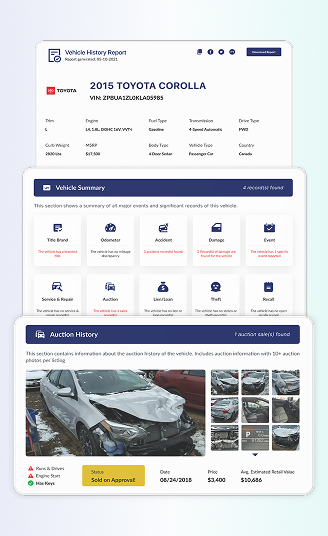
Before you purchase a used vehicle in Michigan, make sure you know its background to avoid buying a fraudulent vehicle. Use our license plate lookup and get the report to check if the vehicle has odometer issues or damage.
What is a Michigan License Plate Lookup?
A Michigan license plate is issued by the Michigan Secretary of State for passenger vehicles, trucks, motorcycles, trailers, and specialty vehicles. It serves as an official identifier that connects a vehicle to its registration and title records within the state.
A Michigan license plate lookup allows buyers and sellers to review a vehicle’s background using the plate number before completing a used car transaction. This is especially useful when a VIN is not immediately available.
By checking the license plate, you can find the vehicle’s model year, make, engine information, accident history, title branding, lien records, mileage readings, and much more. Check the license plate now before you purchase or sell a used vehicle in Michigan.
Why You Should Search a Michigan License Plate
Checking a Michigan license plate before a transaction helps confirm key details that may not be obvious during a visual inspection. Below are common situations where a lookup provides real value.
When Buying a Used Vehicle
Before purchasing a used car, especially from a private seller or small dealer, understanding the vehicle’s past is critical to avoid hidden problems or legal complications.
Review Title and Ownership Records
A license plate lookup helps verify how many times the vehicle has changed ownership and whether the Michigan title is clean or branded as salvage, rebuilt, flood, or scrap.
Identify Past Problems
Accident history, damage reports, or mileage gaps may appear in the report even if the vehicle looks well-maintained during a test drive or inspection.
Selling a Vehicle
Sellers should be checking the Michigan license plate and getting the report before listing a vehicle for sale.
Strengthen Your Listing
Providing verified vehicle history helps answer buyer questions upfront and shows transparency backed by documented records rather than assumptions.
Reduce Buyer Hesitation
Clear and consistent history data builds trust, shortens decision time, and helps buyers feel more confident moving forward with the purchase.
Checking Auction or Private Listings
Vehicles sold through auctions or private-party listings do not always include full disclosures.
Match the Listing With Official Records
A plate lookup allows you to compare advertised details with recorded data to identify inconsistencies in mileage, ownership, or title status.
Detect Missing Information
If important details are missing or do not align with official records, it may be wise to pause and reassess the transaction.
Preventing Fraud and Costly Mistakes
Running a Michigan license plate lookup reduces the risk of buying a vehicle with unresolved legal, financial, or mechanical issues.
Confirm Legal Status
Checking the plate can help uncover stolen vehicle reports, active liens, or title problems that could create serious issues after purchase.
Check for Hidden Damage
Damage from accidents, flooding, or fires may not be visible. A lookup helps uncover reported incidents that could affect long-term reliability and value.
Information Included in Our Michigan License Plate Report
A Michigan license plate lookup report combines basic vehicle details with deeper historical records. By getting the car report in Michigan, you can get this important information that you can choose from:
Vehicle Specifications
This section outlines the vehicle’s core specifications. You may check the engine type, fuel system, transmission, drivetrain, body style, and manufacturing origin. These details help confirm whether the vehicle aligns with driving needs, performance expectations, and budget considerations.
Ownership History
A Michigan license plate search shows how the vehicle has changed hands over time. You may see ownership duration and prior registration locations. Personal owner information remains protected under state and federal privacy laws.
Title Status
This section indicates whether the vehicle holds a clean Michigan title or carries branding such as salvage, rebuilt, flood-damaged, or scrap. Reviewing title status helps avoid future registration issues or resale limitations.
Theft Records
This section checks whether the vehicle has ever been reported stolen. When available, it may include reporting dates and jurisdictions. Purchasing a stolen vehicle can result in seizure by authorities, even if bought unknowingly.
Accident Records
Reported accidents are listed with available dates and locations, along with the number of incidents recorded. Reviewing this information helps evaluate potential impacts on safety, structural integrity, and resale value.
Mileage Verification
Mileage readings from different reporting points are compared to identify inconsistencies. Reviewing these entries helps reduce the risk of odometer rollback, which is a common issue in used vehicle fraud cases.
Auction History and Photos
If the vehicle passed through an auction, this section provides auction dates, locations, sale prices, condition notes, and available photos taken during the auction process, offering visual insight into past condition.
Lien or Loan Information
This section highlights active or historical liens tied to the vehicle. Outstanding financial claims can delay or prevent ownership transfer through the Michigan Secretary of State.
Warranty Coverage
This section helps determine whether factory or extended warranties are still active. It may include coverage terms, mileage limits, and manufacturer-backed warranty details such as powertrain or corrosion protection.
Damage Records
Damage linked to accidents, floods, fires, or other events may appear here. Reviewing these records helps assess whether repairs were required and whether damage could affect long-term reliability.
Service and Maintenance Records
Service history provides insight into how the vehicle was maintained over time. When available, it may show service dates, locations, and types of maintenance or repairs performed.
Recall Information
Check if the vehicle was recalled with our tool. With a vehicle history report, you can examine the reasons why the vehicle was recalled, the date, how the manufacturer fixed the recalls, and the recall status, whether it is closed or still open.
How to Check the License Plate in Michigan?
To check the license plate and get a vehicle history report in Michigan, you can follow these simple steps.
Find the License Plate Number
Check on the rear or front side of the vehicle. If you cannot find it, you may ask the seller.
Fill in the Form
Click on the form above, then write down the license plate number of the vehicle you are checking. Then, click on the button to submit the form.
Get the Report
After the report has successfully generated, you may proceed to payment to get the full vehicle history report.
Free License Plate Lookup in Michigan
If you plan to check the car’s basic information, you may use our free Michigan license plate lookup tool. Here’s what you will get with our free lookup service:
- Associated VIN number
- Year, Make, and Model
- Country of Origin
- Market Value
- Transmission Type
- Fuel Type
- Drive Type
- Body Type
- Trim Information
- MSRP
- Engine Specifications
- Dimensions
- Sales/auction history
- Market value
- Mileage
Laws on Michigan License Plate
Michigan driving laws require motorists to have their license in their immediate possession and to display it upon request by a police officer. Misusing a license, such as lending it to others or using a fraudulent ID, is strictly prohibited.
Furthermore, the state has implemented significant reforms, including ending license suspensions for non-driving offences and introducing a new hands-free driving law. Drivers must also ensure they are REAL ID-compliant for federal purposes, as non-compliance can lead to specific legal penalties.
Security of Information on Michigan License Plates
Under Michigan’s MCL 257.208c, personal details linked to a license plate are kept private to ensure driver security. The law requires that any individual or entity seeking access to names or addresses must demonstrate a legitimate legal need. Without such authorisation, the Secretary of State is forbidden from releasing highly restricted personal information to the general public.
License Plate Design and Formatting in Michigan
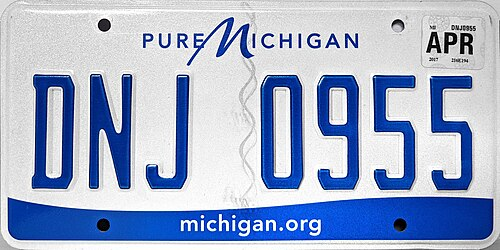
Michigan license plates most commonly use the white-on-blue “Pure Michigan” design, with alternatives like “Water-Winter Wonderland” and speciality or personalised plates, all in standard 12×6-inch aluminium format.
Format and Serialization of Michigan License Plate
The standard layout features raised blue characters on a reflective white background. A subtle blue wave runs along the bottom edge, while the “Pure Michigan” logo appears centered at the top. The typical serial format is ABC 1234, though variations exist for specialty and personalized plates.
License Plate Design in Michigan
Michigan license plates come in several designs that highlight state pride, history, and special causes. Drivers can choose between standard-issue plates and a wide range of themed or personalised options.
- Standard and Popular Designs: The default plate features a white background, blue lettering, and the “Pure Michigan” slogan at the top.
- Water–Winter Wonderland: Retro blue-and-yellow design celebrating Michigan’s outdoor and scenic identity.
- Red, White, and Blue (Bicentennial Edition): Limited 2026 design marking the U.S. semiquincentennial, inspired by Michigan’s 1976 bicentennial plate.
- Specialty and Personalized Designs: Plates supporting charities, environmental programs, universities, and military recognition. Some older designs remain on registered vehicles.
- Personalized Plates: Drivers can request custom letter and number combinations on eligible plates. Fees and approval rules apply.
- Cause and Organization Plates: Support nonprofit groups and public programs, including cancer research, 4-H, veterans, and historic military service recognitions like Purple Heart or Merchant Marine plates.
Types of License Plates in Michigan
These plates are available through the Michigan Secretary of State (SOS) and vary by eligibility, use, and design theme.
Standard Plate Options
Includes “Pure Michigan,” Water–Winter Wonderland, Mackinac Bridge, and other traditional designs celebrating state heritage and scenic identity.
Legacy Plates
Recreate historic Michigan plates, such as Great Lake State and 1976-style semiquincentennial editions, honouring classic designs from past decades.
Special Cause Fundraising Plates
Support charities and programs, with a portion of fees directed to the designated cause.
University Fundraising Plates
Feature logos from Michigan colleges like University of Michigan, MSU, Wayne State, and others, helping fund school programs.
Military and Veteran Plates
Recognise active service members, veterans, and eligible family members, honouring specific branches, conflicts, or awards.
Amateur Radio and Special Organisation Plates
Available for licensed operators or members of qualifying nonprofit and public service groups.
Historical and Authentic Plates
For vehicles 26+ years old, primarily used for exhibitions, parades, or club activities, with restricted driving periods.
Disability Plates
Issued to qualifying individuals, featuring special insignia and, where applicable, accessible parking privileges.
Trailer and Industry Plates
Separate plates for trailers, farm, fleet, or commercial vehicles, classified by weight and SOS guidelines.
Cost of License Plate in Michigan
The cost of a Michigan license plate depends on the type of plate you choose, any special designs, and the vehicle’s registration fees. Plate prices are separate from the regular registration and title fees charged by the Michigan Secretary of State.
- Standard Plate Fees: Base plate fee around $5 for Pure Michigan, Water–Winter Wonderland, or Mackinac Bridge plates.
- Registration and Tab Costs: Fees based on vehicle age and MSRP; newer vehicles use retail price, older vehicles use weight.
- Personalized Plates: Non-refundable issuance fee plus $15 annual renewal in addition to regular registration.
- Fundraising and Specialty Plates: University or charity plates typically cost $35 plus standard registration, supporting the respective program.
- Legacy and Legacy-Style Plate Fees: One-time Road Fund fee (around $50) on issuance for commemorative plates; lower renewal fees thereafter.
License Plate Lookup by States
Check any other license plate across different states with our license plate lookup service.
 Alaska
Arizona
Arkansas
California
Colorado
Connecticut
Delaware
Florida
Hawaii
Idaho
Illinois
Indiana
Iowa
Kansas
Kentucky
Louisiana
Maine
Maryland
Massachusetts
Michigan
Minnesota
Mississippi
Missouri
Montana
Nebraska
Nevada
New Hampshire
New Jersey
New Mexico
New York
North Carolina
North Dakota
Ohio
Oklahoma
Oregon
Pennsylvania
Rhode Island
South Carolina
South Dakota
Tennessee
Texas
Utah
Vermont
Virginia
Washington
West Virginia
Wisconsin
Wyoming
Alaska
Arizona
Arkansas
California
Colorado
Connecticut
Delaware
Florida
Hawaii
Idaho
Illinois
Indiana
Iowa
Kansas
Kentucky
Louisiana
Maine
Maryland
Massachusetts
Michigan
Minnesota
Mississippi
Missouri
Montana
Nebraska
Nevada
New Hampshire
New Jersey
New Mexico
New York
North Carolina
North Dakota
Ohio
Oklahoma
Oregon
Pennsylvania
Rhode Island
South Carolina
South Dakota
Tennessee
Texas
Utah
Vermont
Virginia
Washington
West Virginia
Wisconsin
Wyoming
FAQs About Michigan License Plate Lookup
Can you look up Michigan license plates?
Yes, you can search a Michigan license plate to check vehicle history, insurance status, or personalized plate availability using services like Instant VIN Report. However, accessing owner names or addresses requires a legally permitted purpose under the Driver’s Privacy Protection Act (DPPA).
How do I lookup the owner of a license plate?
You generally cannot look up a private owner’s name from a Michigan license plate due to DPPA restrictions. Vehicle history tools are allowed, but owner details are limited to law enforcement or authorised parties for valid reasons such as accidents, sales, or legal matters.
What is the most popular license plate in Michigan?
Michigan’s most common license plate is the white “Pure Michigan” design, used by the majority of drivers. The blue-and-yellow “Water–Winter Wonderland” plate follows, with the Mackinac Bridge design ranking next in popularity.
Can someone find you by looking up your license plate?
No, a regular person cannot obtain your name, address, or other personal details from a license plate. Privacy laws like the DPPA restrict that information to law enforcement and approved entities with legitimate legal purposes.
Can I run a license plate online?
Yes, you can run a Michigan license plate online to view basic vehicle details such as make, model, and year through public or vehicle history services. Access to owner information remains restricted under DPPA rules.