
Check the Vehicle’s Complete Records With Vermont License Plate Lookup
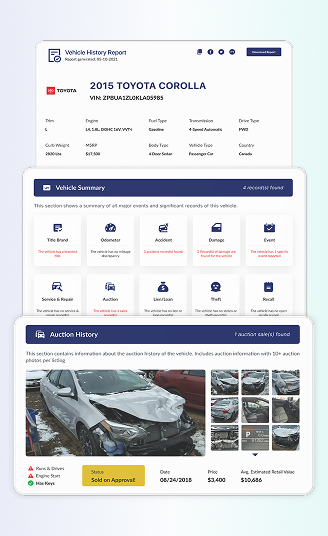
Before buying a used vehicle in Vermont, run a Vermont license plate lookup to review its history. A vehicle report helps confirm specifications, mileage records, accident history, auction activity, title status, and other key details before you commit.
What is a Vermont License Plate?
A Vermont license plate is issued by the state to identify registered vehicles, including passenger cars, motorcycles, trucks, and trailers. Plates remain valid as long as registration stays active, with renewal decals issued during registration renewal.
A Vermont license plate lookup allows buyers and sellers to search a plate number and access a vehicle history report. These reports may include accident records, odometer readings, auction history, title branding, damage reports, and available service information.
Why Look Up a Vermont License Plate?
Whether buying or selling, reviewing a vehicle’s background reduces risk and helps prevent costly surprises. A Vermont plate lookup provides documented records that support smarter decisions on both sides of a transaction.
Buyers
Before purchasing a used vehicle, especially from a private seller or small dealer, verifying the vehicle’s past is critical.
Negotiate With Better Data
A vehicle history report allows buyers to review market value, original pricing, and past records, helping support price negotiations with documented evidence.
Check the Vehicle’s Overall Condition
A plate lookup can reveal issues such as mileage inconsistencies, theft records, incomplete maintenance history, or prior damage that may not be obvious during an inspection.
Sellers
Vehicle history reports are not just for buyers. Sellers can also benefit by preparing accurate information before listing a vehicle.
Support a Faster Sale
Providing verified vehicle data helps answer buyer questions upfront and builds confidence, reducing delays during negotiations.
Set a More Accurate Price
By reviewing title status, mileage history, and overall condition, sellers can price the vehicle more realistically and competitively.
Verify Auction or Private-Party Listings
Vehicles sold through auctions or private listings do not always include complete disclosures.
Confirm Listing Accuracy
Comparing listing details with a Vermont license plate lookup helps ensure the advertised information matches official vehicle records.
Avoid Misleading or Missing Details
If records do not align with the listing, it may indicate hidden issues, incorrect mileage, or incomplete disclosures worth investigating further.
What Information Will You Get from Our Vermont Vehicle History Report?
A Vermont vehicle history report brings together technical data, legal records, and historical insights to help buyers and sellers understand a vehicle’s background before making pricing, purchasing, or ownership decisions.
Vehicle Specifications
This section details the vehicle’s technical profile, including country of manufacture, engine configuration, transmission type, drivetrain, seating capacity, factory features, and original MSRP. Reviewing these specifications helps confirm whether the vehicle matches the listing and meets performance, budget, and usage expectations.
Ownership History
Ownership history outlines how the vehicle has changed hands over time. It may include registration states, ownership duration, and transfer timelines, while excluding personal details such as names or addresses in compliance with state and federal privacy regulations.
Title Status
Title records show whether the vehicle carries a clean title or has been branded as salvage, rebuilt, lemon, or similar classifications. Reviewing title status early helps avoid registration complications, resale limitations, and unexpected legal or insurance challenges.
Theft Records
This section checks whether the vehicle has ever been reported stolen. When available, it may include report dates and locations. Purchasing a stolen vehicle can result in seizure by authorities, even if the buyer was unaware at the time of purchase.
Accident Records
Accident history includes reported collisions with available dates, locations, and incident counts. Reviewing these records helps assess prior damage, potential structural concerns, and how previous accidents may affect safety, reliability, and future resale value.
Mileage Verification
Mileage verification compares odometer readings across different reporting points and timeframes. This section highlights inconsistencies, gaps, or irregular increases that may indicate odometer rollback, reporting errors, or inaccurate mileage disclosures.
Auction Insights and Photos
If the vehicle was previously sold through an auction, this section may include auction dates, locations, sale results, final prices, and up to ten images showing the vehicle’s condition at the time it entered the auction market.
Lien or Loan Information
Lien records identify outstanding loans or financial claims tied to the vehicle. Active liens can delay or block ownership transfer, making it important to confirm that all financial obligations are cleared before completing a purchase or sale.
Warranty Coverage
This section reviews any remaining factory or extended warranty coverage. It may include coverage types, mileage limits, expiration dates, and duration details, helping determine whether certain repairs or services may still be covered.
Damage Records
Damage records document reported issues caused by accidents, floods, fires, or other events. Reviewing this information helps uncover serious problems that may not be visible during a physical inspection but could impact long-term ownership costs.
Maintenance Records
Service and maintenance history provides insight into how the vehicle was cared for over time. When available, records may include service dates, locations, and performed work, offering clues about reliability and overall vehicle condition.
Recall Information
Recall records show whether the vehicle has been affected by manufacturer safety recalls. This section explains recall causes, dates, repair actions, and current status, helping ensure unresolved recalls are addressed before purchase or continued use.
How to Lookup Vermont License Plate?
You can use our Vermont license plate search tool and get the vehicle history report. Here’s how to do it:
Find the License Plate Number
Check on the rear and the front side to get the license plate number. Or, you can ask the seller directly if you cannot find it.
Fill in the Form
After you get the license plate number, click on the form above. Write down the number and click on the “Search” button.
Get the Report
Wait for a few seconds until the report is generated. Then, proceed to payment to get the full vehicle history report.
Can You Lookup Vermont License Plate for Free?
Yes, you can use our free Vermont license plate lookup and get this information with the free lookup service.
- Associated VIN number
- Year, Make, and Model
- Country of Origin
- Market Value
- Transmission Type
- Fuel Type
- Drive Type
- Body Type
- Trim Information
- MSRP
- Engine Specifications
- Dimensions
- Sales/auction history
- Market value
- Mileage
Vermont License Plate Laws
Vermont law requires most vehicles to display two license plates, one on the front and one on the rear, securely fastened and clearly visible. If only one plate is issued, it must be mounted on the rear. Plates must remain unobstructed, and since June 1, 2023, validation stickers are no longer issued. Front plates may not be covered, except for approved “Vermont Strong” designs.
Security of Information
Vermont license plates serve as secure vehicle identifiers that allow law enforcement to access registration and ownership records through the DMV database. As of June 1, 2023, the state eliminated annual validation stickers and now relies on electronic verification. Plates must be properly displayed, and vanity plate messages are subject to state content restrictions.
Vermont License Plate Design and Format
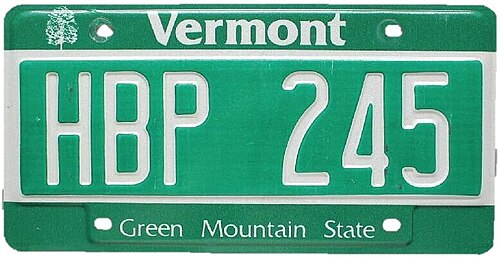
Vermont license plates feature a clean green-on-white design with the slogan “Green Mountain State.” A unique hallmark is their debossed numbering, where characters are stamped inward rather than raised. Vermont has preserved this tradition since 1967, making it the only U.S. state to continue using debossed plates. Standard plates measure 6 by 12 inches and are also available in specialty, vanity, and conservation designs.
Format and Serialization of Vermont License Plate
Passenger vehicles in Vermont use a six-character alphanumeric plate format, most commonly displayed as three letters followed by three numbers (AAA 000). The design uses green lettering on a white background and typically includes the “Green Mountain State” slogan. As of 2024, newly issued plates are progressing through the “K” series.
License Plate Design in Vermont
Vermont license plates are known for their understated look and unique manufacturing style, combining simple visuals with long-standing design traditions that set them apart from other states.
- Base Design: White background with dark blue lettering and the “Green Mountain State” slogan.
- Debossed Characters: Letters and numbers are stamped inward, not raised. Vermont is the only U.S. state that still uses this method.
- Plate Format: Six-character layout, typically three letters followed by three numbers (AAA 001).
- Character Rules: Letters I, J, O, and Q are skipped, and the number zero is always used instead of the letter O.
- Alternative Designs: Includes conservation plates with wildlife imagery, Vermont Strong plates, and approved vanity designs.
Types of License Plates in Vermont
The Vermont Department of Motor Vehicles offers a wide range of license plate options, covering everyday passenger vehicles as well as specialized uses, honors, and organizations.
Standard & Vanity Plates
Regular “Green Mountain State” plates and personalized versions with approved character limits.
Specialty & Conservation Plates
Wildlife-themed conservation plates, Building Bright Futures, and National Ski Patrol designs.
Military & Veteran Plates
Plates for veterans, Purple Heart recipients, Gold Star families, and specific combat service honors.
Organization & Service Plates
Plates supporting groups such as American Legion, firefighters, and Rotary International.
Vehicle-Specific Plates
Options for antique vehicles, street rods, trailers, tractors, and commercial vehicles.
Customization
Many, though not all, plate types can be ordered with personalized lettering.
Cost of License Plates in Vermont
License plate costs in Vermont vary based on plate type, personalization, and vehicle classification, with additional fees applying for titles and certain registrations.
- Standard Plates: Typically range from $10 to $50, depending on plate type and term.
- Vanity Plates: Usually cost between $50 and $200, based on customization and duration.
- Specialty Plates: Most specialty and conservation plates range from $30 to $150.
- Replacement Plates: Generally cost between $10 and $50.
- Vermont Strong Plates: Priced at $35 per plate.
- Additional Fees: Title fees (around $42) and registration fees vary by vehicle type, including antique and electric vehicles.
License Plate Lookup by States
Our license plate lookup service is available statewide; you can check license plates from other states, including:
 Alaska
Arizona
Arkansas
California
Colorado
Connecticut
Delaware
Florida
Hawaii
Idaho
Illinois
Indiana
Iowa
Kansas
Kentucky
Louisiana
Maine
Maryland
Massachusetts
Michigan
Minnesota
Mississippi
Missouri
Montana
Nebraska
Nevada
New Hampshire
New Jersey
New Mexico
New York
North Carolina
North Dakota
Ohio
Oklahoma
Oregon
Pennsylvania
Rhode Island
South Carolina
South Dakota
Tennessee
Texas
Utah
Vermont
Virginia
Washington
West Virginia
Wisconsin
Wyoming
Alaska
Arizona
Arkansas
California
Colorado
Connecticut
Delaware
Florida
Hawaii
Idaho
Illinois
Indiana
Iowa
Kansas
Kentucky
Louisiana
Maine
Maryland
Massachusetts
Michigan
Minnesota
Mississippi
Missouri
Montana
Nebraska
Nevada
New Hampshire
New Jersey
New Mexico
New York
North Carolina
North Dakota
Ohio
Oklahoma
Oregon
Pennsylvania
Rhode Island
South Carolina
South Dakota
Tennessee
Texas
Utah
Vermont
Virginia
Washington
West Virginia
Wisconsin
Wyoming
Vermont License Plate Lookup FAQs
Is there a free license plate lookup in Vermont?
Basic Vermont plate searches can return limited, non-personal details through our free license plate lookup service. These may confirm general vehicle information, but official records or sensitive data require a formal request through the Vermont DMV.
Can Vermont license plates be searched online?
Yes. Vermont license plates can be checked online using vehicle history tools that provide non-restricted details such as vehicle specs, title events, accident records, and mileage history. Personal owner information is protected under privacy laws.
What information can a Vermont license plate lookup show?
A Vermont plate lookup may return vehicle details like make, model, year, title status, accident history, liens, recalls, and odometer records. Owner names and addresses are not publicly available due to state and federal privacy rules.
How do I find the owner of a car by license plate in Vermont?
Finding the registered owner of a Vermont vehicle is restricted. Requests must go through the Vermont DMV and require a permitted legal reason, such as insurance claims or court matters, in compliance with the Driver’s Privacy Protection Act (DPPA).
How can I check for salvage titles or flood damage in Vermont?
To identify salvage, rebuilt, or flood damage, review a vehicle history report using the plate number or VIN. It’s also smart to inspect the vehicle for physical signs of water or structural damage that may not appear in title records. Use our Vermont license plate lookup service and get the records.