
Free License Plate Lookup Using Any U.S. Plate
A license plate lookup gives you a simple way to check the history behind a vehicle using only the plate number. With this, you can check accident details, mileage records, past ownership, market value, and more.
What is a License Plate Lookup?
A license plate lookup is a tool that turns a simple plate number into the full history of a vehicle. Most states link each plate to a VIN. When you enter the plate, the system pulls the VIN from state records. That VIN then becomes the key to retrieving vehicle history from several trusted databases.
It is a handy option when the seller forgot to share the VIN, or you are checking a car that is not yours, or you simply want to confirm a few things without asking the owner too many questions. Think of it as your quick shortcut to clarity.
Why Should You Run a License Plate Search?
A license plate search can feel like a small step, but it often saves people from big headaches. It gives you a quiet moment of clarity before you make a decision that involves real money and long-term commitment.
And honestly, that is something both buyers and sellers appreciate, even if they look at it from different angles. Some reasons why you need to check are:
Buyers
Catch hidden problems early
A plate search can show accidents, title issues, or suspicious mileage that the seller might not mention. It is a simple way to spot red flags before you spend your money.
Compare the listing with the facts
Sometimes what you see online does not match what the records show. A lookup helps you confirm that the car’s story is consistent and makes sense.
Negotiate with confidence
When you know the real history, you can make a smarter offer without feeling unsure or pressured. It turns a stressful decision into a calmer one
Sellers
Build trust instantly
Sharing a clean report tells buyers you have nothing to hide. It makes you look prepared, honest, and confident about the car you are selling.
Speed up the sale
Buyers make decisions faster when they have clear information. A report removes doubts and keeps the conversation focused on the car itself.
Support your asking price
Instead of explaining why your car is worth the amount you are asking, you can show the history and condition right away. It strengthens your position and reduces back-and-forth.
What Information Can You Get from a License Plate Lookup?
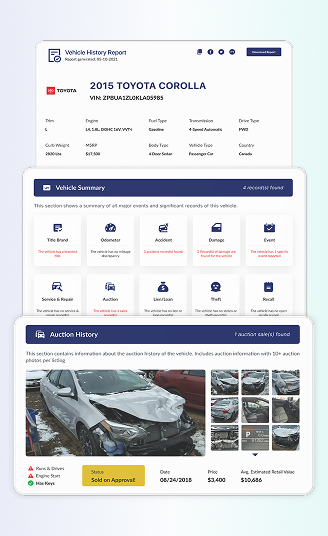
Instant VIN Reports provides a wide range of information that helps you understand a vehicle from different angles. You can see things like past accidents, past odometer readings, title problems, and even photos from previous auctions.
Here’s everything you can get from a license plate lookup:
Odometer Readings
Mileage records help you understand how much the vehicle has actually been driven and whether those numbers make sense over time. This section compares mileage entries from different sources to spot irregular patterns.
Recorded mileage over time
Shows mileage entries collected from inspections, registrations, emissions tests, and service visits.
Inconsistencies and sudden changes
Highlights mileage drops, unusual jumps, or placeholder readings that may indicate tampering.
Location and event source
Displays where and why each mileage reading was recorded to add useful context.
Accident History
Accident history indicates whether the vehicle has been involved in reported collisions or damage events. Even well-repaired vehicles may carry long-term safety or value concerns tied to past accidents.
Reported accident dates and types
Shows when accidents occurred and the nature of each reported incident.
Impact areas and severity
Indicates which parts of the vehicle were affected, such as front, rear, side, or multiple areas.
Safety-related damage indicators
Flags events involving airbags, structural damage, or safety system deployment.
Ownership History
Ownership records show how the vehicle has changed hands over time and how stable its ownership pattern has been. This can show how the car was treated and whether it may have recurring issues.
Number of previous owners
Displays how many individuals or organizations have owned the vehicle.
Length of ownership periods
Shows how long each owner kept the vehicle before selling or transferring it.
Ownership pattern insights
Frequent ownership changes within short periods may signal underlying problems.
Sales History
Sales history helps track when and how the vehicle was listed or sold in the past. It also adds context around mileage and condition at different points in time.
Recorded sale events
Shows sale dates, listing events, and where the vehicle changed hands.
Mileage at time of sale
Displays mileage recorded during each sale or listing event.
Vehicle photos at sale
Includes photos from past listings or sales when available, showing real condition.
Title Brand Records
Title brand records highlight serious events that affected the vehicle’s legal status. These records are critical because they permanently stay attached to the vehicle.
Title branding history
Identifies salvage, rebuilt, flood, fire, or junk title branding.
Permanently attached records
Explains how title brands follow the vehicle throughout its lifetime.
Title status context
Helps you understand whether a clean title truly reflects the vehicle’s past.
Usage History
Usage history explains how the vehicle was used during its life, which directly impacts wear and long-term reliability. Not all miles are equal.
Personal versus commercial use
Shows whether the vehicle was privately owned or used commercially.
High-wear usage indicators
Flags use as a rental, taxi, delivery, or fleet vehicle.
Government or specialty use
Identifies vehicles operated by government agencies or special programs.
Auction Records with Photos
Auction records often show a vehicle’s condition before repairs or resale. This section can uncover details that are not visible in standard listings.
Auction appearance history
Shows whether the vehicle was listed or sold at auction.
Condition at auction
Describes the vehicle’s recorded condition during the auction event.
Auction photos and notes
Includes images that may disclose damage, wear, or missing parts.
Liens and Loans
Lien records protect you from financial and legal complications. Buying a vehicle with an active lien can create serious ownership problems.
Active lien status
Shows whether a lender still holds a financial claim on the vehicle.
Ownership transfer risks
Explains how liens can block registration or title transfer.
Legal and paperwork clarity
Helps prevent surprises during purchase or registration.
Stolen Records
Stolen vehicle checks confirm whether the vehicle has been reported stolen. This is one of the most important checks for buyer protection.
Theft database checks
Searches national and insurance databases for theft reports.
Recovery status
Shows whether the vehicle was recovered or remains flagged.
Ownership risk warning
Prevents situations where a vehicle could later be seized by authorities.
Service History
Service history provides insight into how well the vehicle was maintained. Regular service often points to better reliability and care.
Routine maintenance records
Includes oil changes, brake service, inspections, and basic repairs.
Repair and service notes
Shows reported mechanical or maintenance work performed over time.
Maintenance consistency
Helps identify whether service was performed regularly or sporadically.
Vehicle Specifications
Specifications confirm exactly how the vehicle was built. This helps verify that the car matches what the seller claims.
Core vehicle identity
Confirms year, make, model, and trim level.
Mechanical and performance details
Lists engine type, transmission, drivetrain, and horsepower.
Factory features and equipment
Shows safety systems, options, and original factory equipment.
Recall History
Recall information highlights known safety or manufacturing issues. Addressing recalls is important for safe and reliable driving.
Open and closed recalls
Shows unresolved and completed recall actions.
Safety-related recall details
Explains what the recall affects and why it matters.
Manufacturer repair guidance
Indicates whether repairs are recommended or required.
Is It Legal to Run a License Plate Lookup?
Yes, it is perfectly legal when used for the right reasons. You are allowed to view information about a vehicle’s history. What you cannot access is personal data about the owner. Our license plate number lookup tool follows the rules set by the Driver’s Privacy Protection Act, which protects personal details.
Your search stays within legal boundaries and focuses entirely on the vehicle and its history.
U.S License Plate Design and Formats
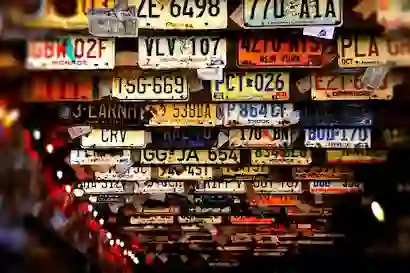
License plates come in many styles. Some states prefer simple color blocks. Others use bold artwork that reflects state identity. For example, Colorado includes snowy mountains, while Florida often features oranges or palm trees. Designs shift over the years and sometimes even change with the seasons or special events.
Types of License Plates
There are several types of plates found across the country. Each type has its own look and numbering pattern. You might see:
Standard plates:
Standard plates are issued to private passenger vehicles and follow the most common state format and numbering system.
Commercial plates:
Commercial plates are used on vehicles registered for business purposes, often with weight class or usage indicators.
Dealer plates:
Dealer plates allow licensed dealers to move, test, or transport vehicles without registering each one individually.
Government plates:
Government plates identify vehicles owned or operated by federal, state, or local government agencies.
Specialty plates:
Specialty plates support causes, universities, military service, or custom designs and may use unique numbering formats.
Temporary tags:
Temporary tags are short-term plates used during registration processing or after a recent vehicle purchase.
Cause or organization plates:
These plates represent specific charities, foundations, or organizations and usually require an additional registration fee.
License Plate Designs and Formats
Formats also vary. Some states use letters first. Others start with numbers. Some combine them in ways that help identify the class of the vehicle. Here are some examples to give you an idea:
| State | Standard format | Notes | Background design |
|---|---|---|---|
| California | 1ABC234 | Format in use since 1980; set to switch after exhausting sequence. | White sheeting, red “California” script at top, blue alphanumerics. |
| Texas | ABC-1234 | “Texas Classic” format in use since 2012 on standard passenger plates. | White background, black characters, star or Lone Star motif. |
| Florida | AB1 2CD (newest) | Multiple formats used concurrently; current one began June 2024. | Reflective white with green/greenish characters, orange graphic + “Sunshine State”. |
| New York | ABC-1234 | Introduced with 2020 “Excelsior” baseplate; still in use. | Light background, state colours, “Excelsior” motif. |
| Ohio | ABC 1234 | Format in use since December 2021 (“Sunrise in Ohio” design). | Background depends on series; modern colour blocks, state name prominent. |
| Pennsylvania | ABC-1234 | New “Liberty Bell” style now used for standard plates. | Liberty Bell motif, state colours, modern graphic background. |
| Illinois | AB 12345 | Format uses two letters then five numbers in latest series. | White-to-blue gradient; large portrait of Abraham Lincoln at left; skyline and state capital dome graphics. |
| Georgia | ABC1234 | Three letters plus four numbers is standard in the current issue series. | White field, black characters; peach tree or “Georgia.gov” peach graphic in some variants. |
| Virginia | ABC-1234 | Standard issue uses three letters followed by four digits. | White background, “Virginia” at top; some special series show “Virginia is for Lovers”. |
| Washington | ABC1234 | Standard has three letters then four numbers. | Light background, Mount Rainier or evergreen imagery, “Evergreen State”. |
How to Look Up a License Plate
If you have a plate number in front of you, you are already halfway there. The actual lookup part is quick, clear, and easy to follow. The steps to follow are:
Step 1: Find the License Plate
Look for the plate on the rear of the vehicle or in online photos. Make sure each character is correct, since even one small mistake can lead to incorrect results.
Step 2: Fill in the Form
Enter the plate number and select the correct state. This helps the system know where to search.
Step 3: Get the Report
Our tool gathers information from trusted databases and delivers a clear history report that can be downloaded or printed instantly.
How a Simple License Plate Lookup Saved a Buyer!
Meet Carlos. He spotted a nice-looking 2015 Jeep Wrangler Sahara listed at a good price. The ad said it was clean, driven lightly, and never damaged. Everything from the photos looked solid. Still, something in Carlos’s gut said, “Let’s check this first.”
He ran a license plate lookup, and within minutes he found:
- The vehicle history showed a “salvage title” entry, meaning the title had been branded salvage.
- Auction records revealed the Wrangler sold at an auction on 09/03/2020 for $4,100 with “primary damage: All over.”
- A listed odometer jump: mileage hit 999,999 at the auction event (a common placeholder for tampered or unusable readings) after showing ~52,148 miles previously.
- Four separate recorded liens or loans on the vehicle.
When Carlos saw this, his confident smile turned into a thoughtful pause. He walked away from the deal. Later he told us, “Thanks for saving me thousands and a nightmare.”
Can I Run a Reverse License Plate Lookup?
Yes, you can run a reverse license plate lookup to learn more about a vehicle and get its VIN by using its plate number. In fact, it is highly recommended that you should always run a reverse license plate lookup for any vehicle that you are considering for purchase or simply want to look up
Note that privacy laws prevent you from seeing personal information about the owner, such as their name, address, or phone number, but you can access important details about the vehicle itself. This may include the car’s make, model, year, accident history, theft records, recall information, and more.
How Accurate Are License Plate Lookups?
Accuracy depends on the strength of the data behind the search. InstantVINReports pulls information from several trusted sources, which helps create a clearer picture of a vehicle’s past.
These records are based on real events, not guesses or secondhand stories, so the results tend to be much more dependable than what you might hear from a seller.
Why License Plate Lookup Results Are Accurate
Here are a few reasons the results from a license plate lookup stay accurate:
Multiple official data sources
The report checks state agencies, insurance carriers, manufacturers, and auctions, which limits missing information.
Consistent reporting across the vehicle’s lifespan
Many events are recorded more than once in different places. When details match across sources, the accuracy increases.
Real photos and timestamps
Auction photos, service entries, and title updates include dates and locations, which help confirm the timeline of the vehicle’s history.
Limitations of Free License Plate Lookups
A free license plate lookup is helpful for a quick glance, but you will not be able to get the full picture. With a free lookup, you can expect to get vehicle specifications and features but very limited vehicle history. To get a full report, you will need to opt for a paid check.
Here’s what you can get with a free license plate lookup versus a paid one:
| Data Included | Free License Plate Lookup | Vehicle History Report |
|---|---|---|
| Basic VIN decoding (all vehicle types) | ||
| Vehicle year, make, model & trim | ||
| Detailed specifications (engine, body, etc.) | ||
| Market value estimate | ||
| Current sales listings | ||
| Auction results / history | ||
| Recorded mileage at sales/auctions | ||
| Complete ownership & usage history | ||
| Theft / stolen vehicle records | ||
| Previous owners | ||
| Salvage / junk status | ||
| Title branding (e.g., rebuilt, flood) | ||
| Odometer rollback check | ||
| Loan or lien status | ||
| Vehicle usage type (personal, fleet, etc.) | ||
| Service and maintenance records | ||
| Open recalls from manufacturer |
Why Choose Our License Plate Lookup Tool?
Instant VIN Reports makes the process simple. You get fast results, accurate information, and reports that are easy to understand. Some reasons why we stand out are
- Fast results
- Accurate vehicle data
- Clear, easy-to-read reports
- Auction photos when available
- Nationwide coverage
- Strong privacy protection
- Reliable customer support
- Trusted by buyers and sellers
Ready to See What’s Behind the Plate?
If you want answers, you can check the vehicle right now. Just enter the plate number and let the report show you the details that matter. It takes only a few seconds, and it can help you make a safer, more confident decision.
License Plate Search by State
Our system supports plate lookups for every state. Select the state below, and we will decode the plate, pull the linked VIN, and show you the full history.
 Alaska
Arizona
Arkansas
California
Colorado
Connecticut
Delaware
Florida
Georgia
Hawaii
Idaho
Illinois
Indiana
Iowa
Kansas
Kentucky
Louisiana
Maine
Maryland
Massachusetts
Michigan
Minnesota
Mississippi
Missouri
Montana
Nebraska
Nevada
New Hampshire
New Jersey
New Mexico
New York
North Carolina
North Dakota
Ohio
Oklahoma
Oregon
Pennsylvania
Rhode Island
South Carolina
South Dakota
Tennessee
Texas
Utah
Vermont
Virginia
Washington
West Virginia
Wisconsin
Wyoming
Alaska
Arizona
Arkansas
California
Colorado
Connecticut
Delaware
Florida
Georgia
Hawaii
Idaho
Illinois
Indiana
Iowa
Kansas
Kentucky
Louisiana
Maine
Maryland
Massachusetts
Michigan
Minnesota
Mississippi
Missouri
Montana
Nebraska
Nevada
New Hampshire
New Jersey
New Mexico
New York
North Carolina
North Dakota
Ohio
Oklahoma
Oregon
Pennsylvania
Rhode Island
South Carolina
South Dakota
Tennessee
Texas
Utah
Vermont
Virginia
Washington
West Virginia
Wisconsin
Wyoming
External Resources & References
Some government resources you can check for further vehicle insights are:
NICB VINCheck Program
A public tool from the National Insurance Crime Bureau for theft and total loss records.
Driver’s Privacy Protection Act (DPPA)
Federal law that explains what vehicle information can be shared and what remains private.
FAQ About License Plate Lookup
How can I look up my license plate number?
To look up your license plate number, you need the plate number and a license plate lookup tool. Check your registration card, insurance documents, or the back of your vehicle to get it. Next, enter the license plate number into the lookup tool and it will be decoded to show vehicle specifications and history records.
How to lookup car owner by license plate?
You cannot see personal owner details with the license plate due to privacy rules. You can, however, view vehicle history such as accidents, mileage, theft records, title information, and more.
What is the best free license plate lookup?
Instant VIN Reports offers the best free license plate lookup tools. With a free check, you can view vehicle specifications, sales history, auction records, market value, and mileage information. However, to view all history records, you should go for a paid lookup. You can also do a DMV license plate lookup for free at your state’s DMV or use the NMVTIS.
Are there any truly free license plate lookup sites?
Yes, but free car license plate lookup tools offer limited data. They usually do not include accidents, title brands, or theft records.
Where can I do a free license plate lookup?
You can begin a free search on Instant VIN Reports with our license plate lookup tool. If you want the complete picture, you can view the full history report afterward.