


Get a Vehicle Report with Connecticut License Plate Lookup
Before you purchase a used vehicle in Connecticut, be sure to use the Connecticut license plate search tool and get the vehicle history report. Check the specs, odometer reading, accident history, auction report, and much more!
What is a Connecticut License Plate?
A Connecticut license plate is used as an identification for each vehicle, such as cars, motorbikes, trucks, and more. Connecticut does not mandate changing license plates after a few years; you will be getting new plates or a renewal sticker after you renew the vehicle registration.
The Connecticut license plate lookup is a tool you can use to check the license plate and get a vehicle history report. In the report, you can see a detailed record of the vehicle, like accident, auction, odometer reading, damage history, and even the maintenance and service history. Be sure to search the license plate and get the complete vehicle report before buying or selling a used vehicle in Connecticut.
Why Should You Lookup the Connecticut License Plate?
As a buyer or seller, you need to be careful before purchasing a used vehicle. That is why it is always recommended to search the Connecticut license plate and get the complete vehicle history report.
Buyers
As a buyer, it is important to be careful before purchasing a used vehicle. Here’s top reasons why you need to get the car report in Connecticut.
Negotiate Better
By checking the information on the report, you can check the MSRP, market value, and past records.
Check the Vehicle’s Overall Condition
You may check if the vehicle has any downsides, like odometer rollback, incomplete maintenance, or even if it was a stolen vehicle.
Sellers
Not only for buyers, but a vehicle report can also be used for buyers. Here’s why it is a must have items for sellers:
Help Sales Team
With a vehicle report, the sales team can learn the product better and faster. It helps them to close the deal faster.
Set the Right Price
With a report, you can set the price of your vehicle better. Examine the MSRP, market value, and its overcall condition to set the selling price.
Check the Vehicle’s Real Condition
Not all vehicle comes in good condition. By checking the Connecticut license plate lookup, you can unreveal whether the vehicle is good or not.
Check the Odemeter Reading
With a vehicle report, you’ll get the updated odometer reading along with the dates and the last recorded mileage.
Examine the Title
Make sure that the vehicle has a clean title before you get the vehicle. If it was marked as rebuilt or lemon, it is better to run away.
Verifying Auction or Private-Party Listings
Not every listing shows the complete vehicle information. Do a plate search ensure the details match the vehicle being sold, particularly in auctions or private sales.
Confirm Listing Accuracy
By cross-referencing the information from the Colorado license plate lookup tool with the listing, you can verify if the vehicle details align with the advertisement.
Avoid Misleading Descriptions
Identify discrepancies or missing details that could indicate hidden issues or misrepresented vehicle details.
What Information Will You Be Getting from Our Connecticut Vehicle History Report?
With a Connecticut vehicle history report, you can look up plenty of important information regarding the vehicle. Here’s what you will find in the report.
Vehicle Specifications
Check the complete vehicle specifications like country of origin, engine type, transmission, drive type, standard seating, MSRP, and many more. This section helps the buyers and sellers get the right information on the vehicle’s specifications.
Ownership History
This section outlines the vehicle’s past ownership timeline. In the report, you can find the past registration location, year of purchase, and the ownership duration. Personal details like names, addresses, and contact information are excluded due to privacy laws.
Title Status
This section helps confirm the vehicle’s legal standing. It shows whether the title is clean or branded as salvage, rebuilt, or lemon, allowing you to spot potential legal or resale issues before moving forward.
Theft Records
This check shows whether the vehicle was ever reported stolen. It includes the reported date and location. Buying a stolen vehicle can result in seizure by authorities, with no compensation for the buyer.
Accident Records
This section lists reported accidents, including dates and locations. It also shows how many times the vehicle was involved in a collision, helping you assess past damage that may affect safety or value.
Mileage Verification
This section compares mileage readings over time. It shows early and recent odometer records with dates, helping identify rollbacks, inconsistencies, or unusual gaps that may signal mileage tampering.
Auction Insights and Photos
Check if the vehicle was sold at an auction. It includes auction dates, locations, sale status, and final price. You can also get up to ten pictures that show the vehicle’s condition when it was auctioned.
Lien or Loan Information
Check if there are any outstanding loans or financial claims tied to the vehicle. Active liens can block ownership transfer, so all debts should be cleared before completing a purchase or sale. Be sure to check that all liens/loans are cleared off, so you are not dealing with someone’s debt.
Warranty Coverage
Examine any existing warranties, their month and mileage of limit. It includes coverage types like manufacturer or extended warranty, mileage limits, and expiration dates, helping you understand what repairs may still be covered.
Damage Records
Find out if the vehicle has hidden damage caused by fire, flood, accident, or lemon. Reviewing these records helps identify serious issues that may not be visible during a physical inspection.
Maintenance Records
This section shows past service and maintenance history. It includes service dates, locations, and work performed. Consistent maintenance usually indicates better care and long-term reliability.
Recall Information
See if the vehicle has recalls history. Get the full explanation on the cause, recall date, and how the issues were fixed. Open recalls may impact safety and resale value; make sure the recall status is closed.
How to Lookup Connecticut License Plate?
You can use our Connecticut license plate search tool and get the vehicle history report. Here’s how to do it:
Find the License Plate Number
Check on the rear at the front side to get the license plate number. Or, you can ask the seller directly if you cannot find it.
Fill in the Form
After you get the license plate number, click on the form above. Write down the number and click on the “Search” button.
Get the Report
Wait for a few seconds until the report is complete. Then, proceed to payment to get the full vehicle history report.
Can You Lookup the Connecticut License Plate for Free?
Yes. We have a free Connecticut license plate lookup that you can use to check the vehicle’s basic information, such as:
- Associated VIN number
- Year, Make, and Model
- Country of Origin
- Market Value
- Transmission Type
- Fuel Type
- Drive Type
- Body Type
- Trim Information
- MSRP
- Engine Specifications
- Dimensions
- Sales/auction history
- Market value
- Mileage
Connecticut Laws on License Plate
In Connecticut, a license plate is issued by the Connecticut Department of Motor Vehicles (DMV). The license plate must be displayed on the rear and front of the vehicle. Which must be visible and does not have anything covering the plates. If there’s a frame or anything that covers the license plate number, you might get fined.
Security of Information on Connecticut License Plates
Connecticut license plate data is closely regulated due to the extensive use of Automated License Plate Readers (ALPRs) by law enforcement, which collect, store, and share large volumes of vehicle location data.
While these systems support criminal investigations, they raise privacy concerns over data retention periods, typically 30 to 90 days, or up to five years under proposed and debated legislation. Collected data may also be shared with federal agencies, including ICE and DHS.
License Plate Design and Format in Connecticut
Connecticut license plates have a white background with blue text, featuring the slogan “The Constitution State” and a state map outline.
Format and Serialisation
On the CT license plates they used the latest format, e.g., AB 12345, though older formats like 123·ABC still exist.
Special and vanity plates offer various designs, including wildlife themes and personalization options up to 7 characters for cars, with additional options for motorcycles and commercial vehicles, all managed by the CT DMV.
License Plate Design
Connecticut offers a variety of license plate designs, including standard and specialty plates. Drivers can select a design that fits their needs, whether they want a classic look or to support specific causes.
Standard Design Plates
These plates typically feature a white background with blue text and the state slogan, “The Constitution State.” The standard format follows a 7-character pattern, such as AB·12345.
Custom Designs
Drivers can personalize their plates with up to 7 characters, provided they are approved by the Connecticut DMV. This includes a variety of designs for environmental causes, veterans, and more.
Specialty Plates
These plates support specific causes like historical preservation or environmental efforts.
Disability Plates
The Connecticut DMV issues disability plates and placards for qualifying individuals with disabilities.
Military and Veterans License Plates
Connecticut offers military and veterans plates to honour service members, including plates for veterans, Purple Heart recipients, and Gold Star families.
Green Vehicle Plates
These plates help promote low-emission vehicles and may provide additional benefits, such as access to carpool lanes, depending on the vehicle type.
License Plate Types in Connecticut
Connecticut offers several license plate options for different vehicle types and driver preferences. Most plates use a seven-character alphanumeric format and include standard, specialty, and personalized designs.
- Standard Passenger Plates: The default blue fade design, usually issued with a seven-character alphanumeric combination.
- Vanity or Custom Plates: Personalized plates with one to seven characters, available for passenger, commercial, camper, and motorcycle vehicles.
- Specialty and Organizational Plates: More than 50 options supporting causes and groups, including environmental programs, universities, and the Long Island Sound plate.
- Commercial, Trailer, and Combination Plates: Issued for trucks, trailers, and commercial vehicles based on gross vehicle weight rating (GVWR).
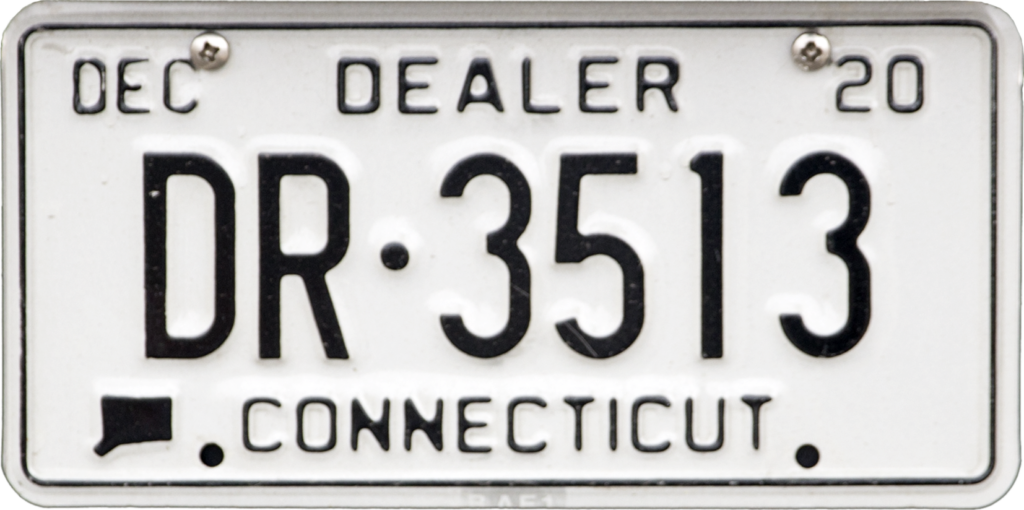
- Dealer, Repair, and Dismantler Plates: Special plates identified by prefixes such as MX, MD, X, D, or R.
- Veteran and Military Plates: Plates that recognise military service, specific branches, or participation in designated conflicts.
License Plate Costs in Connecticut
The cost of Connecticut license plates varies based on the type of plate and vehicle. Standard plates are typically part of the registration fee, while specialty and personalized plates come with additional fees.
- Standard Plates: Included with vehicle registration. The base registration fee is about $80, depending on the vehicle’s weight and other factors.
- Specialty Plates: Cost an additional $50 at issuance, with an annual renewal fee of around $30.
- Personalized Plates: Require an $80 initial fee and a $60 annual renewal. Extra charges may apply for custom messages.
- Veteran Plates: Available at no extra cost, though certain designs, such as Purple Heart plates, may require a small donation.
License Plate Lookup by States
Our license plate lookup service is available statewide; you can check license plates from other states, including:
Connecticut License Plate Lookup FAQs
Is there a free license plate lookup in Connecticut?
Yes, you can get basic info for a Connecticut license plate lookup for free through community-driven sites like Instant VIN Report, where you can find vehcile data and history. However, for official records like driving history, you'll need to use the CT DMV's website or submit a formal request for detailed, legally restricted data.
How can I find the owner of a car by license plate in CT?
To find the owner of a vehicle in Connecticut, you typically need a valid reason (such as an accident). You can request a title search or vehicle record from the CT DMV, but this requires payment and is restricted by privacy laws like the DPPA. For general vehicle details, use our Connecticut license plate lookup.
What information is available from a Connecticut license plate check?
Yes, you can look up basic information about Connecticut license plates online, mainly for registration verification (whether it’s active and valid) and vehicle history reports. However, to access owner details (name, address), you'll need to submit a formal request to the CT DMV due to privacy laws like the DPPA. Third-party sites like Instant VIN Report offer vehicle history using the plate number for a fee.
Can you look up Connecticut license plates online?
Yes, you can look up basic information for Connecticut license plates online, such as registration status and vehicle history reports. However, accessing owner details (name, address) requires a formal request to the DMV due to privacy laws (DPPA). You can use our license plate lookup tool to get the vehcile’s complete history.
How do I check for salvage titles or flood damage on a Connecticut vehicle?
To check for salvage or flood damage in a Connecticut vehicle, use the VIN on the Instant VIN Record for official records. Additionally, conduct a thorough physical inspection, looking for signs such as mildew, rust, or water lines in hidden areas. Some damage may not be reflected in the title, according to the FTC and NICB.