The quickest way to check your engine size is to decode your VIN or read the emissions label under the hood, which usually lists the engine displacement in liters, such as 2.0L. You can also find it on the window sticker or in the owner's manual. Below are all four methods, plus what the numbers mean.
What Is a VIN and How Does It Reveal Engine Information?
The VIN (Vehicle Identification Number) is a unique code assigned to every car. It serves as a unique identifier for your vehicle and contains important information, including its make, model, year, and engine type. It is 17 characters long and a mix of numbers and letters.
You can usually find the VIN in several locations on the vehicle.
- On the driver's side dashboard, near the windshield
- On the driver's side door frame
- Inside the engine compartment, near the firewall
- On your vehicle registration or insurance documents
Knowing how to read your VIN is essential for vehicle identification and can save you time and hassle in the long run.
RELATED: How to decode a 13-digit VIN number
How to Check Engine Size (With or Without the VIN)
The quickest way to check your engine size is to decode your VIN or read the emissions label under the hood, which usually lists the engine displacement in liters, such as 2.0L. You can also find it on the window sticker or in the owner's manual. Engine size is the total volume of all the engine's cylinders, written in liters (2.0L) or cubic centimeters (cc). There are four reliable ways to find it.
1. Read the emissions label under the hood
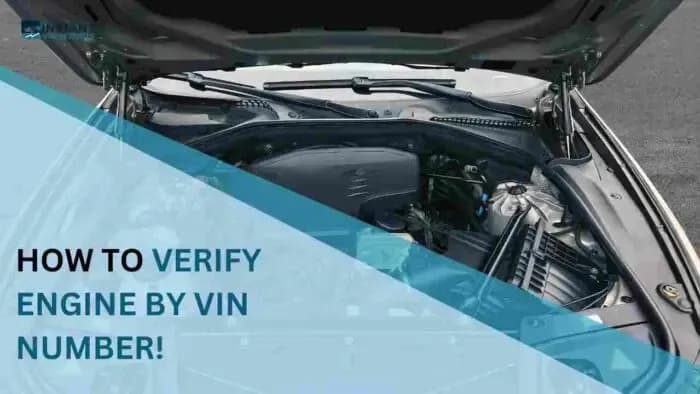
Open the hood and look on the underside of the hood, on the radiator support or near the front of the engine bay for a sticker titled "Vehicle Emission Control Information." It usually shows the displacement in liters and an engine family code. Where it sits varies by make.
2. Check Engine Size by VIN
- Find your VIN. It's on the driver's side dashboard near the windshield, on the driver's door frame, and on your registration or insurance documents, so you can find it even without the car.
- Enter it in the engine VIN decoder.
- Review the results: engine size (2.0L, 3.5L, 5.0L), engine type (I4, V6, V8), fuel type, transmission, trim, body style and manufacturer specifications.
Double-check every character, because one wrong digit changes the result. Many North American VINs carry the engine code somewhere in characters 4 to 8, often the 8th, but the position depends on the manufacturer.
3. Check the window sticker
The original window sticker lists the engine. You can also get one by VIN, as explained further down this page.
4. Use the owner's manual and engine cover
The specifications page of the owner's manual lists the engine options. Some engine covers show the displacement, but badges on the body can be changed, so don't rely on them alone.
What 2.0L, 3.5L and 5.0L mean
One liter is 1,000 cc, or about 61 cubic inches.
| Engine size | Cubic centimeters | Cubic inches (approx.) |
|---|---|---|
| 1.6L | 1,600 | 98 |
| 2.0L | 2,000 | 122 |
| 3.5L | 3,500 | 214 |
| 5.0L | 5,000 | 305 |
| 5.7L | 5,700 | 348 |
Engine Size vs Engine Type
Engine size refers to the engine's displacement, such as 2.0L, 3.5L, or 5.7L. "Engine type" refers to the engine configuration, such as Inline-4, V6, or V8. A VIN decoder can often reveal both pieces of information.
If you're buying a used car or need to dig up the history of a used car you just bought, take a step further to get the vehicle history report to uncover past records like title, accident history, theft records, lien records, ownership history, and more.
The comprehensive report can help you make informed decisions, whether you're buying a new part, reselling your car, or just curious about a vehicle's history.
Some Tips When Checking Engine Size by VIN
When checking your engine size by VIN, keep these tips in mind:
- Ensure Accuracy: Make sure you enter your VIN correctly. One wrong digit can lead to inaccurate results. It's easy to make a mistake when typing, so double-check your input.
- Use Reliable Sources: The internet is full of misinformation. Using a reliable tool like our VIN check tool ensures you get accurate details. You want to trust the information you receive.
- Save Your Engine Information: Keep your engine information, such as the size, handy for future reference. Write it down in a place where you can easily find it later. You never know when you might need to check your engine size again!
- Understand the Vehicle History Report: Once you generate a history report, take the time to read it thoroughly. Understanding the details helps you spot any potential issues or highlights you need to address.
Final Thought on How to Check Engine Size
Checking your engine size by VIN doesn't have to be a daunting task. With a few simple steps and the right tools, you can easily find the information you need. Remember to keep your VIN handy, and don't hesitate to use our VIN Check tool, which helps simplify the process and gives you comprehensive information about your vehicle.
Whether you're upgrading parts, selling your car, or just satisfying your curiosity, this knowledge will serve you well.
Frequently Asked Questions on How to Check Engine Size
My Car Doesn't Have A VIN. What Do I Do?
Every vehicle produced after 1981 should have a standard 17-character VIN. If you can't find it, check under the car or paperwork. We can also decode shorter pre-1980s VINs ranging from 5 to 14 characters. If you still can't find it, you can also use a U.S. license plate or the car's year, make, and model.
Does VIN tell engine size?
Yes, the VIN tells the original engine size accurately. The VIN contains manufacturer-specific codes that identify the engine installed at the factory. Our VIN decoder can identify the original engine specifications associated with the VIN.
What engine does my VIN show?
When you fill in the form with the VIN, our VIN lookup can reveal:
- Engine size,
- Engine family,
- Fuel type,
- And more
Can I check the engine size by VIN for a classic car?
Yes, but older VINs often use different formats. A classic VIN decoder or classic vehicle history report is usually more effective for vehicles built before 1981.
What if my VIN doesn't match the engine in the car?
If the VIN results don't match the engine currently in the vehicle, the engine may have been replaced. This is common in performance builds, restoration projects, and older vehicles. The VIN decoder identifies the engine installed at the factory, but it cannot automatically detect engine swaps performed later in the vehicle's life.
Is a VIN decoder enough before buying a used car?
Not always. A VIN decoder helps verify specifications, but it won't show accident records, title issues, ownership history, auction records, or liens. For those details, a full vehicle history report is recommended.
What Else Can I Do With My VIN?
Your VIN is a powerful tool. Aside from checking engine size, you can:
- Discover Your Car's History: This includes information about previous accidents, repairs, and service records. Knowing your car's past can inform future decisions.
- Check for Recalls: Recalls can impact safety and performance. Your VIN can tell you if your vehicle is subject to any outstanding safety recalls.
- Determine Original Manufacturer Specifications: This includes details about the original engine, transmission, and optional features. Knowing the specifications can help you when upgrading parts or making modifications.
Can I Change My VIN?
Changing a VIN is a complex process. It can raise legal concerns and is often illegal if done maliciously. Contact your local DMV for guidance if your VIN needs to be changed. They will provide the proper steps if a legitimate reason exists, such as correcting an error.