

Before the VIN standardization to 17-digits in 1981, manufacturers used various lengths and formats for VINs - one of the VIN formats is a 13 digit VIN.
The 13-digit VIN is a unique series of numbers and characters assigned to a classic car, and each digit is coded for specific information.
Unlike the standard 17-digit VIN used today, some classic vintage cars have a 13-digit VIN, which is not recognized by many VIN decoders, including the renowned Carfax decoder.
If you're wondering, "How do I decode a 13-digit or pre-1981 VIN?" join us as we demonstrate how simple it is to check any classic car by using our classic car VIN lookup specifically designed for vintage vehicles.
Key Takeaways:
- 13-digit VINs are for pre-1981 classics. Before 1981, VINs were not standardized. Many classic cars use a 13-digit format, but some have 11 or even 9 digits. Standard 17-digit decoders (like Carfax) will not work for these.
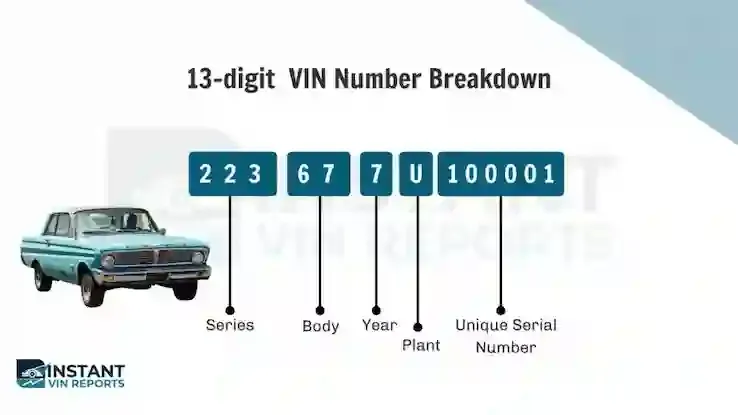
- Each of the classic VIN 13 digits tells you something specific, like the manufacturer (1st digit), engine cylinders (3rd digit), model year (6th digit), and production plant (7th digit). The last 6 digits (8th-13th) are just a unique serial number.
- An online classic VIN decoder tool, like Instant VIN Reports, is the best option. Manually decoding is possible, but a reliable 13-digit VIN decoder tool is faster and more accurate. It will give you details like make, model, country of origin, and engine type instantly.
What is a Classic VIN Number?
This is a unique VIN number that is associated with vehicles manufactured before 1981. The unique VIN number given to each vehicle is created from using a 13 digit sequence of letters and numbers.
Some manufacturers issue 13-digit VINs, while others issue 11-digit or even 9-digit VIN's. Each character in the sequence provides different information about the vehicle, such as the manufacturer, place of origin, place of assembly, model year, and vehicle type.
Decoding a 13 digit VIN or any classic is very easy by using a 13-digit VIN decoder.
However, you can still manually decode the VIN. It takes additional effort, but it's worth trying. Let's break it down:
1st Digit
The first digit of the 13-digit VIN represents the manufacturer of the vehicle, also known as the series origin.
2nd Digit
The second digit indicates the specific series model of the classic vehicle.
3rd Digit
The third digit provides the engine specifications - number of cylinders.
4th and 5th Digits
The fourth and fifth characters provide information on the vehicle's body style.
6th Digit
The sixth digit represents the model year of the classic car.
7th Digit
The seventh digit represents the production plant information.
8th to 13th Digits
These serve as a unique "serial" number for each classic vehicle. They don't provide detailed information but distinguish a classic vehicle from another same kind produced on the assembly line.
Nevertheless, you may not be able to easily decode the 13 digit manually - you need an accurate classic car VIN decoder to obtain detailed information.
13-Digit VIN Decoder
Decoding a 13-digit VIN can be straightforward when using a reliable VIN decoder. A VIN decoder tool can quickly provide details about your vehicle, such as its make, model, country of origin, engine type, and assembly location. Simply input the VIN into an online classic car VIN lookup tool, and instantly access all the necessary information.
How to Decode a Classic VIN
Here is how you can decode the VIN in these four easy steps:
- Find the VIN of your classic car. Check the car's dashboard, driver's side door frame, or vehicle registration documents.
- Navigate to the Instant VIN Reports Classic Car VIN Decoder site and enter the VIN into the form on the page.
- Fill out the form by also providing your email address and phone number. Click "Search VIN" to decode your classic car VIN.
- Access detailed and accurate vehicle information.
You can also get a classic build sheet to get the original engine specifications, transmission, standard/optional equipment, interior/exterior colors, dimensions, and more.
Importance of Decoding a 13 Digit VIN?
Decoding your 13-digit VIN is crucial for several reasons.
First, it can reveal vital information about the classic vehicle's history, including its manufacture date, specifications, and features.
It helps ensure that the car you're buying is not stolen or associated with any legal issues. By decoding your VIN, you can make informed decisions when purchasing a classic car, whether for restoration or collection purposes.
How do I Find My Classic VIN Number?
Usually, the VIN can be located by checking the following places on your classic car.
- It's stamped into a plate that's mounted on the dashboard near the windshield
- It's stamped on the driver-side door jamb.
- It's also stamped on the engine's firewall.
READ ALSO: Can I Find My VIN Number Without My Car?
How Do I Find The History of My Classic Car?
If you own or are looking to purchase a classic car, it may not be easy to find the vehicle history because classic VIN numbers were not the standard 17 digits we find today. So, where do you go to do a classic car VIN search?
Performing a classic VIN lookup can be a daunting task, and there are several ways to go about it. Here are some of the most common ways of getting the history of a classic car.
Use an Online VIN decoder
One easy way to perform a classic car VIN check is to use a service like Instant VIN Reports Classic Decoder By VIN. This service collects information about cars from all over the country and stores it in its database. This information includes the vehicle specifications, title information, and accident reports.
Use an Online Forum or Community
Going to online forums and communities dedicated to classic cars can also help you find information about the history of a classic car. In these forums, you will find several classic car enthusiasts who are passionate about classic cars and will be ready to help others find information about their cars. It is believed that forums can be a great place to find the pictures, specifications, and owners' manuals of classic cars
Contact the Original Manufacturer
You can also contact the original manufacturer of a classic car for its history. Definitely, many manufacturers will have data on all the cars that they have ever made. This information could be the year, make, and model, and information about any recalls that it may have had.
Conclusion
Decoding a 13-digit VIN is an important step in understanding the history and specifications of your classic car. A VIN decoder tool is the most efficient way to access this information. Whether you're restoring a vintage vehicle or purchasing one, knowing the details of the VIN can help ensure you make the right choices.
FAQ about How To Decode a 13 Digit VIN Number
Can a VIN number be 13 digits?
Yes, a VIN can be 13 digits, particularly for older vehicles manufactured before 1981. However, since 1981, the National Highway Traffic Safety Administration (NHTSA) standardized the VIN format to 17 digits for all vehicles produced.
Why does my VIN number only have 13 characters?
From January 1966, the US Government mandated the use of a 13-character VIN. This specification was phased in over several years. By January 1, 1969, all cars sold in the US were required to have the 13-digit VIN.
How do you decode a 13 digit VIN number?
Each character of the 13 digits represents specific information which can easily be accurately decoded using a 13 digit VIN decoder.
How do I find my classic car VIN?
For classic cars (pre-1981), the VIN is usually located in several common places. Check the driver's side dashboard near the windshield, the driver's door jamb, or under the hood on the firewall or engine block. You may also find it on the frame rail, steering column, or in documents like the title, registration, or insurance papers.
How to find the history of a classic car?
To find the history of the classic cars, the easiest way is to input the VIN into an online decoder tool that can handle pre-1980s VINs, like Instant VIN reports. After you submit it, you will see the recorded vehicle history, like mileage, lien/loan, and available sales & auction records.
Are all old VINs having 13 digits?
Not always. The easiest way is to check using our VIN decoder lookup tool, because it instantly identifies the correct format. Because, unlike modern 17-character VINs, older VINs (before 1981) can use shorter formats and range from 5 to 14 digits, not strictly 13.
What does each digit in a 13-digit VIN mean?
In general, older VINs (like 13 digits) don't follow a universal structure. Each manufacturer used its own coding system, so meanings vary depending on the brand and production year. That's why the fastest way to understand what a 13-digit VIN means is by using our VIN number decoder, which translates each character automatically.
Is there a free 13-digit VIN decoder?
Yes, you can start with our free VIN lookup tool to decode basic information instantly. Free tools usually provide key specs like make, model, and engine. For deeper insights like ownership history, liens, or damage records, you can upgrade to the full PremiumVIN report for more complete data.
How to decode a pre-1981 VIN?
The simplest way is to use our VIN decoder, since manual decoding can be confusing. Pre-1981 VINs don't follow the modern 17-character standard, so you need a tool that supports classic VIN formats, like Instant VIN Reports (5-14 characters), that can pull data from multiple databases to interpret them correctly.
Can Carfax decode a 13-digit VIN?
No. Carfax has limited support for older VIN formats. Instead, you can use our VIN lookup, which is designed to handle both modern and classic VINs, including 13-digit formats. This makes it more reliable when checking older vehicles or classic models.