
Selling your car at the right time can be the difference between making a profit and taking a loss. Many car owners rush to sell without considering timing, often losing money. This guide will help you understand the best time to sell a car.
Knowing the factors that affect your car's value can help you maximize your profit. A key solution is understanding the market and vehicle trends and using tools like Instant VIN Reports to check your car's value before you sell.
Key Takeaways
- Best time of year to sell a car: Late March through May (spring) for most vehicle types
- Best day to list: Thursday or Friday evening to catch weekend shoppers
- Always decode the VIN on your own car before listing. Having a vehicle history report enhances your professionalism and helps you sell faster.
Why Timing Matters in Car Sales
The timing of your car sale can significantly impact the final price. The auto market isn't static - it changes based on several factors like seasonality, economic conditions, and regional demand.
For sellers, understanding these trends means you can plan your sale when the market is highest, helping you get the best possible price. Let's explore how timing impacts your car sales.
Read also:Where Can I Find My VIN Number Without a Car?
When Is the Best Time to Sell a Car?
The time of year plays a major role in determining car sale prices. Knowing when demand is at its peak can help you decide when to sell for the most profit. Here are some seasonal trends to keep an eye out for:
Best Months to Sell
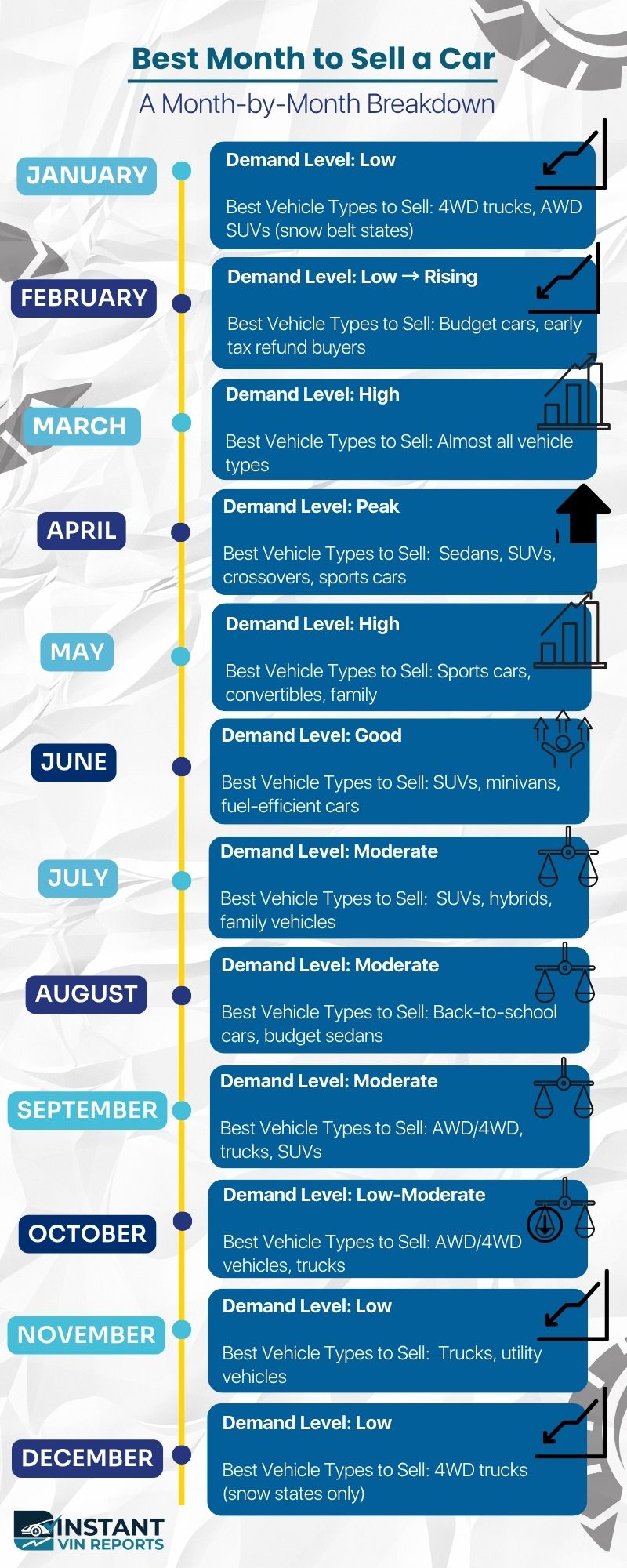
Spring and summer are the best seasons for selling used cars. During these months, buyers are more active because the weather is favorable for car shopping and test drives. Additionally, people tend to get tax refunds in early spring, giving them extra money to spend on cars. Families often look for vehicles before summer vacation, making this an ideal time to list your car.
In contrast, the winter months, especially December and January, can be slower. The weather discourages buyers from shopping, and many people are focused on holiday expenses rather than purchasing a car. However, if you need to sell during this period, focus on marketing your car as a good deal, as budget-conscious buyers may still be looking.
What Day of the Week Is Best to Sell a Car?
This is one of the most underrated timing decisions sellers make. The best day to list a used car is Thursday or Friday.
Here's why: most private-party car shoppers browse listings during the work week but schedule test drives and finalize purchases on weekends. A listing that goes live Thursday or Friday gets peak visibility right when buyers are mentally transitioning into weekend mode and actively planning viewings.
Listings posted on Monday or Tuesday often get buried by newer listings by the time the weekend arrives, right when buyers are most active.
Practical tip: Post your listing on Thursday evening. Write your description, take photos in daylight earlier in the week, and schedule the listing to go live that evening. You'll hit the Friday morning browsing crowd with a fresh, full-featured listing.
Sales Events and Promotions
Certain times of the year see increased buyer activity due to sales events and promotions. For instance, tax season (February to April) brings more buyers into the market, using their refunds as down payments.
End-of-year sales events can also attract buyers as dealerships clear out inventory to make room for new models. Aligning your sales with these trends can increase your chances of a quick, profitable sale.
Read also: How to Clear Salvage Title from Any Vehicle
External Factors Influencing Selling Time
Aside from seasonal trends, several external factors can influence the optimal time to sell your car.
Economic Conditions
The state of the economy has a direct impact on car sales. During an economic boom, buyers have more disposable income, leading to higher demand for used cars. In these periods, you can sell your car at a higher price. However, during economic downturns, buyers may be more cautious, and the demand for cars drops, which can lower your sale price.
It's wise to monitor economic indicators. If inflation rates are high or unemployment is rising, consider delaying your sale if possible. Alternatively, you might have better luck in niche markets where certain vehicles, like fuel-efficient models, become more popular during tough economic times.
Vehicle Age and Mileage
The age and mileage of your car are two critical factors that affect its value. Newer cars with low mileage tend to sell faster and for higher prices. Once your car hits certain milestones (50,000 or 100,000 miles), its value declines rapidly. If your vehicle is approaching one of these thresholds, consider selling it sooner rather than later to get the best price.
Buyers often prefer cars around three to five years old because they have lower mileage and are still relatively modern. If your vehicle falls into this category, you're in a solid position to sell.
Local Market Conditions
The demand for cars can vary widely based on your location. In urban areas, smaller, fuel-efficient cars are often in higher demand due to traffic and parking constraints. In contrast, rural or suburban areas may have a higher demand for trucks or SUVs, which are better suited for rougher terrain and outdoor activities.
To understand local market demand, review listings in your area. If there are many similar vehicles for sale, the market might be saturated, making it harder to sell at a reasonable price. Conversely, if there are few listings for your type of car, you can command a higher price.
Read also: What Is a Branded Title Vehicle? Find Out if Your Car Is Safe
Preparing Your Car for Sale
To get the best price for your car, you must present it in the best possible condition. Here are some practical tips:
Clean and Detail
A clean, well-maintained car is more appealing to buyers. Wash and wax the exterior, and vacuum and clean the interior.
Fix Minor Issues
Address small repairs, such as replacing burnt-out lights or fixing minor dents and scratches. These fixes are often inexpensive but can have a significant impact on the sale price.
Gather Documentation
Having all your paperwork ready, including maintenance records and the car title, can help speed up the sale process and build buyer confidence.
For a more comprehensive check on your vehicle's history and features, consider using the VIN Number Decoder from Instant VIN Reports. It provides detailed information on your car, helping you spot any potential issues before listing it.
How Instant VIN Reports Can Assist You in Selling
Before listing your car, having the full picture of its value and history can give you a serious edge. Instant VIN Reports make this easy. With just your VIN, you get a detailed vehicle history that includes previous ownership, accident records, mileage accuracy, and open recalls—everything a smart buyer wants to know.
For classic or pre-1980 vehicles, the rules are entirely different. Use our classic VIN decoder to research production numbers, factory options, and historical data that can support a higher asking price.
By sharing this report with potential buyers, you establish immediate trust, justify your asking price, and differentiate yourself from other listings that lack transparency. Don't have the VIN on hand? No problem, a license plate lookup can give you the same valuable info.
With this, you can expect faster sales, fewer price negotiations, and more confident buyers—all with one quick report.
Conclusion
Timing matters when it comes to selling your car. Knowing the right season, local market trends, and overall economic conditions can help you sell for more. Getting your car ready and using tools like Instant VIN Reports to check its history and value gives you a real advantage. Selling doesn't have to be stressful - just follow the tips in this guide to make smart choices and get the best possible deal.
Frequently Asked Questions
What is the best month to sell a car?
April is generally the best month to sell a used car. Demand peaks in spring as tax refunds hit, the weather improves, and buyers motivated by summer plans and life changes enter the market. March and May are close seconds, making late spring the strongest window of the year for most vehicle types.
When should I sell my car?
Sell your car when at least two of these conditions align: it's spring (March-May), your vehicle is approaching a mileage milestone (like 50K or 100K), it's between 3-7 years old, or you have a documented maintenance history that supports your asking price. The longer you wait past these windows, the more depreciation works against you.
Is spring a good time to sell a car?
Yes! Spring is the best season to sell a used car for most vehicle types. Tax refund season drives buyer demand from late February through April, warmer weather increases test drive activity, and buyers motivated by summer plans, graduations, and new jobs all enter the market simultaneously.
What time of year do car prices peak?
Used car prices typically peak in the spring, specifically March through May, driven by the tax refund car-buying season and seasonal demand. Prices for AWD/4WD vehicles can also spike in early fall (September-October) as buyers in northern states prepare for winter.
Should I sell my car before or after winter?
For most vehicles (sedans, sports cars, and convertibles), sell before winter if you can. Winter reduces buyer activity and test drive motivation significantly. If you own a 4WD truck or an AWD SUV, fall can actually be a good selling window before the snow hits. Otherwise, waiting until spring will generally get you more.
How can I improve the value of my car before selling it?
To increase your car's value, ensure it's clean, well-maintained, and free of minor cosmetic issues. You can also use a window sticker lookup to get a detailed list of your car's original features, which may help justify a higher asking price.
What factors affect car sale prices?
Car sale prices are influenced by factors like the vehicle's age, mileage, condition, and the current state of the economy. Local market demand and seasonal trends also significantly determine the price. For a detailed look at how these factors affect resale value, check out this guide on cars with the best resale value.