


If you are thinking about buying a used motorcycle, then running a VIN check is very important. Buying a second-hand motorcycle may be a better option if you do not have enough money, you have bad credit, or you are seeking entry level motorcycles.
It can be very intimidating to buy a used motorcycle, especially if it’s from a private dealer. There’s a lot of fraud and shady people out there, and it’s a very good idea to know what you are doing. In this article, we will be looking at how you can easily check the VIN of a motorcycle and what the numbers stand for.
Key Takeaways
- Every post-1981 motorcycle has a 17-character VIN stamped into the steering neck frame
- The VIN encodes the manufacturer, country of origin, engine type, model year, assembly plant, and unique production sequence
- Pre-1981 motorcycles use shorter non-standard formats — use the classic VIN decoder for those
- Any VIN that appears altered, obscured, or mismatched is a reason to walk away
How To Check a Motorcycle VIN
To avoid any unpleasant experiences when buying a motorcycle, you can check the VIN and find out the previous history.
Most motorcycles sold in the United States usually have a 17 digit character, and these are made up of a unique combination of letters and numbers.
The code is used to identify both the manufacturer and the individual bike. The motorcycle VIN decoder is used to determine the meaning and significance of each character.
The code can be found on the vehicle’s frame, although its exact location varies depending on the make and model of the motorcycle you’re looking at. The information below will help you understand better
Here is the complete breakdown of Harley Davidson, one of the motorcycle brands:

1st Character
A VIN’s first character identifies the motorcycle’s manufacturing region. Some of the most motorcycles have 1st Digit VIN with:
- J = Japan (Honda, Yamaha, Kawasaki, Suzuki)
- 1, 4, or 5 = United States
- 2 = Canada
- 3 = Mexico
- L = China
- V = France (some European makes)
- W = Germany (BMW)
2nd Character
The second character, when coupled with the first, indicates the country in which the motorcycle was built. A BMW motorcycle built in Mexico or a Japanese ATV made in Canada is not uncommon.
3rd Character
Manufacturers of power sports vehicles utilize the third character to identify the vehicle type. For example, it could indicate a motorcycle, ATV, or scooter. Manufacturers don’t all use the same codes.
Characters 4-9
These characters make up the Vehicle Descriptor Section. Characters 4 through 8 contain details about the model, engine size, and body style options available. Manufacturers don’t all use the same codes. Character 9 is a check digit that determines whether or not the VIN is correct. Through the use of a Weight Factor Table, it is determined from the whole VIN.
Characters 10-17
These characters make up the Vehicle Identifier Section. The tenth character denotes the vehicle’s marketing model year, which is not to be confused with its production year. As it rolled off the manufacturing line, characters 11 through 17 identify the assembly facility, available options, and the production number.
Where Is My VIN Located?
The VIN is located in a motorcycle that varies from manufacturer to manufacturer. For most motorcycles, the VIN is usually located near the base of the steering wheel or near the bottom of the cylinders.
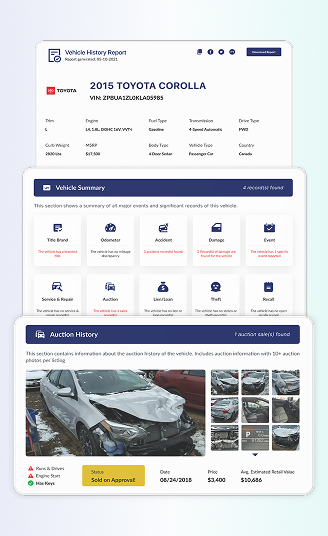
A VIN can give you a detailed report of a motorcycle’s history of repairs.
It can also give you a complete record of each of its owners. It can even give you a record of a motorcycle’s odometer history so you can make sure it hasn’t been rolled back and its mileage is correct. The consumer can also find out the data about open recalls.
If you cannot get the VIN of your motorcycle, this is also fine, as you can also use the license plate number to get the previous history. You want to ensure that you always use the VIN number, though, as a license plate number is not always as dependable.
Performing a free VIN check puts your mind at ease. It lets you know that the bike you’re thinking about buying is legit. That way, you can simply relax and enjoy the ride!
Frequently Asked Questions About Decoding A Motorcycle VIN
Where do I find the VIN on a motorcycle?
The most common location to find the VIN on a motorcycle is the steering neck. The other location is in front of the frame where the fork tubes connect. Look for stamped characters on the right side of the neck. Some manufacturers also stamp a secondary identification number on the engine cases. Always verify that the VIN on the frame matches the number on the title documents.
How do I decode a motorcycle VIN?
To decode a motorcycle VIN manually you can break 17-character motorcycle VIN into three sections: the World Manufacturer Identifier (positions 1–3, covering manufacturer and country), the Vehicle Descriptor Section (positions 4–8, covering model, engine, and type), and the Vehicle Identifier Section (positions 9–17, including the check digit, model year, plant code, and production sequence).
Use our VIN decoder to get manufacturer-specific decoded results for faster and more accurate results. We cannot only decode the 17 characters VIN, but also the VINs of older classic motorcycles.
Do all motorcycles have VINs?
All street-legal motorcycles manufactured after 1981 have standardized 17-digit VINs as required by NHTSA regulations. Motorcycles manufactured before 1981 have shorter, manufacturer-specific identification numbers. Off-road-only vehicles may have different identification systems depending on the manufacturer and state regulations. Use our classic VIN Number decoder for pre-1981 bikes.
What does the motorcycle VIN tell me?
The VIN tells you the manufacturer and country of assembly, the vehicle type and engine specifications, the model year, the assembly plant, and the unique production sequence number. Running a history check on the VIN additionally reveals the title status, accident records, odometer history, theft records, and open safety recalls.
How do I check if a motorcycle is stolen?
Run a VIN check on the motorcycle’s frame VIN. The report queries NMVTIS and law enforcement databases for theft records. A stolen vehicle record in the report means the motorcycle should not be purchased — it can be seized by authorities at any time. Also physically inspect the VIN for signs of tampering, which is a common indicator of a stolen vehicle with an altered identity.
Can I run a free motorcycle VIN check?
Yes, you can. We provide free vehicle specifications through our VIN check tool, For a comprehensive history report covering title status, accidents, odometer records, and theft history, a paid report through Instant VIN Reports provides far more complete coverage than any free tool.