
Check if a Car Has a Lien by VIN: Avoid Hidden Debt
Buying a used car without checking for liens first is a costly gamble. A quick lien check by VIN reveals any unpaid loans or active financial claims tied to the vehicle before you hand over your money. Enter the VIN to save thousands on hidden debt now.
Why Check for a Lien Before Buying a Used Car?
Auto financing is everywhere, and buying a car with an existing lien is more common than most people realize. Here is what buyers need to know:
What Is a Lien on a Car?
A lien on a car is a legal claim that a lender holds against a vehicle until the owner fully pays off the loan used to purchase it. In simple terms, if someone took out a loan to buy a car and still owes money, the lender technically has a legal right to that vehicle until the debt is cleared.
If you buy a vehicle with an unpaid lien, that debt does not disappear after the sale. The lender can legally repossess the car even after it is in your name, leaving you without a vehicle and without your money. Checking for liens before any transaction is one of the smartest steps any buyer can take.
Why Run a Lien Check Before Buying or Selling a Used Car?
A lien check by VIN number gives you access to the full vehicle history report, including lien and loan records that could save you from a very expensive mistake. Here is why it matters for both sides of the deal.
Buyers
Buyers need to confirm that no financial claims are sitting on a vehicle before handing over any money at all.
Avoid Inheriting Someone Else's Debt
An unpaid lien transfers risk to the buyer. A lien check confirms there are no active loans attached to the vehicle before purchase.
Protect Your Legal Ownership Rights
A vehicle with an unresolved lien can be repossessed by the lender even after you buy it, leaving you with nothing.
Negotiate From a Position of Strength
Discovering an existing lien gives buyers a strong reason to negotiate a lower price or walk away from the deal entirely.
What Information Does a Car Lien Check Reveal?
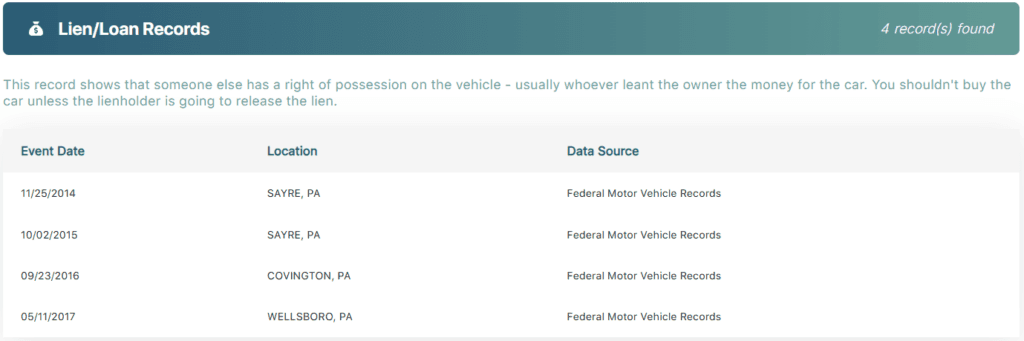
The lien and loan records section of a vehicle history report gives you a clear picture of any financial claims ever recorded against the vehicle, helping you understand its full title status. Here’s what to expect:
Number of Lien Records
This shows how many lien events have been recorded against the vehicle throughout its ownership history.
Dates of Event
This reveals the exact dates each lien was opened or closed, giving you a clear financial timeline for the vehicle.
Location of Event
This shows where each lien was recorded, which can help verify the vehicle’s registration history and ownership trail.
Source of Data
This identifies where the lien information came from, such as state DMV records or financial institution reporting databases.
Other Vehicle Records Available in the Vehicle History Report
A lien check record is just one part of the full vehicle history report. Here are the other important records available when you run a lien search by VIN.
Vehicle Usage
This shows how the car was used, whether it was a personal vehicle, rental, fleet car, or for commercial use.
Ownership History
This reveals the number of previous owners, how long each kept the car, and where it was registered.
Title Brands
This shows any negative title brands on record, such as salvage, rebuilt, flood damage, or lemon law buyback status.
Accident History
This pulls every reported accident on file, including damage details and repair records connected to that specific vehicle.
Mileage History
This tracks recorded odometer readings over time to help you catch any signs of mileage tampering or rollback.
Theft Records
This checks whether the vehicle was ever reported stolen or flagged in any national law enforcement database.
Damage Records
This surfaces any structural or flood damage reports that go beyond standard accident records in the vehicle’s history.
Sales History
This shows every recorded sale of the vehicle, including transaction dates and prices from previous sales.
Auction Records & Photos
This shows whether the vehicle was ever sold at auction, including auction photos, dates, and final sale prices.
How to Check if a Car Has a Lien by VIN?
Checking a vehicle for liens is quick and straightforward. Follow these three simple steps and get the full details.
Enter the VIN
Find the VIN on the dashboard or title documents and enter it into our lien lookup search tool, using the form at the top of the page. You can also search by license plate lookup.
Search VIN
Get an instant free preview showing the vehicle's year, make, model, engine details, and other core specifications right away.
Get the Full Lien Report
Pay to access the complete report to view lien and loan records, title status, ownership history, and much more instantly.
What Happens if You Buy a Car With an Unpaid Lien?
Buying a car with an unpaid lien is not just a minor inconvenience, as it can lead to serious financial and legal consequences. Here are four things that could happen.
The Lender Can Repossess the Car
Even after you buy the car, the original lender has the legal right to take it back to recover the unpaid debt.
You Lose Your Money and the Vehicle
If the car gets repossessed, you lose both the vehicle and every dollar you paid for it without any guarantee of recovery.
You cannot get a Clean Title
A vehicle with an active lien cannot be transferred with a clean title, making it difficult or impossible to legally register or resell.
You May Face Legal Disputes
Resolving a lien situation after purchase can lead to lengthy and costly legal battles between the buyer, seller, and the lender involved.
Can a Dealer Sell a Car With a Lien on It?
Technically, a dealer can sell a car that has a lien on it, but they are legally required to resolve that lien as part of the sale process. Most reputable dealerships will pay off any outstanding loan on a trade-in vehicle before listing it for sale, ensuring the title is clear before transferring ownership to a new buyer.
However, a private seller may not always disclose an existing lien, either out of ignorance or dishonesty. This is exactly why running a lien check by VIN before any private car purchase is so important. It’s fast and can save you from a financial nightmare that could take months or years to untangle.
How to Remove a Lien From a Car Title
Removing a lien from a car title is a straightforward process once the loan is fully paid off. Here are the steps to follow.
Pay Off the Loan in Full
Contact your lender and settle the remaining loan balance completely before requesting any lien release documentation from them.
Obtain the Lien Release Document
Once the loan is paid, the lender issues a lien release letter or signs off on the title directly.
Submit Documents to the DMV
Take the lien release document to your local DMV and apply for an updated clean title in your name.
Receive Your Clean Title
The DMV processes the paperwork and issues a new title showing the vehicle is free and clear of any liens.
Why Choose Our Vehicle Lien Lookup Tool?
There are many lien check tools available online, but here is what makes ours stand out from the rest every single time.
Trusted Data Sources
We pull lien data directly from verified state and national databases for reliable results.
Instant and Detailed Vehicle History Report
Get a thorough lien report and full vehicle history delivered instantly after a successful payment.
Support All Brands
Our lien lookup by VIN tool works across every major vehicle make and model available.
24/7 Customer Support
Our team is always on hand to help you anytime you need assistance.
Get a Lien Search by VIN Before Buying that Used Car
Do not risk losing thousands of dollars to hidden debt on a used car. Use our lien search by VIN tool to verify the lien status and spot hidden issues before it is too late.
Frequently Asked Questions About Lien Check by VIN Number
How do I check if a car has a lien by VIN?
To check if a car has a lien by VIN, enter the VIN into our auto lien check tool to get the full vehicle history report. The report will show any recorded lien or loan activity tied to that vehicle.
What is a lien on a car title?
A lien on a car title is a legal claim a lender holds against a vehicle until the loan used to purchase it is fully repaid. The lien is removed from the title once the debt is completely settled.
Can I buy a car that has a lien on it?
Yes, you can buy a car that has a lien on it, but the lien must be resolved before a clean title can be transferred. It is safest to confirm the lien is cleared before completing any purchase transaction.
Does a VIN number show outstanding finance?
Yes, a VIN can reveal outstanding finance when you look up the vehicle history by VIN. The report will show any lien and loan records from state and national databases associated with that specific vehicle.
What happens if I buy a car with an unpaid lien?
If you buy a car with an unpaid lien, the lender can legally repossess the vehicle even after the purchase is complete. You could lose both the car and the money you paid for it.
How long does a lien stay on a car title?
A lien stays on a car title until the associated loan is fully paid off and a lien release is officially filed with the DMV. Unresolved liens can remain on a title indefinitely until action is taken.
What is a lien release, and how do I get one?
A lien release is a document from the lender confirming the loan has been fully paid. You get one by paying off the loan in full and then requesting the release document from your lender directly.
Is a free lien check by VIN accurate?
Some free lien check tools online may help identify the presence of a lien, but accuracy depends on the data sources used. Your best bet is to get a paid VIN report, which typically provides detailed and accurate lien status information.
What is the difference between a lien and a salvage title?
A lien is a financial claim against a vehicle due to an unpaid loan, while a salvage title is a brand assigned to a vehicle that has been declared a total loss by an insurance company after significant damage.
What is a DMV lien check?
A DMV lien check is a search conducted through your state's Department of Motor Vehicles to verify whether any liens are recorded against a vehicle's title. It confirms the legal and financial status of the car's ownership record.