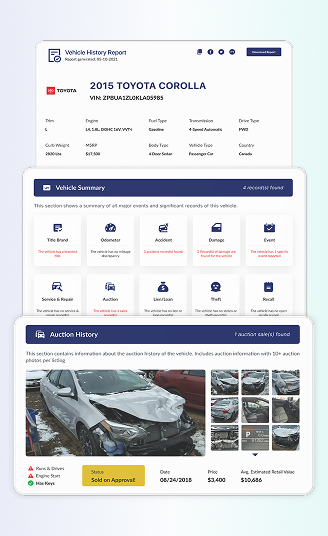


Check Any Vehicle for Open Safety Recall Information
Over 29 million vehicles are actively tracked for recall in the U.S. in 2025. Enter the VIN or U.S. license plate into our vehicle recall check to find out if your vehicle has any open safety recalls. Instantly look up any unrepaired safety issues, including airbag, engine, brakes, steering, suspension, and more.
Most Recent and Notable Vehicle Recalls in the U.S.
Vehicle recalls in the U.S. cover a wide range of safety and operational issues. Some defects are minor, while others can affect critical systems and endanger lives.
+29.2 Millions
The National Highway Traffic Safety Administration (NHTSA) reported 891 vehicle recalls affecting more than 29.2 million vehicles in 2025.
+50 Millions
The highest recall year in modern U.S. history was 2014, when more than 50 million vehicles were recalled.
~67 Millions
The massive Takata Corporation airbag crisis alone affected about 67 million airbags in the U.S.
What is a Vehicle Recall and Why is it Issued?
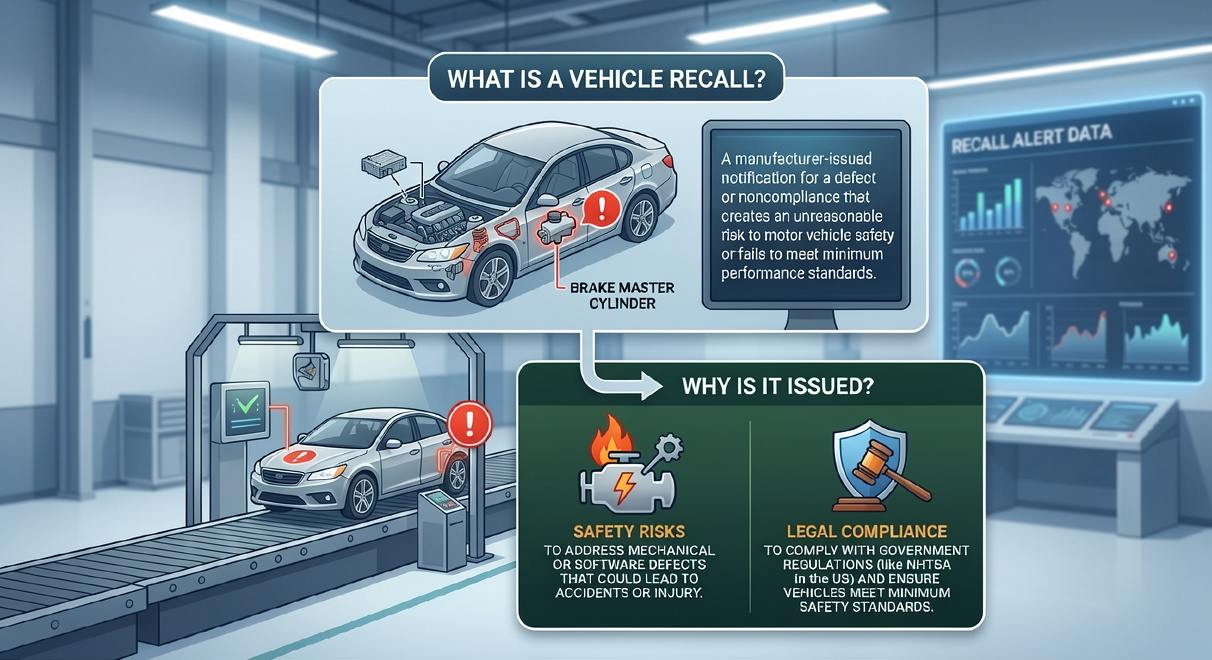
A vehicle recall is an official manufacturer safety notice issued when a vehicle component creates safety risks or fails federal safety standards.
It’s usually issued when the manufacturer realizes that there is a potential safety issue with a component of a vehicle or if it fails to meet the set minimum safety standards. It can be related to equipment, car seats, tires, or any other car parts.
Manufacturers are required to notify the consumers and the regulatory safety agencies, fix the problem by repairing it at no cost, replacing it, offering a refund, or, in rare cases, repurchasing the vehicle.
When Do You Need to Run a Vehicle Recall Check?
Many recalls remain unresolved for years because drivers never realize their vehicle is affected. A VIN-based recall report helps identify active recalls and important vehicle safety history records connected to the car.
Before Buying a Used Car
Used vehicles don’t always include recall information. A Recall check reveals open recalls, title records, and past damage before you buy.
After Nationwide Announcement
If news reports a recall involving similar vehicles, or receive an email, a VIN-specific recall search confirms if the vehicle is impacted.
As Part of Vehicle Checks
The NHTSA recommends checking the vehicle every 6 months. Regular recall checks help identify recalls added later.
If You Suspect a Fault
Millions of recalled vehicles are resold without repairs. If the vehicle has unusual issues, a recall check can show unresolved safety problems.
Why Checking for Vehicle Recalls is Important
Recall checks help identify manufacturer safety campaigns affecting millions of vehicles across the United States each year.
Owners
Vehicle owners should monitor recalls regularly because manufacturers may expand campaigns years after original production.
Reduce Long-Term Repair Costs
Resolving recalls early may prevent additional damage involving airbags, seatbelts, or child safety systems.
Improve Vehicle Safety
Recall repairs help ensure important safety systems operate properly during emergencies or accidents.
Prepare for Road Trips
Checking recalls before traveling helps identify unresolved defects affecting tires, steering, brakes, or visibility systems.
Buyers
Online listings rarely include recall information. Checking a recall helps buyers verify unresolved recalls before purchasing used vehicles.
Identify Recall-Related Accident Risks
Some recalls involve ABS braking failures, Takata airbags, rearview camera malfunctions, battery overheating, or steering system defects linked to crash risks.
Identify Recall Expansion Campaigns
Manufacturers sometimes expand recalls later, affecting additional production dates or trim levels.
Buy With More Confidence
Checking recalls before purchase helps buyers make safer and more informed used vehicle decisions.
Dealers & Resellers
Dealerships often review recall reports before reselling, financing, or listing used inventory vehicles for sale.
Confirm Dealer Repair Availability
Sellers can verify whether repairs remain available before transferring ownership to another driver.
Reduce Liability Concerns
Completing recalls before selling may reduce concerns about unresolved manufacturer safety defects later.
Sell With Greater Confidence
Knowing recalls were checked and resolved helps sellers complete transactions more smoothly and professionally.
What Recall Information Will You Find in Our Report?
Vehicle safety is critical, and knowing whether a car has open recalls can protect you from hazards and legal risks. With InstantVINReports, every recall check report is premium and delivers complete, verified information.
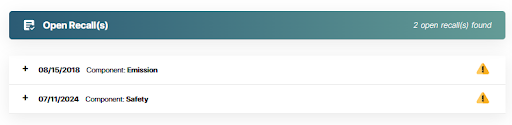
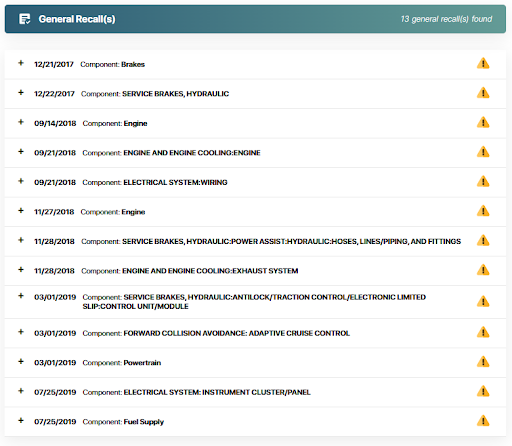
Recall Date
Check the official date when the manufacturer or government, like NHTSA, announced the recall.
Campaign Number
Manufacturer-assigned identifier for tracking the recall.
Affected Components
This section will tell you which parts of the car are affected, e.g., airbags, brakes, batteries, and ADAS sensors
Remedy Description
Includes dealer repair instructions, repair status, replacement parts availability, and manufacturer-issued safety recommendations for drivers.
Recall Number
Government-issued number for official records and lookup.
Summary & Notes
A concise explanation of why the recall exists, potential safety risk, and any important details.
Buying a Used Car? Get the Full Vehicle History Report
The full vehicle history report goes beyond recalls to give you a complete vehicle history, helping you make informed decisions when buying, selling, or driving a car:
Vehicle Specifications
Displays engine type, drivetrain, fuel type, body style, engine displacement, and factory vehicle configuration details.
Ownership History
Check the previous ownership records, registration timelines, ownership duration, and current registered state information for the vehicle.
Vehicle Usage Records
Identifies whether the vehicle was used personally, leased, commercial, fleet-operated, rental, taxi, or government-owned previously.
Mileage History Records
Tracks historical odometer readings, reported service mileage, and estimated current mileage to detect inconsistencies or rollback risks.
Service & Repair History
Lists reported maintenance visits, repair records, inspections, and manufacturer service actions performed throughout the vehicle’s lifetime.
Auction & Sales Records
Shows recorded previous dealership listings, auction appearances, sale prices, seller type, and vehicle condition information with more than 10 photos from reported listings.
Title Brand Verification
Checks for salvage, rebuilt, flood, junk, lemon, fire, or odometer-branded title history across reporting databases.
Damage Verification Records
Detects reported structural damage, flood exposure, fire incidents, salvage auction activity, or major damage-related vehicle history events.
Theft & Lien Records
Searches for active theft reports, repossession activity, outstanding liens, unpaid loans, or financial ownership claims against the vehicle.
Market Value Estimates
Provides estimated private-party, trade-in, dealer retail, and rough-condition values using current market valuation databases.
Repair Cost Estimates
Displays estimated dealer and independent repair pricing for major vehicle components, maintenance services, and replacement repairs.
Warranty Coverage Information
Shows remaining or expired manufacturer basic warranty coverage for powertrain, corrosion, and standard factory protection programs.
How to Check for Vehicle Recalls ?
Checking the vehicle safety recall records is simple. Just follow these three easy steps to get the safety records of the vehicle.
Step 1: Enter Your VIN Number or License Plate
Type the VIN or the U.S license plate into the form above. The VIN can be found on the car dashboard, driver's side door jamb, and other areas, including the vehicle paperwork
Step 2: Click “Search VIN”
After entering the VIN or plate number, select “Search VIN.”
Step 3: Get the Full History Report
You will see a free preview page with a decoded VIN. Purchase a full report to access recall information, and other vehicle history records, including accident records, title checks, ownership history, mileage data, and more. View the report online instantly or download it as a PDF for future reference.
What to do If Your Vehicle is Recalled?
Open recalls should never be ignored. Drivers should verify recalls quickly and complete repairs when available.
Check The VIN Details
Search the VIN to identify active recalls linked specifically to the vehicle and production information.
Read the Recall Description
Review the affected systems, recall severity, and manufacturer recommendations before continuing to drive the vehicle regularly.
Schedule a Dealer Inspection
Most recall repairs are completed by authorized dealers using manufacturer-issued repair instructions and replacement components.
Check Vehicle Recalls by Make
You can use our recall lookup tool to check these vehicle brands for any open safety recall records, the full vehicle history report, and more.
- Acura
- Alfa romeo
- AM general
- Aston martin
- Audi
- Austin healey
- Avanti motors
- Bentley
- BMW
- Bricklin
- Bugatti
- Buick
- Cadillac
- Chevrolet
- Chryler
- Daewoo
- Daihatsu
- Datsun
- Dodge
- Eagle
- Ferrari
- Fiat
- Fisker
- Ford
- Freightliner
- Genesis
- Geo
- GMC
- Harley davidson
- Hino
- Honda
- Hummer
- Hyundai
- Infiniti
- International
- Isuzu
- Jaguar
- Jeep
- Kawasaki
- Kenworth
- Kia
- Koenigsegg
- Lamborghini
- Land rover
- Lexus
- Lincoln
- Lotus
- Maserati
- Maybach
- Mazda
- McLaren
- Mercedes Benz
- Mercury
- MG
- MINI
- Mitsubishi
- Morgan
- Nissan
- Oldsmobile
- Panoz
- Peterbilt
- Plymouth
- Polestar
- Pontiac
- Porsche
- Ram
- Rolls-Royce
- Saab
- Saleen
- Saturn
- Scion
- Shelby
- Smart
- Subaru
- Suzuki
- Tesla
- Toyota
- Triumph
- Volkswagen
- Volvo
- Yamaha
Check Other Vehicle Check Services
We offer more than just recall lookups. Our vehicle lookup tools help drivers verify ownership history, factory specifications, title status, auction records, and original vehicle equipment using VIN numbers or license plates.
Auction VIN Checks
View available auction records, previous listings, sales history, and reported vehicle damage at the auction blocks connected to the VIN before purchasing.
Title Check
Hidden title brands can affect safety and value. Search title records instantly using the vehicle VIN or license plate.
Trailer VIN Lookup
Get a full trailer VIN records to verify manufacturer information, title history, specifications, recalls, and registration details before purchase.
License Plate Lookup
License plate searches help verify a vehicle’s hidden history before buying or confirming ownership information.
Free VIN Decoding
Decode VIN numbers at no cost, and access engine specifications, trim details, drivetrain information, factory equipment, and manufacturing records.
Classic Car VIN Lookup
Decode older VIN formats from 5 to 14 digits, and get information about the factory specifications, model information, and production records for classic vehicles.
Window Sticker Lookup
View original factory window sticker information, including packages, colors, pricing, and installed vehicle options.
Classic Build Sheets
Retrieve factory-issued classic build details information for supported classic vehicles and collectible models.
Check Any Vehicle For Open Safety Recalls Now
Identify hidden vehicle safety risks. Enter your VIN or license plate now to instantly check for open recalls, electrical defects, airbag recalls, and manufacturer safety campaigns.
Frequently Asked Questions About Vehicle Recall Checks
Can I check if a car has had a recall?
Yes, you can check if the car has a recall. By using the vehicle’s VIN or license plate, you can check if any recalls have been issued for that car. Instant VIN Reports provides full recall details, including affected components, manufacturer remedy instructions, and repair availability without needing third-party websites.
What are the types of recalls on vehicles?
There are three types of recalls on vehicles
- Safety recalls – which are usually done when there is a defect in the vehicle
- Compliance Recalls – Vehicle doesn’t meet safety regulations.
- Emission recalls – which are done when the vehicles do not meet the emission standards.
What triggers a recall?
Recalls are issued when a manufacturer identifies a defect that may compromise vehicle safety, cause a malfunction, or violate federal safety regulations. Examples include airbags, brake failures, electrical system defects, or hood latches that may open while driving.
What vehicles are on the recall list?
Vehicles are listed based on manufacturer-reported defects submitted to the NHTSA or company records. Every VIN-reportable vehicle affected by an active safety recall is included in the InstantVINReports database.
Which type of recall is the most serious?
Safety recalls affecting critical systems, like airbags, brakes, steering, or hoods, are the most urgent. For example, on February, 26, 2026, Ford recalled 4.3 million U.S. vehicles after software failures disabled trailer brakes and exterior lights, increasing accident risk.
Is it okay to purchase a vehicle with recalls?
It might be worrying to buy a car with a safety recall on it. However, you should know that a recall actually means that the manufacturers have discovered a problem and have also found a way to fix it at no additional cost to you.
Can I still drive my car if it has a recall?
In most cases, you can drive, but some defects (like the Nissan Pathfinder hood latch recall in Montana, 2025) may increase crash risk. Repairs are available through authorized dealers. Always check your specific recall for safety instructions.
How long does a vehicle recall last?
Recalls do not expire. Once a recall is issued, it remains active until the manufacturer provides a fix. The vehicle is covered for free repairs at any authorized dealer as long as the recall is active.
Are recall repairs really free?
Yes. Federal law requires manufacturers to repair safety recall defects at no charge to the vehicle owner, regardless of whether you bought the car new or used, and regardless of how long ago the recall was issued. Parts and labor are covered entirely by the manufacturer.
What if my car has a recall but no fix is available yet?
NHTSA requires the manufacturer to continue developing a remedy and to notify you when one becomes available. In the interim, the manufacturer is required to send interim safety instructions. Check your VIN periodically so you know when a remedy becomes available.
What if a dealer refuses to fix my recall?
If an authorized dealer refuses to perform a recall repair at no charge, you can report the issue directly to NHTSA at safercar.gov or by calling 1-888-327-4236. You can also contact the manufacturer’s customer service line directly. Federal law is unambiguous: if a remedy is available and your vehicle is covered, the repair must be performed free of charge.