
If you're checking a used motorcycle, start with the VIN. The number can help you identify the bike, compare it with its title and registration, and research available records before you buy. By running a motorcycle VIN check, you can learn more about the bike's history, including any accidents or repairs it may have undergone. In this article, we'll discuss how to carry out a motorcycle VIN check for free.
Key Takeaway
- Verify the motorcycle: Confirm its year, make, model, engine, and other available specifications using a free motorcycle VIN lookup.
- Check its history: Review available accident, title, mileage, ownership, lien, theft, and other records.
- Spot discrepancies: Compare VIN records with the motorcycle, documents, and seller’s description.
- Make informed decisions: Use the available VIN information before buying or selling a motorcycle.
What Is a Motorcycle VIN?
A Vehicle Identification Number (VIN) is a unique identification code assigned to a vehicle. Modern motorcycles generally use a 17-character VIN, while older motorcycles can have shorter identification numbers and can vary from 5 - 14 digits because VIN formats were not standardized before 1981.
Most modern motorcycles use a 17-character VIN. The characters are generally grouped into three sections:
| VIN Section | Positions | What It Identifies |
|---|---|---|
| WMI | 1–3 | Manufacturer and country or region |
| VDS | 4–9 | Vehicle description |
| VIS | 10–17 | Model year, plant and production identifier |
The exact information represented by individual positions varies by manufacturer, so don't assume that every motorcycle brand uses the same code for the same feature.
Why Should You Check a Motorcycle VIN?
Before we dive into how to check a motorcycle's VIN number, let's discuss why it's important. When you're buying a used motorcycle from a dealership, private seller, auction, or online marketplace, you need to know as much about the motorcycle, and avoid scams or fraud.
Motorcycle Buyers
Use VIN information to compare bikes and identify differences between listings, specifications, and reported history
Sellers & Dealers
Knowing exactly what the bike is and use the verified specifications and available records to create more accurate listings and pricing.
Where to Find the Motorcycle's VIN Number
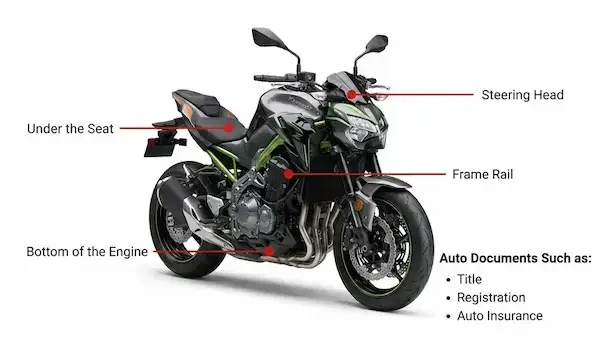
The motorcycle's VIN number can usually be found on the frame, near the steering head. However, you must understand that, depending on the make and model of the bike, it may be located in a different spot. Here are some other places you can look:
- The steering head or steering neck
- The motorcycle frame
- Areas around the front of the frame
- The vehicle identification plate or label
- The motorcycle's registration or title documents
Still can't find it? If you're having trouble finding the VIN number, your next step should be to consult the motorcycle's owner's manual, ask other motorcycle owners, or contact the manufacturer or dealership.
How to Check a Motorcycle VIN
Once you've found and verified the VIN, you can use it to check the motorcycle's basic information and investigate available records.
Step 1: Find the VIN
The first step in checking a motorcycle's VIN number is to locate it. The VIN can usually be found on the motorcycle's frame, near the steering head. It may also be stamped on the engine block or printed on the motorcycle's registration or title documents. After finding the VIN, you can move on to the next step.
Step 2: Verify the VIN
Compare the VIN on the motorcycle with the VIN on the title, registration, or other vehicle documents.
Step 3: Run a Free VIN Lookup
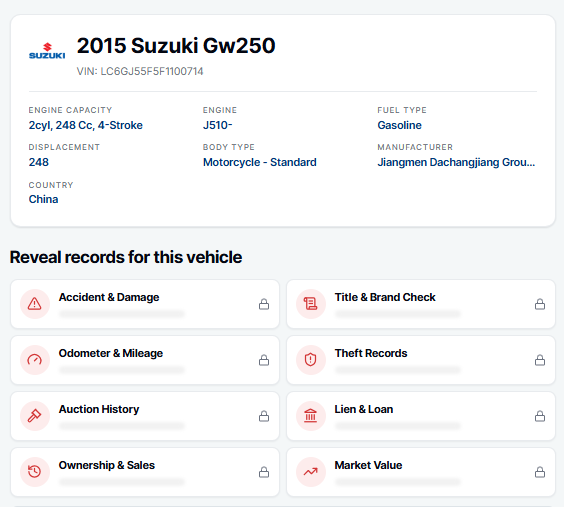
Use the VIN to retrieve basic vehicle information. A free lookup is useful when you first want to establish what motorcycle the VIN represents. Depending on the available data, the lookup can provide information such as:
- Year
- Make
- Model
- Engine
- Fuel type
- Body type
- Vehicle type
- Country of manufacture
- MSRP
Step 4: Check the Motorcycle's History
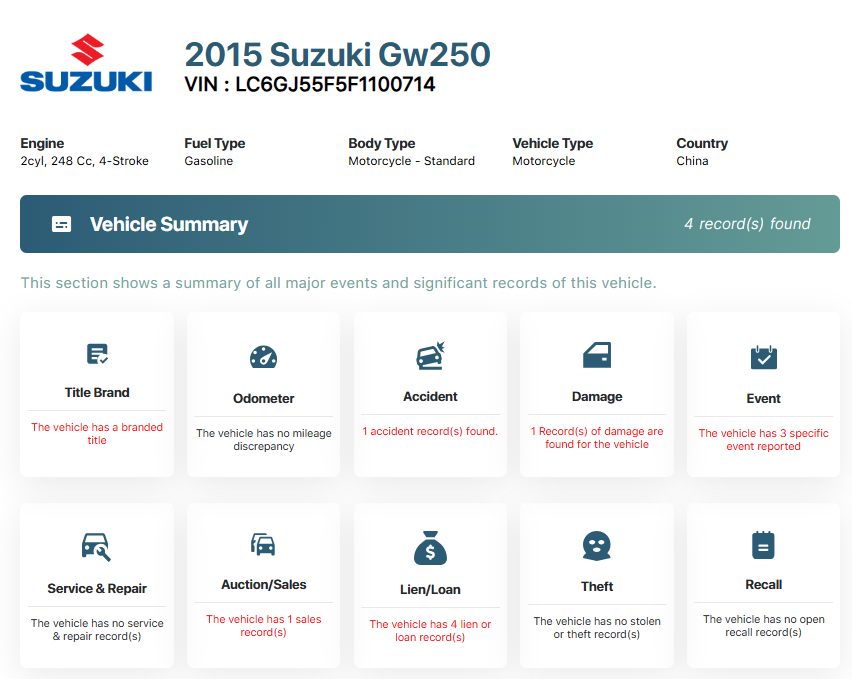
If you're considering buying the motorcycle, move beyond basic identification and check available historical records. Our classic lookup also supports many pre-1981 vehicles with shorter VINs, including formats ranging from 5 to 14 characters.
Vehicle Specifications
Decoding the VIN can help confirm the motorcycle’s basic specifications, including its model year, make, model, engine information, and other identifying details. You can also learn more about looking up vehicle specs by VIN if you want to compare the decoded information with the seller’s listing.
Title Information
Check the motorcycle’s title history for recorded brands that could affect ownership, value, or registration. Available records can identify salvage, rebuilt, flood, junk, lemon, or other title brands associated with the VIN.
Odometer Records
Review recorded mileage readings to see how the motorcycle’s odometer changed over time. Comparing historical readings with the current odometer can help identify inconsistencies that deserve further investigation before purchase.
Ownership History
Review available ownership records to see how many owners the motorcycle has had and where those records were reported. Compare this information with registration documents, mileage records, and the seller’s description.
Accident History
Check available accident records for reported collisions or other incidents associated with the motorcycle’s VIN. These records can provide additional context about reported damage and help identify areas that deserve closer physical inspection.
Auction & Sales History
Review available auction and sales records to see when the motorcycle changed hands, where it appeared, and how it was described. Records may include sale details, prices, damage information, condition notes, and auction photographs.
Read Also: How to Get a Car Auction History by VIN (Full Guide)
Lien/Loan History
Check for recorded liens or loans before purchasing a motorcycle. A lien can indicate another party has a financial interest in the vehicle. Verify the lien status and release before completing the purchase.
Service & Maintenance History
Review available service and maintenance records for evidence of previous care. Records will include routine maintenance or major repairs, helping you compare the motorcycle’s documented history with its current condition and the seller’s claims.
Theft Records
Check available theft records to determine whether the motorcycle was reported stolen or associated with a recovery record. This provides another ownership-related check and can identify records that deserve investigation before purchasing.
Recall History
Review available recall information associated with the motorcycle’s VIN. A recall record can identify an unresolved safety issue when available. Use the result to confirm the recall status and whether the required repair was completed.
View the Motorcycle VIN Report
Check Motorcycle History by VIN
Step 5: Compare the Results
Use the results alongside a physical inspection and the vehicle's paperwork. Verify that you're making the right choice and buying the best motorcycle at the dealership or private seller.
Compare the VIN With the Motorcycle and Documents
Use the decoded VIN and history records to confirm that the motorcycle matches the seller’s description and paperwork. Check the VIN, make, model, year, engine information, title, and registration for consistency. If something does not match, ask the seller for an explanation and supporting documentation before proceeding.
Check Imported or Grey-Market Motorcycles
If the motorcycle was imported, use the VIN information and history records to verify its origin and vehicle identity. Imported motorcycles can have different documentation or registration requirements, so confirm that the paperwork matches the motorcycle before completing the purchase.
Inspect the VIN for Tampering
Even after decoding the VIN and checking its history, inspect the physical VIN on the motorcycle. Look for scratches, grinding, welding, uneven spacing, or signs that the VIN plate has been replaced. Any inconsistency between the physical VIN, title, registration, or history records should be investigated before buying.
Conclusion on How to Check a Motorcycle’s VIN Number
If you plan to buy a used motorcycle, be sure to check its Vehicle Identification Number (VIN) for accuracy. Running a motorcycle VIN check gives you valuable information about the bike's history. By following the steps outlined in this article, you can make an informed decision and avoid any unpleasant surprises down the road. Remember, a little bit of research now can save you a lot of headaches later on.
Frequently Asked Questions
What if my motorcycle’s VIN has fewer than 17 digits?
Motorcycles built before 1981 often have shorter VINs (7–13 characters). These older VINs follow a different format. Our VIN lookup tool can decode many classic chassis numbers from 5 to 14 digits.
Can I decode a motorcycle VIN for free?
Yes. A free VIN decoder can help you check basic vehicle information such as the year, make, model, engine, transmission, and other available specifications. A full vehicle history report is separate and is used to check available historical records.
How do I test my secondhand bike?
When inspecting a bicycle, thoroughly examine the frame and fork for any bends, cracks (which can be extremely hazardous), dents, or rust. A useful way to assess the bike's straightness is to try riding it without holding the handlebars, if you're accustomed to doing so on your bike.
Does a motorcycle VIN show mileage?
The VIN itself does not contain the motorcycle's current mileage. However, mileage can appear in records associated with the VIN. Our history report can show recorded odometer readings when those records are available.
Can I check whether a motorcycle has a salvage title?
A vehicle history report can show available title-brand information, including salvage or rebuilt records when reported. The Instant VIN Report includes separate checks for salvage, rebuilt or rebuildable, flood, fire, hail, lemon, junk, and odometer title brands.
Can a VIN check show previous motorcycle owners?
A history report can include ownership records when they are available. For example, the sample report documents six ownership records, including purchase dates, locations, and ownership periods.
How to Check if a Vehicle Is Stolen?
You can check if your vehicle has ever been stolen by running a VIN check and getting the vehicle history report. In the report, you can find information about the vehicle, including accident record, lien/loan report, and theft records.
How to tell if a motorcycle has been in an accident?
To tell if a motorcycle has been in an accident, you can get the vehicle history report through a VIN or license plate lookup. You will receive a detailed vehicle history report that includes accident reports, lien and loan information, maintenance history, and more. This lets you thoroughly inspect the vehicle's hidden condition.
Can I check a classic motorcycle VIN?
Yes. Classic vehicles often use shorter VINs, and Instant VIN Reports support many pre-1981 identification numbers ranging from 5 to 14 characters.