
Key Takeaway:
- A salvage title means the vehicle was declared a total loss, usually because repair costs exceeded a percentage of its market value under state regulations.
- Using a vehicle history report helps you buy with confidence by verifying the title brands, accident records, damage history, auction records, mileage history, ownership changes, and other important events.
- Always inspect the vehicle before buying, review its repair records, and have a trusted mechanic perform a pre-purchase inspection whenever possible.
If you're looking at a used car, don't stop at the price or mileage. Checking the title and knowing whether the vehicle has a salvage title or not is one detail you shouldn't overlook. Salvage titles indicate that a vehicle has been severely damaged and written off by an insurance company, but this doesn’t automatically make it unsuitable for purchase.
Understanding how salvage titles work makes it easier to judge whether a used car is worth considering.
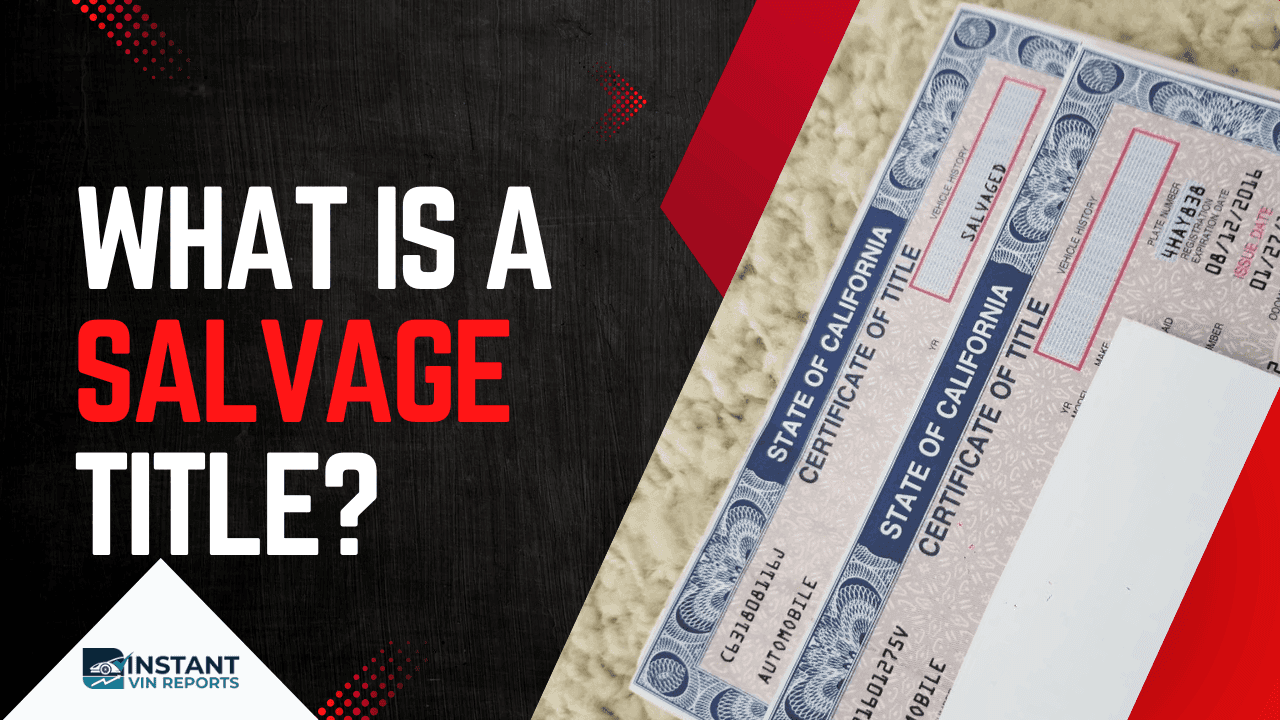
What is a Salvage Title?
Think of a salvage title as a warning label. It tells future buyers that the vehicle was once considered a total loss by an insurance company. In most states, that happens when repairing the damage would cost more than a percentage of the vehicle's actual cash value.
A salvage title isn't the same as a rebuilt title. A salvage vehicle hasn't yet completed the repairs and inspections required to return it to the road, while a rebuilt vehicle has already passed those steps. Insurance companies don't issue salvage titles for just one reason. Here are some of the situations that commonly lead to one.
- Accident Damage: A collision or crash that causes structural or mechanical damage.
- Flood Damage: Cars submerged in water are at risk of rust and electrical damage.
- Hail, Weather, and Natural Disasters: Large hail, hurricanes, tornadoes, falling trees, or other severe weather events can cause enough damage for an insurance company to declare a vehicle a total loss.
- Theft Recovery: When a stolen vehicle is recovered but damaged beyond repair.
- Vandalism: Instances where the vehicle has sustained damage render it a total loss.
Damage alone doesn't guarantee a salvage title. Whether one is issued depends on repair costs, state law, and how the insurer calculates a total loss.
Read also: The difference between Salvage and Rebuilt Title?
Salvage Title vs. Clean Title vs. Rebuilt Title
Understanding the difference between these title brands helps avoid confusion when shopping for a used vehicle.
| Title Type | What It Means | Can It Be Driven? |
|---|---|---|
| Clean Title | No major title brands have been recorded. | Yes |
| Salvage Title | Declared a total loss by an insurance company. | Usually no, until repaired and inspected. |
| Rebuilt Title | Previously salvaged but repaired and approved under state requirements. | Yes, after meeting state regulations. |
The title alone doesn't tell you how well the repairs were completed. Two rebuilt vehicles may look identical on paper while having very different repair quality. That's why experienced buyers rarely rely on the title alone—they also review repair documentation, inspect the vehicle carefully, and check its history before making a decision.
Read also: What is a Rebuilt Title?
Different State Regulations and Their Impact
Salvage title laws aren't the same across the country. Every state sets its own rules for declaring a vehicle a total loss and deciding whether it can return to the road.
That's why the same damaged car could receive different title statuses depending on where it's registered. Some states use a fixed percentage, while others rely on different formulas or insurance guidelines.
How to Check if the Vehicle Had a Salvage Title?
Before buying a salvage-title vehicle, start by performing a thorough evaluation to ensure you are making a sound investment.
Checking the Vehicle History Report

A vehicle history report is crucial when considering a salvage title vehicle. It will provide details about the car’s previous owners, accidents, flood damage, and other essential information.
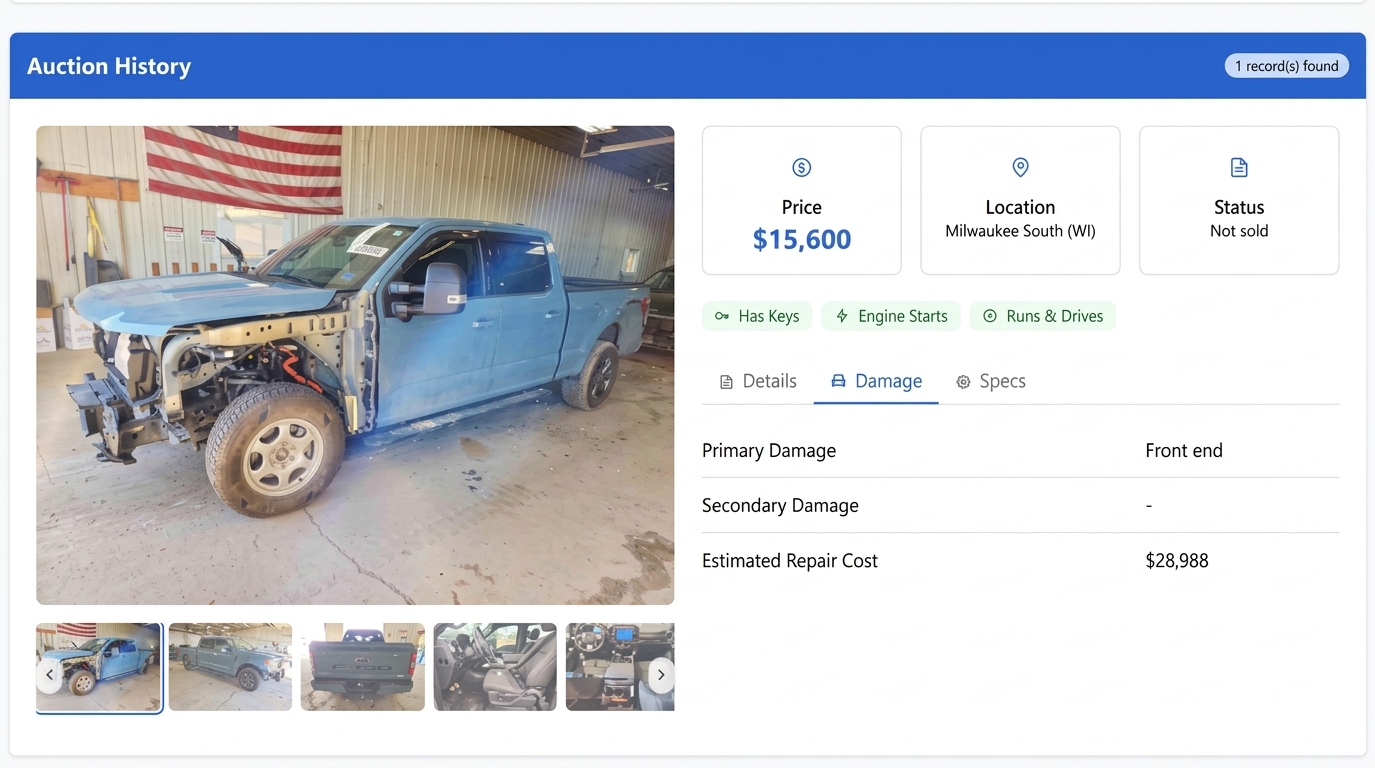
A title alone doesn't tell the whole story. A full report can help you check the vehicle title records and other vehicle records, including the extent of the damage, whether the vehicle has been repaired properly, and whether the vehicle has appeared in the auction or online listings before, with available photos. So you can evaluate the car's condition in one place.
Check the Vehicle Title
Start by asking to see the vehicle title. A branded title is often printed directly on the document, although the wording varies by state.
Consulting with Mechanics
Even if the car looks good during a test drive, it's still worth paying for an independent inspection. A mechanic can spot frame repairs, poor welding, suspension damage, or other problems that aren't obvious from the driver's seat.
Compare the Asking Price
A salvage title almost always reduces a vehicle's market value. If the asking price is close to what similar clean-title vehicles are selling for, there's very little financial advantage for taking on the additional risk.
On the other hand, a well-repaired vehicle offered at a meaningful discount may deserve a closer look, provided the repairs are documented, and an inspection doesn't uncover new concerns. Price should never be the only reason to buy a salvage-title vehicle, but it should reflect the vehicle's history.
Is It Safe to Buy a Salvage Title Car?
Sometimes yes. Sometimes no. It depends on how the vehicle was damaged, how well it was repaired, and whether you can verify that work. Some have been carefully repaired and driven for years, while others continue to have expensive problems. That's why every vehicle deserves its own evaluation.
See the advantages and the potential drawbacks of buying a vehicle with a salvage title below:
Potential Advantages of Buying a Salvage Title Vehicle
Despite the risks, there can be potential advantages to purchasing a salvage title vehicle. For sure buyers, a salvage title car may offer a good opportunity, especially if they are willing to invest in repairs. Here are some of the benefits:
Lower Purchase Price
A salvage title usually reduces the market value of a vehicle. If you understand the repair history and know what to inspect, you may be able to buy the same model for thousands less than a comparable clean-title vehicle.
Opportunity for Buyers Willing to Invest in Repairs
Buyers who know how to evaluate repairs (or who have access to reliable repair shops) often see value where other buyers see risk. Buying a salvage title vehicle could provide an opportunity to restore it to a roadworthy condition. After completing the necessary repairs, you may have a car that performs like new at a fraction of the cost of buying a comparable clean title vehicle.
Possible Appreciation After Repairs
Most rebuilt vehicles never reach the value of an equivalent clean-title model. Still, some rare, collectible, or high-demand vehicles can regain part of their value after quality repairs and proper documentation. Once the car has passed inspections and is granted a rebuilt title, it may be eligible for resale at a higher price than what you paid initially, especially if it’s in good condition and has a strong demand.
Potential Drawbacks of Buying a Vehicle with a Salvage Title
The lower price comes with trade-offs. Before buying, make sure you understand what those trade-offs could mean after you take the car home. Here’s what to consider:
Hidden Damage
Not every repair meets manufacturer standards. Some vehicles receive cosmetic repairs while underlying structural damage remains. Reviewing repair invoices and having the vehicle inspected can reveal problems that aren't obvious during a test drive.
Insurance May Be Limited
One of the biggest challenges of purchasing a salvage title vehicle is obtaining insurance. Many insurance companies are reluctant to provide full coverage for salvage cars, and some may not offer any coverage. Comprehensive and collision coverage helps pay for repairs if your vehicle is damaged or totaled, leaving you with only liability coverage.
Lower Resale Value
Expect a lower resale value. Selling the vehicle later may be harder than buying it. Even well-repaired cars often attract fewer buyers simply because of the title history.
Safety and Reliability Issues
Salvage vehicles may have undetected structural or mechanical damage that can affect their safety and reliability. Even after repairs, the vehicle may not perform as well as a comparable car with a clean title. Issues like frame damage, airbag deployment, or compromised safety features might not be immediately visible but could pose long-term risks.
Difficulty in Financing
Financing can also be more difficult. Some lenders won't finance salvage vehicles, while others ask for a larger down payment or charge higher interest rates. In some cases, obtaining financing for a salvage title vehicle may only be possible with proof of repairs or a rebuilt title.
See this guide to learn more about understanding title loans
How to Clear Salvage Title
In most states, you can't simply remove a salvage title. Instead, the vehicle must be fully repaired, pass any required state inspections, and qualify for a rebuilt title. The exact process varies by state, but it typically includes documenting repairs, completing an inspection, and applying for a new title.
If you'd like a step-by-step guide, read our article on how to clear a salvage title from any vehicle.
Conclusion on Salvage Titles
Buying a salvage-title vehicle isn't automatically a mistake. It just requires more homework than buying a clean-title car. If the repairs were done correctly, the history is well documented, and an inspection doesn't uncover new problems, it could be a worthwhile purchase. If those pieces are missing, walking away is usually the safer decision.
Before buying, verify the vehicle history, inspect the vehicle carefully, review repair records, and check a complete vehicle history report. Spending a few minutes researching the VIN can save thousands of dollars later.
Frequently Asked Questions About Salvage Titles
Can I Insure a Salvage Title Vehicle?
Insuring a salvage title vehicle is possible, but your coverage options may be limited. Many insurance companies offer only liability coverage, and comprehensive or collision coverage might be unavailable.
What is the difference between a salvage title and a rebuilt title?
A salvage title means the vehicle has been declared a total loss and usually cannot be legally driven until repaired. A rebuilt title is issued after the vehicle has been repaired and passed any required state inspections. Check this article to see more about the difference between a salvage title and a rebuilt title.
Is a branded title the same as a salvage title?
Not exactly. A salvage title is one type of branded title. Other title brands include rebuilt, flood, junk, lemon, and manufacturer buyback titles. Each brand provides information about the vehicle's history or legal status.
What is a total loss vehicle?
A total loss vehicle is one that an insurance company determines is not economically practical to repair after damage or theft. Depending on state regulations and the insurer's assessment, the vehicle may be issued a salvage title.
What does a vehicle history report show about a salvage title?
Our vehicle history report can confirm whether a vehicle has a salvage or other branded title and may also include accident history, insurance loss records, ownership history, theft records, auction history, open recalls, and vehicle specifications, using its VIN and chassis numbers with 5 to 14 digits for discontinued or pre-1980s classic cars. Reviewing this information helps buyers better understand the vehicle's history before making a purchase.