

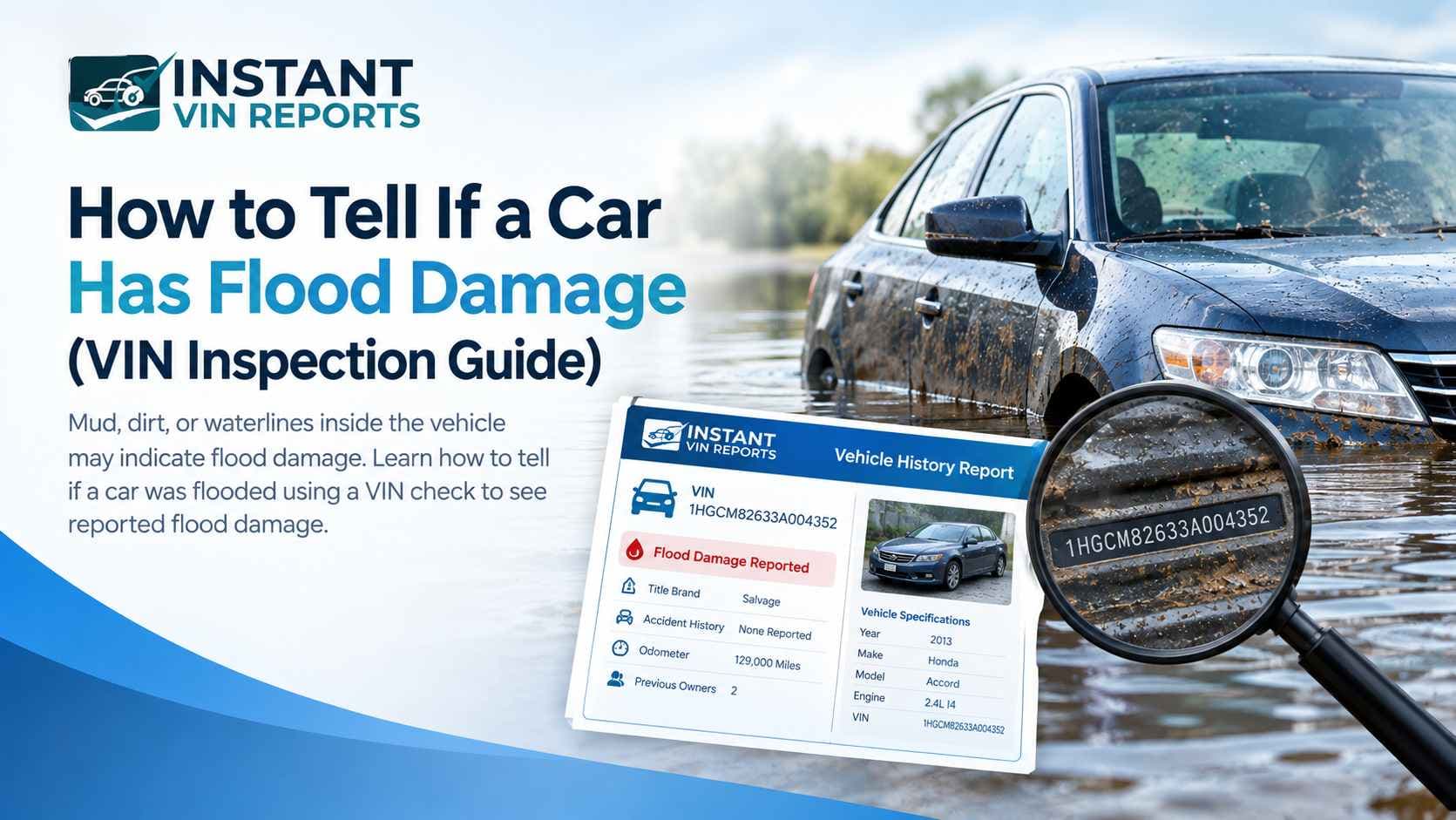
Flood damage is not always visible, especially after a vehicle has been cleaned or repaired. The most reliable approach is to compare the vehicle's recorded history with its physical condition and have an independent mechanic inspect it before purchase. In this guide, we will talk about how to spot a flooded vehicle.
Key Takeaways
- Check the VIN first. Look at the title brand records for flood or water-damage brands, salvage/rebuilt history, insurance records, auction history, and ownership or title changes.
- Inspect the physical vehicle. Musty odors, stained or replaced carpeting, silt, rust, moisture inside lights, corroded wiring, and electrical problems can all be warning signs.
- Get an independent inspection when something looks wrong. A mechanic can examine systems that aren't possible to evaluate through a VIN report alone.
How Can You Tell If a Car Has Been Flooded?
The strongest approach to tell if a car has been flooded is to compare the vehicle's physical condition with its VIN and title history. You can look for several signs that a vehicle may have been exposed to floodwater. Here are some:
1. Check the VIN and the Title History First
Start by running a flood VIN check before inspecting it in person. A VIN check can reveal flood or water-damage brands, salvage or total-loss records, insurance events, auction history, mileage information, and other reported incidents.
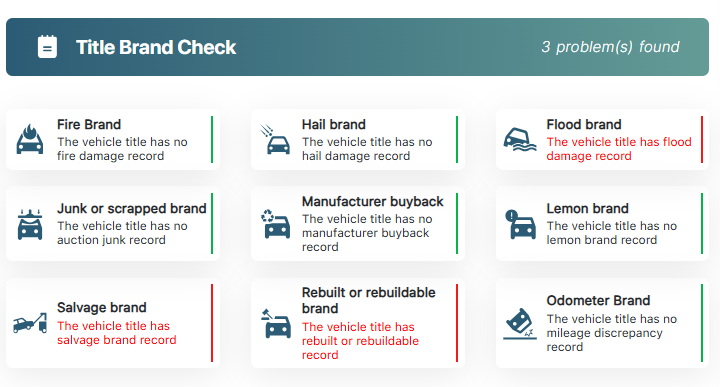
What a VIN Check Cannot Show
A vehicle history report cannot guarantee that every instance of flood damage will be recorded. For example, damage may not appear if:
- The vehicle was uninsured
- The owner never filed an insurance claim
- The damage was never reported
- The water exposure was relatively minor
- The available reporting sources did not record the event
That is why a clean VIN history should not be treated as proof that a vehicle has never been exposed to water.
2. Check the Interior for Water Damage
Once you've reviewed the VIN history, inspect the vehicle carefully. Bring a flashlight and ask the seller for permission to examine the interior thoroughly.
Check the Carpeting
Pull back the floor mats and, where possible, inspect the edges of the carpeting. Look for:
- Water stains
- Mud
- Silt
- Sand
- Dampness
- Mold
- Discoloration
- Recently replaced carpeting
Pay particular attention to the padding underneath the carpet because it can retain moisture even when the visible surface looks clean.
Inspect the Seat Rails
Move the front seats forward and backward. Look underneath them for unusual rust or corrosion on the metal rails and mounting hardware. These areas can be overlooked during cleaning.
Check Hidden Areas
Inspect areas that are difficult to reach, including:
- Under the seats
- Center console
- Glove box
- Lower dashboard
- Wiring areas
- Floor-level brackets
Mud, silt, rust, or corrosion in these areas can warrant further investigation.
3. Check the Interior for Musty or Masked Odors
A musty, damp, or mold-like smell can be a warning sign. Close the doors and windows for a few minutes before inspecting the interior. Then smell the cabin carefully. Also run the:
- Air conditioner
- Heater
- Cabin fan
Pay attention to unusual damp or moldy odors coming through the vents. Be cautious if the vehicle has an unusually strong air freshener smell. Cleaning products can mask odors temporarily, so smell should be treated as one clue rather than proof of flood damage.
4. Inspect the Trunk and Spare-Tire Well
Open the trunk and remove the spare tire if possible. Look underneath it for:
- Water
- Dampness
- Mud
- Silt
- Rust
- Water lines
- Debris
Also check whether the trunk carpeting looks newer or different from the rest of the vehicle. The spare-tire compartment is particularly useful because it can retain evidence of water exposure even after the visible interior has been cleaned.
5. Look for Rust and Corrosion
Some rust is normal, particularly on older vehicles. What matters is where you find it and whether it is consistent with the vehicle's age and condition. Inspect areas such as:
- Seat rails
- Door hinges
- Hood and trunk latches
- Pedal brackets
- Under-dashboard hardware
- Wiring connectors
- Undercarriage components
Also look for corrosion around electrical connections. Unusual rust in areas that are normally protected from water can justify a closer inspection.
6. Check the Lights for Moisture
Turn on the headlights, brake lights, turn signals, and other exterior lights. Look closely at the lenses for:
- Condensation
- Water droplets
- Fogging
- Water lines
- Corrosion
Also inspect the instrument cluster for moisture or unusual behavior. Condensation can have causes unrelated to flooding, so treat it as a warning sign that needs to be considered alongside the rest of the vehicle's condition.
7. Inspect the Seat Belts
Pull each seat belt out as far as it will go. Look for:
- Water stains
- Mold
- Discoloration
- Dirt or sediment
- Differences between belts
The ends and lower portions of seat belts can retain evidence of water exposure even after other parts of the interior have been cleaned.
8. Inspect the Engine Bay, Air Filter, and Fluids
Open the hood and look beyond the engine itself.
Look for Mud and Silt
Inspect hard-to-reach areas around:
- Wiring harnesses
- Starter
- Power steering components
- Engine crevices
- Connectors
Dried mud or sediment can indicate significant water exposure.
Check the Air Filter
If accessible, inspect the air filter and its housing. Look for:
- Moisture
- Mud
- Water stains
- Warping
- Excessive contamination
Check the Engine Oil
Milky or cloudy oil can indicate water contamination, although other mechanical problems can produce similar symptoms. A mechanic should evaluate unusual fluid conditions before you draw a conclusion.
9. Check Electrical Components
Flood exposure can cause electrical problems that aren't immediately visible. Inspect accessible wiring and connectors for:
- Corrosion
- Green residue
- White powdery buildup
- Damaged connectors
- Unusual wiring repairs
- Brittle insulation
Also test the vehicle's electrical equipment. Turn on and operate:
- Headlights
- Interior lights
- Turn signals
- Brake lights
- Power windows
- Power locks
- Seats
- Wipers
- Radio
- Climate controls
- Dashboard gauges
- Warning lights
Pay attention to flickering, intermittent operation, slow responses, or several unrelated electrical problems occurring at once.
10. Compare the Vehicle With Its History
The final step is to compare everything you've found. For example, investigate further if:
- The car has a clean-looking interior but auction photos show water damage.
- The current title looks clean, but previous title records show a flood brand.
- The vehicle has unusually new carpeting in an otherwise older interior.
- The current condition doesn't match its previous auction condition.
- Ownership or title activity changed significantly after a major flood event.
- The vehicle has multiple unexplained electrical problems.
The more inconsistencies you find, the more important a professional inspection becomes.
Should You Buy a Flood-Damaged Car?
A vehicle with documented flood damage requires additional scrutiny before purchase. Flood exposure can affect electrical components, interior materials, mechanical systems, and metal components.
The extent of the damage depends on factors such as how much water reached the vehicle, how long it remained exposed, and whether the water was fresh or salty. Before buying one, verify:
- The vehicle's title status
- Flood and damage records
- Auction history
- Mileage history
- Ownership history
- Repair documentation
- Current mechanical condition
- Electrical operation
- Corrosion
- Insurance and financing considerations
A professional mechanic should inspect the vehicle before you make a purchase decision.
What If You Already Own a Flood-Damaged Car?
If you suspect that your vehicle has been flooded:
- Document the condition with photographs.
- Keep records of the damage and repairs.
- Have an independent mechanic inspect it.
- Ask the mechanic to check relevant electronic modules and stored fault information.
- Contact your insurer to understand your coverage.
- Get an estimate of both immediate and potential repair costs.
Flood-related problems can involve multiple systems, so a basic engine inspection may not be enough.
Final Thoughts on How To Tell If a Car Was Flooded
Flood damage isn't always obvious from the outside. A vehicle can be cleaned, repaired, and made to look normal while problems remain in its electrical systems, wiring, interior, or metal components.
Before buying a used car, don't judge it by appearance alone. Check the VIN, review its history, inspect the vehicle carefully, and have a mechanic evaluate it when necessary. Taking these steps can help you identify potential flood damage before it becomes an expensive problem.
Check the VIN before you buy, and make sure the vehicle's history matches what you see in front of you.