Check Vehicle Sales History and Previous Listings by VIN
Before you buy a used car, find out exactly how many times it has been sold and what it actually sold for. Our accurate vehicle sales history by VIN tool gives you the full transaction record and negotiating power you need.
Why Check for Sales History Before Buying a Used Car?
The used car market is massive, and understanding a vehicle’s sales history before buying can make a significant difference. Here is what you should know:
38 Million+
Used vehicles sold in the US in 2025
12.8 years
Average age of vehicles on US roads
X 2
The number of used car sales is twice that of new car sales
4 -6 years
The most commonly used car ownership cycle
What Is a Vehicle Sales History Report?
A vehicle sales history report is a documented record of every time a car has been sold, transferred, or listed through a tracked transaction channel. It includes details like the date of each sale, the type of seller involved, the location of the transaction, and, in some cases, the recorded sale price.
This report helps show patterns that a quick test drive or visual inspection simply cannot reveal. A car that has been sold five times in three years tells a very different story from one with a single careful owner. Checking car sales history by VIN gives buyers real insight into how a vehicle has moved through the market and why.
Why is Checking a Car Sale History by VIN Crucial?
Checking VIN sales history connects you to the full vehicle history report, giving buyers and sellers the documented facts they need before any transaction moves forward. Here’s why it’s crucial:
Buyers
Buyers gain a major advantage by knowing exactly how many times a car has been sold and what those transactions looked like.
Spot Frequent Resales That Signal Problems
A car sold multiple times in a short period often has recurring issues that keep pushing buyers away after purchase.
Understand the Car's True Market Value
Knowing what a car previously sold for helps buyers gauge whether the current asking price is fair or inflated above market value.
Negotiate From a Stronger Position
Sales history records give buyers concrete facts to use during price negotiations instead of relying on guesswork or the seller’s claims alone.
Sellers
Sellers who check their own vehicle’s sales history can use the information to price accurately and build trust with potential buyers.
Price the Vehicle Competitively
Understanding what the car sold for previously helps sellers set a realistic asking price that attracts serious buyers quickly and efficiently.
Prove a Stable Ownership Record
A sales history showing few transactions over many years signals a well-kept vehicle, making the car more attractive to cautious buyers.
Avoid Pricing Disputes During Negotiations
Having verified sales history on hand gives sellers a factual foundation to defend their asking price during buyer negotiations confidently.
What Does a Sales History by VIN Report Include?

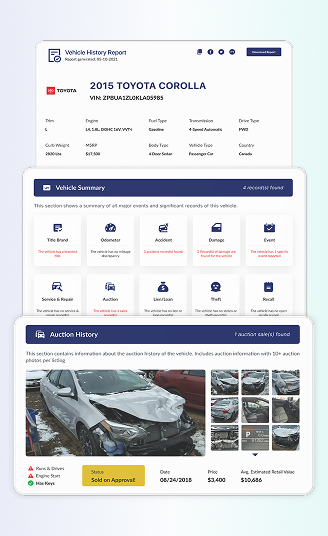
The sales history section of a vehicle history report covers every documented transaction tied to the vehicle, giving you a clear look at how the car has moved from owner to owner over the years. It usually includes:
Number of Sales Records
This shows the total number of times the vehicle has been sold or transferred through recorded channels.
Sale Date
This reveals the exact date each recorded sale or transfer took place throughout the vehicle’s history.
Sales Price
This shows the recorded transaction price where available, particularly for dealer and auction sales.
Sales/Seller Type
This identifies whether each sale came from a dealership, private seller, auction house, or fleet transaction.
Location
This reveals where each transaction took place, helping track the vehicle’s geographic movement over time.
Odometer Reading
This shows the recorded mileage at the time of each sale, helping verify consistent mileage progression over time.
Damage Status
This indicates whether the vehicle had any reported damage at the time of each recorded sale transaction.
Vehicle Specifications
This confirms the vehicle’s core specifications as recorded at the time of each documented sale or transfer.
Sales Images
View 10 photos or more to verify the vehicle’s condition, detect any undisclosed structural damage, and surface any red flags.
Other Important Records Included in the Vehicle History Report
A sales history report includes several other important records beyond just transaction details. Here are other key records to watch out for:
Ownership History
Tracks every previous owner, including how long each person owned the vehicle before selling.
Title Status
Shows the vehicle’s current and past title status, including any brands like salvage or rebuilt.
Accident & Damage Records
This reveals every reported accident and damage event tied to the vehicle’s history.
Auction Records & Photos
Reveal auction appearances, sale prices, and up to 10 photos from auction listings.
Mileage Records
Tracks all recorded odometer readings over time to detect any signs of tampering.
Theft Records
Confirms whether the vehicle was ever reported stolen or flagged in theft databases.
Lien & Loan Records
Check if the vehicle has an outstanding debt on it, which could lead to repossession or difficulty in ownership transfer.
Service/Maintenance Records
Find details on maintenance, repairs, and various inspections the vehicle has gone through during usage by previous owners.
How to Find the Sales History of a Used Car by VIN
Finding a vehicle sales history by VIN number takes just under a minute with our tool. Follow these three simple steps to get started.

Step 1: Enter the VIN
Locate the VIN on the vehicle or in the official document, and enter it into the form at the top of this page. You can also search by running a license plate lookup.

Step 2: Search VIN
Submit the VIN to start the VIN lookup process. This provides vehicle specs such as the year, make, model, transmission, and engine type. If the car was previously listed for sale at auction, you will get some sales records for free.

Step 3: Get the Full Sales History Report
Make the necessary payment to access the complete report, which includes the sales history, ownership records, auction data, title status, and much more. View or download as a PDF.
Previous Sale Price vs. Current Asking Price: What the Gap Tells You
The difference between what a car sold for before and what it is listed for today can reveal a lot about the deal you are looking at.
A Small Gap Is Usually Normal
When a car’s previous sale price is significantly lower than what it is currently listed for, that difference tells a story. A modest increase over time is normal and reflects market appreciation, age, and demand shifts that happen naturally in the used car world.
A Large Gap Deserves a Closer Look
But a large and unexplained gap between what a car last sold for and what a seller is asking today deserves a closer look. It could mean the seller has made genuine improvements, or it could signal a markup that does not reflect the vehicle’s actual condition or market value.
Common Used Car Sales Types You Should Know
Every car sale doesn’t work the same way. Knowing the different types of sales helps you understand a vehicle’s history and what each transaction says about the car.
Dealership Sales
These are transactions handled by licensed car dealers. They typically come with more documentation, some form of inspection, and in many cases, a limited warranty, making them one of the more transparent ways to buy or sell a used vehicle.
Private-Party Sales
Private-party sales happen directly between two individuals without a dealer involved. These transactions are often less expensive but come with fewer protections for the buyer. This makes a thorough VIN history check even more important before committing to any payment.
Online & Remote Sales
Online and remote sales are platforms allowing buyers to purchase vehicles without seeing them in person first. These sales require extra due diligence since the buyer cannot physically inspect the vehicle before the transaction is completed.
Fleet and Commercial Sales
Fleet and commercial sales involve vehicles that were previously owned by a company, rental agency, or government entity. These cars often have higher mileage but may also come with more consistent maintenance records than privately owned vehicles of similar age.
Private Seller Sales vs. Dealership Sales: What to Expect
Knowing the key differences between buying from a private seller and a dealership helps you know what to expect and what to watch out for before signing anything.
| Private Seller | Dealership | |
|---|---|---|
| Price | Usually lower with room to negotiate | Typically higher, but may include added value |
| Warranty | Sold as-is with no warranty in most cases | May include a limited or certified pre-owned warranty |
| Inspection | Buyer arranges their own inspection | The dealer may offer a basic inspection or certification |
| Transparency | Varies widely by seller honesty | Generally, more regulated and accountable |
| Financing | Buyer arranges own financing separately | A dealer often offers in-house financing options |
| Financing | Buyer arranges own financing separately | A dealer often offers in-house financing options |
| Negotiation | More flexible with pricing discussion | Structured but still open to negotiation |
| Return Policy | Rarely available with private sellers | Some dealers offer short return windows |
| Risk Level | Higher risk without proper checks | Lower risk but not completely risk-free |
How Much Should You Pay for a Car?
Knowing the right price to pay for a used car takes more than just checking the price sticker. Here are practical ways to figure out what a fair price actually looks like.
Check the Vehicle's Sales History
Look at what the car actually sold for in previous transactions. Prior sale prices give you a real-world benchmark that is far more reliable than an asking price alone.
Compare Similar Listings in Your Area
Search for the same make, model, year, and trim level being sold nearby. Comparing multiple listings shows you what the market is actually paying right now.
Use Market Valuation Tools
Tools like Kelley Blue Book, Edmunds, and CarGurus provide estimated market values based on condition, mileage, location, and demand for that specific vehicle.
Factor in Condition and Mileage
A car with lower mileage and a clean history is worth more than the same model with higher miles or accident records. Adjust your offer accordingly based on the full history report.
Account for Any Needed Repairs
If the vehicle needs work, get repair cost estimates and subtract that figure from your offer. Never pay top dollar for a car that needs immediate attention after purchase.
Should I Pay Above or Below MSRP?
Whether you should pay above or below MSRP depends on the market conditions and the specific vehicle involved. Here is a guide to help you decide:
When You Should Pay Below MSRP
Most used car buyers have room to pay below MSRP with the right information and timing on their side. Some of the instances include:
- Vehicles have been sitting unsold for an extended period of time.
- The car last sold for significantly less.
- There’s a documented accident or damage on the vehicle’s record.
When You Might Pay Above MSRP
Some situations make paying above MSRP understandable, but they should be rare and clearly justified by the circumstances. Here are some instances:
- Limited inventory and high demand for a specific model.
- A vehicle with desirable factory options, very low miles, and a spotless history.
Why Choose Our Vehicle Sales History by VIN Tool?
Our VIN sales history lookup tool is your go-to when you need reliable sales history data. Here’s why thousands of smart buyers and sellers prefer us:
Accurate and Trusted Data Sources
We provide vehicle sales history from verified dealer, auction, and national transaction databases for accuracy.
Detailed Sales Records and VIN Report
Get a comprehensive sales history report and confidently make an informed decision.
Support for All Brands
Our tool covers every major vehicle make and model, including classic vehicles, without any restrictions.
24/7 Customer Support
Our team is always available to help you whenever you need assistance.
Check Car Sales History by VIN Before Buying
Do not walk into a used car negotiation without knowing what the car previously sold for. The sales history records give you the upper hand at the negotiating table. Run a VIN check now!
Frequently Asked Questions About Car Sales History by VIN
How to find vehicle sales history?
Finding vehicle sales history is simple. Just enter the car's VIN into our vehicle history report tool. The report will pull all recorded sales transactions, including dates, seller types, locations, and recorded prices where available for that specific vehicle.
Is a car that has been sold many times a red flag?
Yes, a car sold many times in a short period can be a red flag. Frequent resales sometimes indicate recurring mechanical problems, dissatisfied buyers, or undisclosed issues that keep causing new owners to sell the vehicle quickly after purchase.
What does frequent resale mean for a car?
Frequent resale of a car often suggests the vehicle has had recurring issues that buyers discovered after purchase. It can also indicate the car was used heavily, had undisclosed problems, or simply did not meet buyer expectations after the sale was completed.
What should you never reveal to the dealer when negotiating?
When negotiating with a dealer, never reveal your maximum budget, how urgently you need the car, or that you are emotionally attached to a specific vehicle. Sharing any of these details weakens your negotiating position and gives the dealer leverage to hold firm on price.