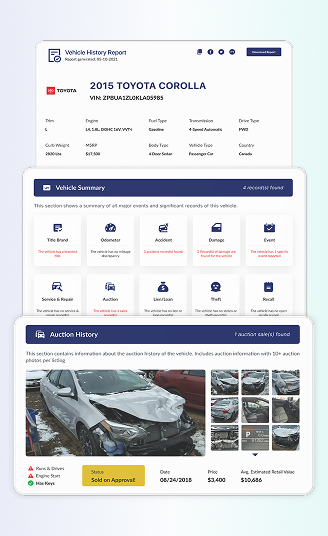

Free Austin Healey VIN Decoder: Lookup Any Classic Collectible Healey Now
From early BN roadsters to the final 1972 models, our Classic Austin Healey VIN Decoder helps you uncover the real story behind the chassis number. Instantly check specs, title records, accident history, and auction data in one clear report before you buy or restore
What is an Austin Healey VIN Decoder?
An Austin Healey VIN decoder is used to confirm identity details before you buy, insure, register, or restore a car. VINs (and older chassis numbers) are critical because small differences can point to a different model year range, production series, or even a paperwork mismatch.
For modern vehicles built after 1981, the decoder reads the standardized 17-character VIN format used worldwide. For classic Austin-Healey vehicles built before VIN standardization, Instant VIN Reports can also decode many 5 to 14-digit chassis and serial number formats commonly found on Austin-Healey 100, 100-Six, 3000, Sprite, BN, BT, and BJ models.
Whether you’re buying, selling, restoring, registering, insuring, or researching a vehicle, understanding the VIN is often the first step toward making informed decisions.
Why Austin Healey VIN Decoding Matters Before Buying a Car
An Austin-Healey VIN number contains valuable information that can help you understand exactly what vehicle you’re looking at before making a purchase. A quick VIN lookup through our decoder can show important specifications and help confirm whether the vehicle matches the seller’s description.
Confirm Model Authenticity
Verify whether a vehicle is represented as the correct Austin-Healey model before beginning negotiations.
Identify Factory Specifications
Review available factory information associated with the VIN to better understand the vehicle’s original configuration.
Protect Your Money
Knowing exactly what vehicle you’re considering helps prevent costly mistakes and allows you to evaluate whether the asking price aligns with the model and specifications.
Make Confident Decisions
A VIN lookup provides objective vehicle information that can help buyers, sellers, collectors, and restorers move forward with greater confidence.
What Information Does an Austin Healey VIN Decoder Show?
A VIN number contains much more than a simple serial number. Even a quick Austin-Healey VIN lookup can reveal important details about the vehicle’s identity, helping buyers, owners, collectors, and restorers confirm exactly what they’re looking at before moving forward.
Manufacturer
Vehicle Origin
Austin-Healey Model & Year Information
Engine Specifications
Transmission Setup
Body Style
Trims
MSRP & Market Value
How to Use the Austin Healey VIN decoder
Using the free decoder is meant to be simple. Just bring the number you have and follow the steps.
Step 1: Enter the VIN
Enter the VIN or Austin Healey number exactly as shown. Double-check characters that look similar, like “0” and “O.”
Step 2: Check the Vehicle Specs
Review the quick decode results, with factory key specs details like the Austin Healey year, model, trim, engine, and the available market value.
Step 3: Get the Full VIN Report
Upgrade to the full vehicle history report if you want deeper record categories, including mileage, lien/loan, and even auction and sales history records with up to +10 photos.
Classic Austin Healey VIN Decoder (Pre-1981)
Before VIN standardization, Austin-Healey vehicles were commonly identified using several factory-issued numbers:
- Chassis Number (most important identifier)
- Engine Number
- Body Number
- Commission Plate Number
- Production Number (on some models)
Together, these identifiers helped distinguish one vehicle from another and are still used today by restorers, registries, and collectors.
Why Didn’t Austin-Healey Have a 17-Digit VIN Number?
If you’re searching for a 17-digit Austin-Healey VIN and can’t find one, that’s completely normal. Original Austin-Healey sports cars were built before manufacturers adopted the VIN system used on modern vehicles. In many cases, you will be working with a chassis or car number rather than a modern VIN.
Instead, these iconic British sports cars use model-specific chassis numbers that collectors, restorers, and registries continue to use for vehicle identification today. Our Austin-Healey VIN lookup can decode vintage Austin-Healey chassis numbers ranging from 5 to 14 characters, including many pre-1981 vehicles that fall outside the modern VIN standard.
How to Read an Austin-Healey 11 Chassis Number
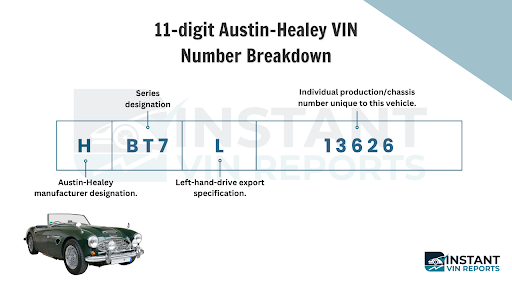
Classic Austin-Healey vehicles were built before VIN standardization existed. Instead of a universal 17-character format, the company used shorter chassis numbers that often combined letters and numbers to identify the model series and production sequence. Below are the breakdown examples of the 11-digit VIN of the Austin-Healey:
Austin Healey VIN Positions Explained For: HBT7L13626
| Position | Section | Meaning |
|---|---|---|
| 1 | H | Austin-Healey |
| 2–4 | BT7 | 3000 Mk I, 2+2 convertible (produced 1959–1961) |
| 5 | L | Left-hand drive (export specification, commonly in North America) |
| 6–11 | 13626 | Sequential production/chassis number |
Because Austin-Healey produced several distinct generations between 1953 and 1967, the exact format varies depending on the model.
Can a Classic Austin-Healey Still Be Decoded?
Yes. Even though classic Austin-Healey vehicles don’t have 17-digit VINs, many chassis numbers can still be decoded to reveal useful information. Using our classic Austin-Healey VIN Decoder, you can decode classic Austin-Healey chassis numbers and many vehicles with 5-digit to 14-digit serial numbers, including vintage Austin-Healey identifiers
This allows owners, buyers, restorers, and collectors to identify important vehicle information without needing a modern VIN.
Where to Find the VIN on an Austin Healey?
Older vehicles may show the key identity as a car number on a plate, and related numbers elsewhere. It is normal to check more than one marking for consistency when you are doing an Austin Healey VIN lookup.
- Firewall (engine bay): Common location for the VIN/car number plate on BN1 to BN4 and also BN6 to BJ8 series.
- Engine number plate: A separate plate attached to the engine block area (location differs by series).
- Documents: Compare the chassis number on the vehicle with the number shown on registration and ownership documents. Any mismatch should be investigated before purchase, especially on classic vehicles that may have changed hands multiple times.

Need To See More? Get the Full Austin Healey Vehicle History Report
When you run an Austin Healey VIN lookup or decode a chassis number with Instant VIN Reports, you are not just reading random letters and numbers. You are reviewing structured vehicle data that helps you understand what the car is, and in many cases, what it has been through.
For collectors and enthusiasts, this matters. Especially with classic British sports cars, where paperwork can be older than the current owner. Below is the type of information you may access through our Austin Healey VIN decoder and full vehicle history report.
Vehicle Specifications
An Austin Healey VIN decoder starts with the basics: what the vehicle is supposed to be. This section typically covers identity details such as make, model, year (when the format supports it), body type, and other specification markers tied to the VIN or recorded profile.
Ownership History
Ownership history is about the paper trail. A vehicle history report can show ownership and registration events when they are available in reported records. For classic cars like Austin Healey models, this can help you understand how often the car changed hands and whether the timeline feels consistent with the seller’s story.
Mileage History
Mileage history (when it exists) helps you understand whether the odometer reading makes sense over time. For older vehicles, records can be limited, but even a few mileage points can help you spot gaps or sudden jumps.
Lien/Loan check
A lien or loan flag can indicate a financial interest connected to the vehicle record. If a lien is active and not resolved, it can complicate a sale, transfer, or registration. For an Austin Healey collector purchase, this is a quiet but important detail.
Accident Records
Accident records, when reported, can provide insight into past incidents tied to the vehicle’s identity. This may include dates, general event types, and severity indicators, depending on what is available in records. On an Austin Healey, even a minor incident decades ago may have led to repairs, panel replacement, or repainting.
Damage History
Damage history goes beyond formal accidents. It can include damage-related indicators that show up in reported data, such as flood, fire, hail, or other notable events when available. For a classic Austin Healey, this matters because environmental damage can affect rust patterns, electrical systems, and long-term reliability.
Title Brand Records
Title branding can change how a vehicle is insured, sold, or valued. This section can indicate whether a title has been marked as salvage, rebuilt, or carries other brands, when those details are reported. For an Austin Healey enthusiast, title brands do not always mean “walk away,” but they should change how you price the car and how carefully you verify workmanship.
Theft Records
Theft records help identify whether the vehicle has been reported stolen or flagged in relevant databases when that information is available. For classic cars, this is not paranoia. It is basic due diligence, especially when a deal looks unusually cheap or the seller avoids sharing documentation.
Service & maintenance Records
Service and maintenance records (when available) help you see whether routine work was reported over time. This may include repair events, maintenance entries, or service-related notes, depending on the records connected to the VIN. This section helps you see whether that pattern exists, even if it is not perfectly complete.
Auction History
Auction history can be helpful because auctions often create a public footprint, sometimes with dates, sale notes, and even images when available. If an Austin Healey passed through auction, it could explain sudden changes in ownership or a jump in asking price later. This section can also help you compare how the vehicle was described before versus how it is described now.
Free Austin Healey VIN Decoder vs Vehicle History Report
The free decoder is for fast screening. The paid report is for decision-making. If you are serious about buying or selling an Austin Healey, the difference becomes obvious quickly.
| Feature | Free VIN Decoder | History Report (Paid) |
|---|---|---|
| VIN decoding for all vehicle types | ||
| Year, make, model, trim | ||
| Full vehicle specifications / detailed car specs | ||
| Market value snapshot | ||
| Sales listings (current/online ads) | ||
| Sales history (timeline of past listings/sales) | ||
| Auction records (when available) | ||
| Auction history with photos | ||
| Mileage during auction/sales (when available) | ||
| Odometer rollback checks | ||
| Ownership history | ||
| Vehicle usage type (personal, fleet, rental, commercial) | ||
| Title brand records (salvage, rebuilt, flood, lemon, etc.) | ||
| Lien & loan records | ||
| Accident & damage history | ||
| Theft / stolen records | ||
| Flood/hail/fire damage checks | ||
| Service/repair records | ||
| Warranty status & coverage | ||
| Recall information |
How David Confirmed a Seller's Claims with an Austin-Healey VIN Check
David found a 1961 Austin-Healey 3000 Mk II listed on an online marketplace. Before contacting the seller, he decided to verify the car’s identity using Instant VIN Reports.
VIN: HBT7L13626
Initial Impression
- Classic 3000 Mk II appeared fully restored in listing photos.
- Limited documentation was provided by the seller.
- Car description matched typical market details (color, mileage, trim).
Critical Findings
|
Outcome
|
Why 1 Million+ Drivers Choose Instant VIN Reports
Whether you’re researching a rare Austin-Healey 100, verifying a 3000 Mk III, or checking a modern vehicle, having access to reliable VIN information matters. Our VIN lookup helps drivers, collectors, buyers, and enthusiasts make informed decisions with fast access to vehicle data and history records.
Daily Data Updates
Vehicle information changes constantly. Our databases are updated regularly to help ensure that users receive the most current information available at the time of their search.
No Hidden Fees or Subscriptions
Know what you’re paying for before you buy. We offer straightforward pricing options without unexpected recurring charges attached to individual vehicle reports.
24/7 Customer Support
Need help understanding a VIN, chassis number, or vehicle report? Our live chat team can help guide you through the information and answer questions about your results.
High Accuracy, Cross-Checked Results
Every VIN lookup is designed to provide reliable information by comparing data from multiple sources and vehicle records whenever available. This helps improve accuracy and reduce inconsistencies.
Who Should Use an Austin Healey VIN Decoder?
An Austin-Healey VIN decoder is useful for more than just buyers. Owners, collectors, restorers, and enthusiasts can all use VIN information to understand better the vehicle they’re researching.
Buyers
Use VIN information as a starting point for deeper research before completing a purchase.
Sellers
Provide potential buyers with verified vehicle information to help build confidence and support the sales process.
Dealers
Use VIN decoding to help organize inventory records and vehicle documentation.
Classic Car Collectors
Identify model designations and verify important details before adding a vehicle to a collection.
Restorers
Use chassis numbers and VIN information to identify the correct model before ordering parts or beginning restoration work.
Estate & Inheritance Owners
Gather important vehicle information when organizing family records or ownership documentation, such as the car specifications.
Supported Austin-Healey models
Austin-Healey has a rich heritage of sports cars, from early 100 models to the iconic 3000 series and Sprite variants. Instant VIN Reports can decode those classic chassis numbers, including discontinued and vintage models with shorter formats.
Popular Austin Healey Models
These are only some of the Austin-Healey models supported by our decoder. We can also decode many discontinued, low-production, and pre-1981 Austin-Healey chassis numbers that use shorter identification formats.
100
100-Six
3000
Sprite
Bugeye Sprite
Frogeye Sprite
MK II Sprite
3000 MK III
Frequently Asked Questions about Austin Healey VIN Decoding
What if my VIN doesn't have 17 digits?
That’s normal for most classic Austin-Healey vehicles. Original Austin-Healey models were produced before the 17-digit VIN standard became mandatory. Instead, they use shorter chassis numbers that typically range from 5 to 14 characters. Instant VIN Reports can decode both modern 17-digit VINs and many classic Austin-Healey chassis numbers.
Where is the chassis number located on an Austin-Healey (3000, Sprite)?
Most owners start with the identification plate on the car and the number shown on the paperwork. If you are inspecting a vehicle in person, compare the plate number to the title and any sales documents. If you want the easiest first step, run an Austin Healey VIN check with Instant VIN Reports, then use the decoded results to guide what you verify on the vehicle.
What do the letters in an Austin-Healey chassis number prefix mean (e.g., BN4, BT7, BJ8)?
Austin-Healey chassis prefixes identify the vehicle family and configuration. For example, BN4 designates a four-seat Austin-Healey 100-Six, while BN6 identifies the two-seat version. Understanding these distinctions can help buyers verify listings, collectors confirm authenticity, and restorers order the correct parts.
So the safest approach is to decode the number and confirm it matches the vehicle’s claimed series. Our Austin Healey VIN decoder is a practical starting point, especially when listings use shorthand terms.
How do I decode the numbers on an Austin-Healey Sprite (Frogeye)?
Sprite identification can use older formats that do not look like a modern 17-character VIN. The safest move is to copy the number exactly, including prefixes, and decode it using a tool that supports classic formats. Instant VIN Reports can decode pre-1981 identifiers, which makes it a useful choice for Sprite owners who are dealing with shorter numbers.
How can I verify the authenticity and model year of my Austin-Healey?
Authenticity checks usually involve matching the identification numbers on the car to the paperwork and ensuring the model details align with what those numbers represent. On classics, you may also compare chassis/car numbers with engine and body identifiers if available.
Decoding the VIN or chassis number with Instant VIN Reports helps you establish that first layer of consistency before you go deeper.
What's the difference between a chassis number, body number, and commission number?
In simple terms, these are different identifiers used on many classic vehicles. The chassis or car number often acts like the main identity anchor, while body and commission numbers can provide additional production context depending on the model.
Because paperwork sometimes mixes these terms, decoding your Austin Healey number first helps you avoid comparing the wrong number to the wrong document.
Can I check the production history and originality of my car using the numbers?
You can often learn a lot by decoding the numbers and checking whether the vehicle details match what is physically present and what is written on the title. “Originality” can be a deep topic with restorations, but number consistency is a strong starting point.
Run an Austin Healey VIN check with Instant VIN Reports to get clear identifiers, then use that information to guide inspection and documentation review.
How can I get a heritage certificate or factory build record for my Austin-Healey?
Factory and heritage records are usually requested through official heritage or archival channels tied to the vehicle’s production history. The key is having the correct chassis/car number and supporting details.
How to decode a classic car VIN number?
The process depends on the manufacturer and production era. For Austin-Healey vehicles, the chassis number prefix often identifies the model family, while the remaining characters identify the individual vehicle. Using the Instant VIN Reports Austin-Healey VIN Decoder is the easiest way to interpret both modern and classic vehicle identifiers.
How to decode an old VIN?
Older VINs and chassis numbers were not standardized, so their format varies by manufacturer. Austin-Healey models use shorter identification numbers that can reveal information about the vehicle’s model series, production sequence, and configuration. A VIN decoder designed for classic vehicles can help simplify the process.
Where can I decode my Austin-Healey's numbers for free online?
You can use the free Austin Healey VIN decoder at Instant VIN Reports for a quick identity check. It is designed for easy screening, and it also supports classic pre-1981 formats. If you need record categories like title brands, lien flags, mileage entries, or accident indicators when available, the premium vehicle history report is the stronger option.
What are common VIN lookup mistakes?
You can use the free Austin Healey VIN decoder at Instant VIN Reports for a quick identity check. It is designed for easy screening, and it also supports classic pre-1981 formats. If you need record categories like title brands, lien flags, mileage entries, or accident indicators when available, the premium vehicle history report is the stronger option.
What are common VIN lookup mistakes?
Common mistakes include entering the wrong characters, confusing the chassis number with other identification plates, and assuming all vehicles use a 17-digit VIN. For classic Austin-Healey models, it’s also important to use a decoder that supports pre-1981 chassis numbers.
What year did cars get 17 digit VINs?
The standardized 17-digit VIN system was adopted for the 1981 model year. Vehicles produced before that time often used manufacturer-specific identification systems. This is why classic Austin-Healey vehicles typically have shorter chassis numbers instead of modern VINs.
How many digits is a 1980 VIN number?
There was no universal VIN length before the 1981 standard. A 1980 vehicle may have a VIN or chassis number that is shorter than 17 characters, depending on the manufacturer. Many classic Austin-Healey identifiers fall within the 5 to 14 character range.