
Subaru VIN Decoder
In the market for a used Subaru, or getting ready to sell yours? Use our Subaru VIN Decoder to check Subaru specs for free, plus see available records like accidents, mileage, and more in seconds.
What is a Subaru VIN Decoder?
A Subaru VIN decoder is a simple online tool that takes the VIN number from your Subaru and turns it into clear information about the car. A VIN Number is usually a 17-character code that every modern road vehicle must carry, and it’s designed to be unique for that vehicle.
When you run that code through a Subaru VIN decoder or Subaru VIN number decoder, you get details like model, trim, body style, and even engine and transmission. And if you’re dealing with an older Subaru with a shorter chassis number (pre-1981), our Instant VIN Reports VIN decoder Subaru system is built to read many of those classic codes too, so you’re not left guessing.
What is a Subaru VIN (Vehicle Identification Number)?
A Subaru Vehicle Identification Number (VIN) is a unique code assigned to every Subaru road vehicle. For modern cars, it’s a 17-character mix of capital letters and numbers that follows international and U.S. standards, and it’s required on any vehicle sold in markets like the United States.
This code is not random. Different positions inside the Subaru VIN describe different information. From a simple VIN check, you can normally find things like:
- Country of origin, manufacturer, and vehicle type (for example, WMIs like JF1 and JF2 are assigned to Subaru vehicles).
- Important Subaru vehicle specifications, such as body style, engine group, transmission type, and restraint system.
- Model year, assembly plant, and serial number, usually encoded in the 10th–17th positions of the VIN.
Checking the VIN is usually one of the first steps when you’re buying a used Subaru. It helps you confirm basic facts about the car and, when combined with a report from Instant VIN Reports, can show history records such as mileage entries, title brands, damage records, and more, so you’re less likely to deal with shady stories, stolen vehicles, or cars hiding heavy repairs.
And if your Subaru is older than the 1981 standard, its VIN or chassis number may be shorter than 17 characters, but it still acts as the main ID for the car, and our Instant VIN Reports system can work with many of those classic Subaru formats as well.
How to Read a Subaru VIN Number?
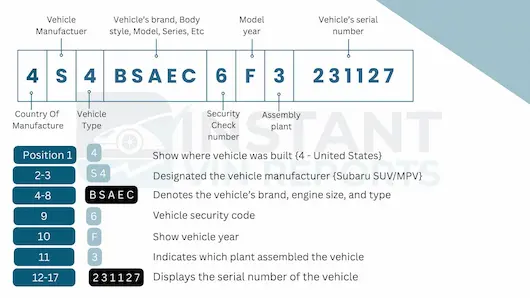
Since 1981, Subaru has followed the common VIN layout used across the industry for vehicles sold in markets like North America. The VIN is split into three main sections:
- WMI: World Manufacturer Identifier (positions 1–3)
- VDS: Vehicle Descriptor Section (positions 4–9)
- VIS: Vehicle Identifier Section (positions 10–17)
The VIN is read from left to right. The first section tells you who built it, the middle tells you what it is, and the end tells you exactly which car you’re looking at. See the detailed explanation below:
WMI (World Manufacturer Identifier)
The first three characters of a Subaru VIN make up the WMI. This block shows the region and the manufacturer.
For Subaru, common WMIs include codes like JF1 and JF2, which are assigned to Subaru passenger cars and SUVs built for markets such as North America.
- 1st character – region or country where the vehicle was built (for example, “J” indicates Japan).
- 2nd–3rd characters – identify the manufacturer and sometimes the vehicle type (e.g., Subaru passenger car versus SUV).
So when you see something like JF1…, you’re looking at a Subaru built under that Japanese WMI block.
VDS (Vehicle Descriptor Section)
Characters 4–9 make up the VDS. This section describes the Subaru itself.
In this block, Subaru encodes things such as:
- body style (sedan, wagon, SUV, coupe)
- series or trim
- engine type and sometimes fuel system
- restraint or airbag system
The 9th character is a check digit used in North America to verify the VIN is correctly formed, following a formula set by regulations.
You don’t have to do the math by hand, of course. A good Subaru VIN decoder or Subaru VIN code decoder does that in the background and flags obvious typos.
VIS (Vehicle Identifier Section)
Characters 10–17 are the VIS, and they finish the story by identifying the exact vehicle.
- The 10th character encodes the model year using a standard year code table.
- The 11th character marks the assembly plant where the Subaru was built.
- Characters 12–17 are the serial or production sequence number, making that Subaru unique within that plant and model run.
For older, pre-1981 Subaru vehicles, VINs and chassis numbers didn’t always follow this exact 17-character layout and could be 11–17 characters long, but they still used fixed positions to describe the car.
Our Instant VIN Reports Subaru VIN decoder is built to handle many of those patterns so you don’t have to memorize any tables.
| 10th Digit | Model Year | 10th Digit | Model Year | 10th Digit | Model Year | 10th Digit | Model Year |
|---|---|---|---|---|---|---|---|
| A | 1980 | M | 1991 | 2 | 2002 | D | 2013 |
| B | 1981 | N | 1992 | 3 | 2003 | E | 2014 |
| C | 1982 | P | 1993 | 4 | 2004 | F | 2015 |
| D | 1983 | R | 1994 | 5 | 2005 | G | 2016 |
| E | 1984 | S | 1995 | 6 | 2006 | H | 2017 |
| F | 1985 | T | 1996 | 7 | 2007 | J | 2018 |
| G | 1986 | V | 1997 | 8 | 2008 | K | 2019 |
| H | 1987 | W | 1998 | 9 | 2009 | L | 2020 |
| J | 1988 | X | 1999 | A | 2010 | M | 2021 |
| K | 1989 | Y | 2000 | B | 2011 | N | 2022 |
| L | 1990 | 1 | 2001 | C | 2012 | P | 2023 |
Where to Find the VIN on a Subaru?
You can’t decode what you can’t find, right? Subaru usually places the VIN in several standard spots so you (and inspectors, and law enforcement) can read it without tearing the car apart. Regulations also require the VIN to be readable from outside the vehicle in normal markets like the U.S.
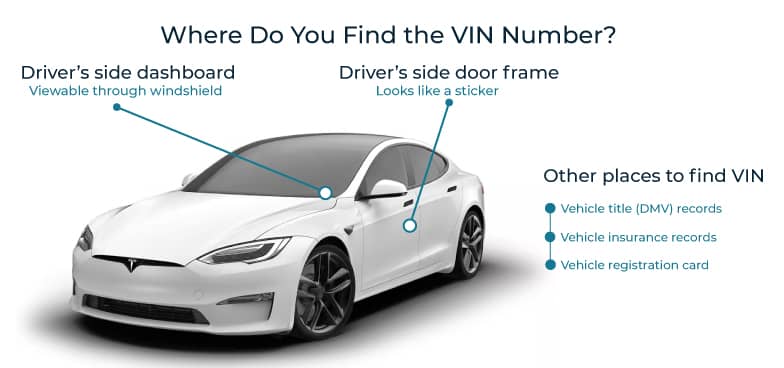
Here are the most common places to look on a Subaru:
- Dashboard, driver’s side: Stand outside the car and look through the lower corner of the windshield on the driver’s side.
- Driver’s door jamb / B-pillar: Open the driver’s door and check the label on the door frame (B-pillar).
- Engine bay: On many Subaru models, especially imports and older cars, the VIN or chassis number appears on a metal plate in the engine bay, often near the strut tower or firewall.
- Other body locations on older vehicles: Some classic Subaru cars may have the VIN stamped on inner fenders or other body panels.
- Paperwork and records: You’ll also find the Subaru VIN printed on the registration, title, insurance documents, and in dealer or service records.
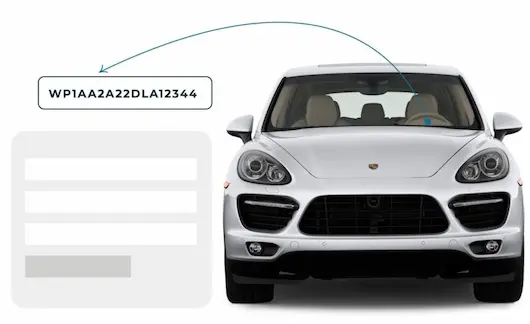
Once you’ve found the VIN, you just type it into our Instant VIN Reports Subaru VIN decoder or tool. The system will read the code, show you the specifications, and if you want, generate a full history report, even for many older, pre-1981 Subaru classics.
What Information Can You Get from a Subaru VIN Decoder?
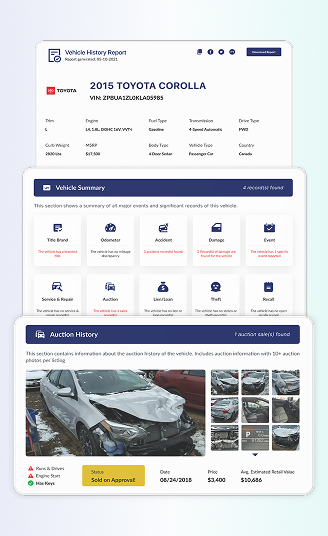
When you run a Subaru VIN through our Subaru VIN decoder tool, you’re not just checking letters and numbers. You’re pulling together the story of that Subaru, in one place, in plain English. Here’s what each section in a Subaru vehicle history report means.
Vehicle Specifications
This is Subaru’s ID card. From a single VIN, the Subaru VIN decoder shows the model, trim, body style, drive type, engine family, transmission, and model year. That’s useful if you’re checking any model of Subaru, including the WRX, STI, or a swapped project where stories can get “creative.”
Lien/Loan Check
A lien or loan check tells you if a bank, finance company, or other lender still has a legal claim on the Subaru. If there’s an active lien and the seller doesn’t pay it off correctly, the lender can still come after the car. The lien/loan status in the report helps you confirm that the Subaru can be transferred cleanly into your name.
Theft Records
Theft records flag if a Subaru has been reported stolen, whether it was recovered, and available data on where the incident was logged. A Subaru with unresolved theft issues can cause big legal headaches if law enforcement or an insurer later disputes the ownership.
Accident & Damage Records
This section lists reported accidents, the dates, and the severity or the area of impact. It can also show other damage categories, such as flood, fire, or structural damage. It’s better to know this from a Subaru VIN report than to find it out during a tense inspection.
Warranty Status
Warranty status tells you whether the Subaru is still covered by any basic manufacturer warranty. If coverage remains, that can save you a lot on repairs and may justify paying a little more. If all warranties are over, you can budget for maintenance with clearer eyes.
Auction History
Many damaged or high-mileage Subarus pass through auctions before landing on a used-car lot or a private ad. Auction history shows whether the Subaru went through auctions; this section includes the dates and basic conditions. When available, it can include mileage at auction and high-level notes about the car’s status.
Sales History
Sales history traces past sales and online listings when data exists: where the Subaru was advertised, how the price changed, and how long it sat on the market. A Subaru that keeps coming back to market or drops price sharply might have issues that don’t show in photos. A well-priced car that sold quickly before may tell you you’re looking at something desirable.
Title Brand Records
Check if the Subaru vehicle carries a clean, salvage, rebuilt, flood, lemon, junk, or buyback title. If they have something other than clean, it means that something serious happened in the past. The Subaru VIN report shows these brands clearly, so you’re not guessing. A branded title isn’t always a deal-breaker, but it affects insurance, resale value, and safety.
Ownership History
Ownership history in a Subaru vehicle history report tells you how many times the Subaru has changed hands and roughly how it was used across its life. Why does this matter? Because a Subaru with one long-term owner who serviced it regularly usually has a different story than one that jumped between many owners in a short time.
Service & Maintenance Records
Whenever available, this section of the Subaru vehicle history report shows service entries, including oil changes, timing belt or timing chain service, brake jobs, recalls completed, and more. Seeing maintenance records for your Subaru VIN can reassure you that previous owners actually did the work, not just talk about it.
Recalls Check
The recall section checks if the Subaru VIN has been involved in safety recalls and whether those recalls are still open. With a Subaru recall check by VIN, you can plan to get those repairs done (often free at a dealer) and drive with more confidence.
Mileage History
Mileage history uses recorded odometer readings from inspections, title transfers, service visits, or auctions to map how the Subaru’s mileage climbed over the years. It’s a key part of our Subaru VIN check, especially if you’re worried about odometer rollback or suspiciously “low mileage” offers.
Why Use a Subaru VIN Decoder?
A lot of free tools only “understand” 17-character VINs. Instant VIN Reports was built to handle many Subaru vehicles from before and after the 1981 VIN standard, with support for 5–17 digit numbers when data is available.
So whether you’re decoding a new WRX or an older Subaru with a shorter chassis number, our Subaru VIN number decoder gives you specs first and then, if you want, a full history report for deeper research.
Who Can Benefit from Using a Subaru VIN Decoder?
Whether you’re looking at the newest Subaru models, listing your old Legacy, or restoring a classic Subaru coupe, decoding the VIN keeps you on the safe side. A Subaru VIN decoder turns confusion into clear bullet points you can act on.
Here’s how it helps different people.
For Buyers
- Confirm the exact Subaru model and trim, not just what the ad claims.
- Verify engine and transmission details instead of trusting badges.
- Review accident and damage records so bodywork doesn’t surprise you later.
- Confirm there are no unpaid liens that could cause legal disputes later.
- Look for title brands like salvage, rebuilt, or flood that affect safety and value.
For Sellers
- Show a clean, VIN-backed spec sheet so buyers know exactly which Subaru you’re offering.
- Share the Subaru VIN report link to answer many questions in one go.
- Use market value and sales data to set a realistic asking price from the start.
- Demonstrate responsible ownership with the available service and maintenance records.
- If your Subaru is a classic, show the decoded chassis number and any preserved records as part of its story.
For Dealers
- Fill in year, make, model, trim, and engine automatically from the VIN during intake.
- Avoid listing mistakes that lead to angry calls, returns, or bad reviews.
- Spot odometer issues early by comparing mileage entries over time.
- See lien/loan records so payoff amounts and paperwork stay clean.
- For Subaru classics, decode shorter VIN or classic chassis numbers and use the available history as a selling story.
How to Use the Free Subaru VIN Decoder?
To use the Subaru VIN Decoder, you first need the VIN. Once you’ve got it, the process is really just three simple steps.
1) Find the VIN
On most Subaru vehicles, you’ll find the 17-character VIN on the dashboard, driver’s door jamb or B-pillar, engine bay, or in paperwork like the title, registration, or insurance card.
2) Fill in the Form
Type or copy the 17-digit VIN into the form above, and click the “Search VIN” button. Our VIN decoder also works for classic Subaru models made before 1981, and with 5–14 digit VIN numbers.
3) Get the Report
You’ll see a preview with the Subaru basic details like the year, make, model, trim, engine, body style, and the available market value snapshot. Complete payment and click “Access Records” to get the full report in seconds. View online or download as a PDF for easy sharing or printing.
Free Subaru VIN Decoder vs. Paid Subaru VIN Decoder
A free Subaru VIN check is a great “first look.” It answers the basic question: What Subaru is this? What engine? Which trim?. But when you’re about to wire money, sign a contract, or buy a classic Subaru as a long-term project, you probably want the full story, not just the cover.
With Instant VIN Reports, you can move from a free Subaru VIN decode to a paid, detailed Subaru history report whenever you decide it’s worth it. Here’s how the two compare:
| Feature | Free VIN Decoder | History Report (Paid) |
|---|---|---|
| VIN decoding for all vehicle types | ||
| Year, make, model, trim | ||
| Full vehicle specifications / detailed car specs | ||
| Market value snapshot | ||
| Sales listings (current/online ads) | ||
| Sales history (timeline of past listings/sales) | ||
| Auction records (when available) | ||
| Auction history with photos | ||
| Mileage during auction/sales (when available) | ||
| Odometer rollback checks | ||
| Ownership history | ||
| Vehicle usage type (personal, fleet, rental, commercial) | ||
| Title brand records (salvage, rebuilt, flood, lemon, etc.) | ||
| Lien & loan records | ||
| Accident & damage history | ||
| Theft / stolen records | ||
| Flood/hail/fire damage checks | ||
| Service/repair records | ||
| Warranty status & coverage | ||
| Recall information |
Decode VIN by Other Manufacturers
 Alfa romeo
AM general
Aston Martin
Audi
Austin Healey
Avanti Motors
Bentley
BMW
Bricklin
Bugatti
Buick
Cadillac
Chevrolet
Chrysler
Daewoo
Daihatsu
Datsun
Dodge
Eagle
Ferrari
Fiat
Fisker
Ford
Freightliner
Genesis
Geo
GMC
Harley Davidson
Hino
Honda
Hummer
Hyundai
Infiniti
Isuzu
Jaguar
Jeep
Kawasaki
Kenworth
Kia
Koenigsegg
Lamborghini
Land Rover
Lexus
Lincoln
Lotus
Maserati
Maybach
Mazda
McLaren
Mercedes Benz
Mercury
MG
MINI
Mitsubishi
Morgan
Nissan
Oldsmobile
Panoz
Peterbilt
Plymouth
Polestar
Pontiac
Porsche
Rolls-Royce
Ram
Saab
Saleen
Saturn
Scion
Shelby
Smart
Subaru
Suzuki
Tesla
Toyota
Triumph
Volkswagen
Volvo
Yamaha
Alfa romeo
AM general
Aston Martin
Audi
Austin Healey
Avanti Motors
Bentley
BMW
Bricklin
Bugatti
Buick
Cadillac
Chevrolet
Chrysler
Daewoo
Daihatsu
Datsun
Dodge
Eagle
Ferrari
Fiat
Fisker
Ford
Freightliner
Genesis
Geo
GMC
Harley Davidson
Hino
Honda
Hummer
Hyundai
Infiniti
Isuzu
Jaguar
Jeep
Kawasaki
Kenworth
Kia
Koenigsegg
Lamborghini
Land Rover
Lexus
Lincoln
Lotus
Maserati
Maybach
Mazda
McLaren
Mercedes Benz
Mercury
MG
MINI
Mitsubishi
Morgan
Nissan
Oldsmobile
Panoz
Peterbilt
Plymouth
Polestar
Pontiac
Porsche
Rolls-Royce
Ram
Saab
Saleen
Saturn
Scion
Shelby
Smart
Subaru
Suzuki
Tesla
Toyota
Triumph
Volkswagen
Volvo
Yamaha
Frequently Asked Questions about Subaru VIN Decoder
Can I look up my Subaru vehicle specs by VIN number?
Yes, you can look up your Subaru vehicle specs by VIN number. When you enter your Subaru VIN into a decoder, you can usually see key specs like year, make, model, trim, engine type, transmission, and body style. With a Subaru VIN decoder from Instant VIN Reports, those specs are pulled straight from VIN data, so you can double-check the car’s identity.
How do I decode my Subaru VIN number?
The easiest way is to use an online Subaru VIN decoder. Find the 17-character Subaru VIN (or classic chassis number), type it into the form, and the system breaks it into sections for you: manufacturer, vehicle description, model year, serial number, and other core specs. Our Subaru VIN decoder does this automatically, so you don’t need to bother decoding it manually
How to decode a VIN manually?
You can decode a Subaru VIN manually, but it takes time. Each position in the 17-character VIN has a specific meaning (world manufacturer identifier, vehicle descriptor, check digit, year code, plant, and serial). You would need a VIN year table, Subaru WMI codes, and other reference charts. That’s why most people just use an online Subaru VIN decoder instead of doing the math by hand.
Is a Subaru VIN lookup free?
A basic Subaru VIN lookup is usually free. With Instant VIN Reports, you can run a free Subaru VIN decode to see the core specs and the available quick market snapshot. If you want full history details, such as title brands, mileage logs, accidents, liens, auction & online listing, and more, that part comes in the full Subaru vehicle report.
Does a VIN report show odometer rollback?
A good VIN report can help you spot possible odometer rollback. It compares mileage readings from registrations, inspections, auctions, and other records over time. If the Subaru’s mileage suddenly drops or behaves strangely, the report will highlight it as a potential issue so you can ask more questions.
How many owners can a Subaru VIN report show?
A Subaru VIN report will show the available data of the number of recorded owners and the type of ownership (e.g., personal, fleet, rental), along with rough timeframes. There isn’t a fixed limit on how many owners can appear; it depends on how many times Subaru has been retitled and what the data sources report.