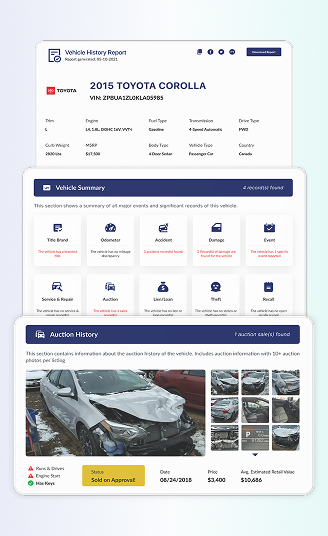

Maserati VIN Decoder
What is a Maserati VIN Decoder?
A Maserati VIN decoder is a tool that reads your VIN and translates it into the information you can actually use. This includes the year, make, model, and other encoded details that help confirm what the car is.
If your Maserati is from before the 1981 model year, its VIN may be shorter and less standardized. This can make decoding a bit trickier, as older vehicles may follow different formats. In these cases, using a tool that supports classic VINs, like Instant VIN Reports, ensures you get the most accurate data available.
What is a Maserati VIN (Vehicle Identification Number)?
A Maserati VIN (Vehicle Identification Number) is a unique code assigned to a vehicle for identification. For most modern vehicles, it is a 17-character string of letters and numbers. It is used for practical tasks like registration and insurance, but it also helps identify the vehicle’s specs and can support recalls or theft prevention work.
Checking the VIN is usually step one when you’re buying a used Maserati. It helps you confirm the car’s identity and reduces the odds of buying something with confusing or mismatched details.
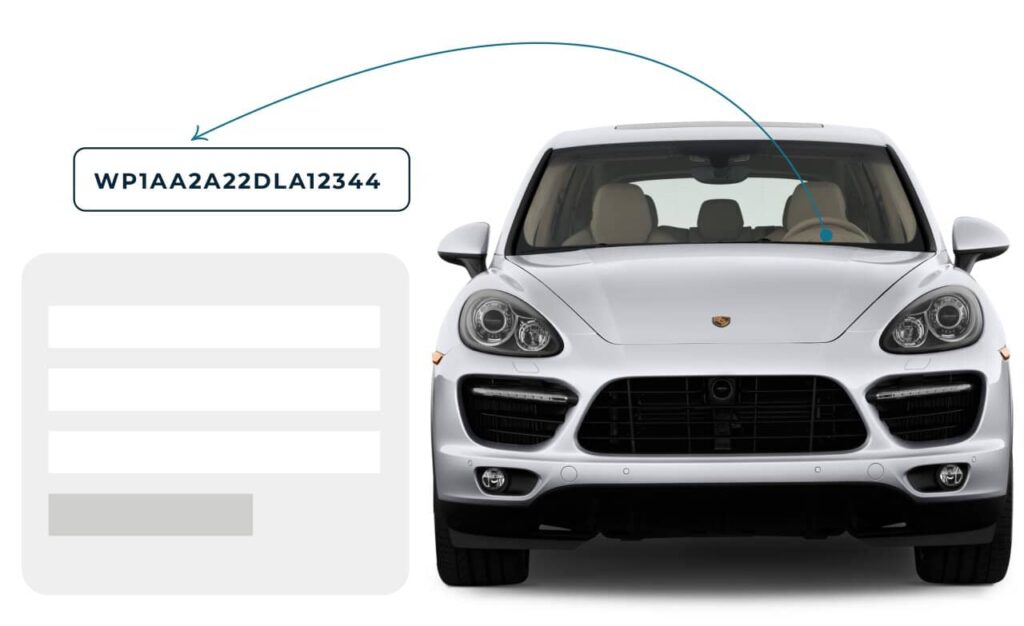
How to Read a Maserati VIN Number?
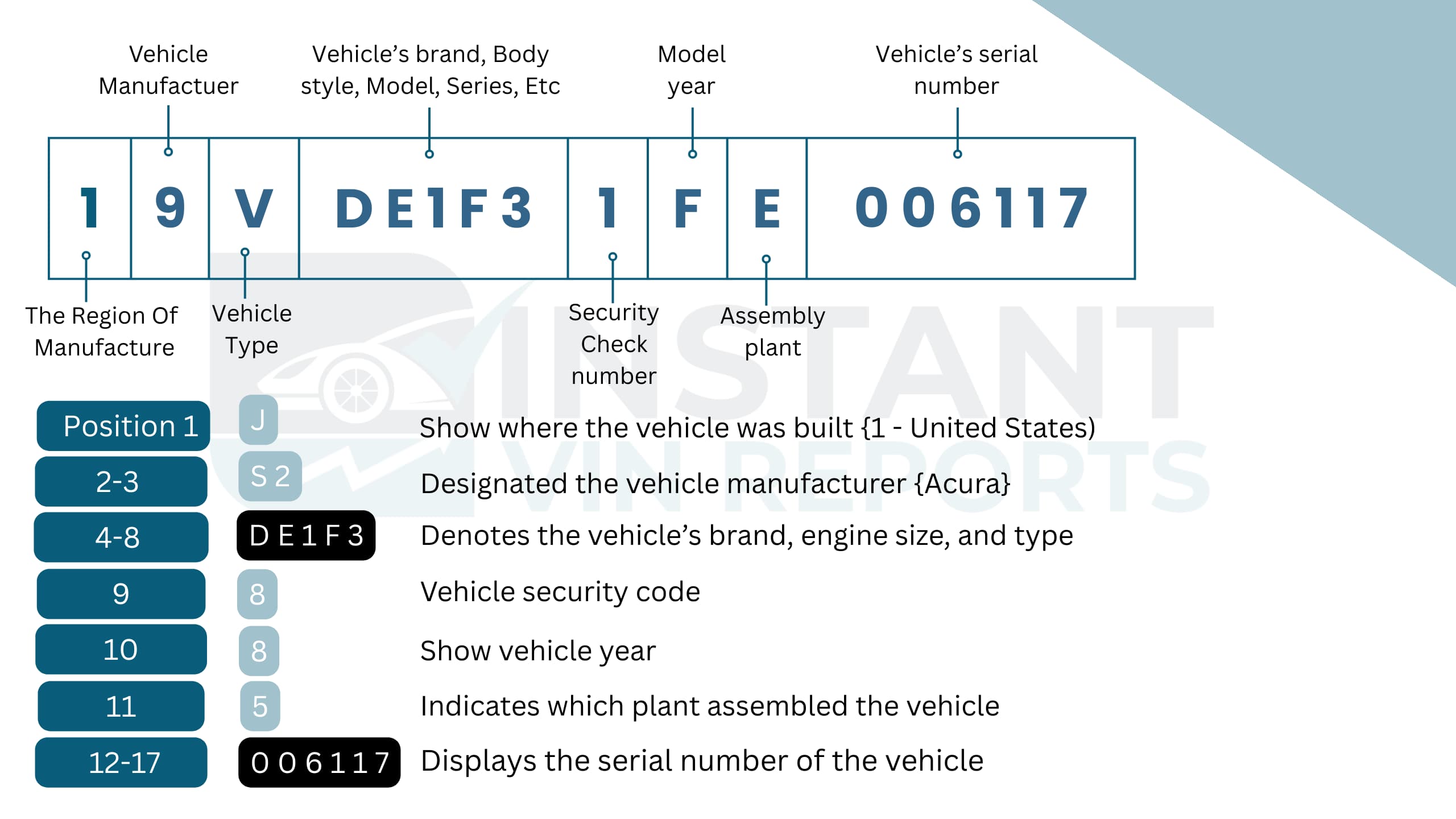
Reading a Maserati VIN is not hard. The VIN is split into three big chunks: WMI, VDS, and VIS. Each chunk does a different job, like identifying the maker, describing the vehicle, and marking the exact unit. If you don’t want to do it manually, a Maserati VIN decoder handles the same logic more quickly.
WMI (World Manufacturer Identifier)
The WMI is the first three characters of a VIN. Its job is to identify the manufacturer. In plain terms, it tells you “who made the vehicle.” For a Maserati buyer, this matters because you’re confirming the VIN starts with a real manufacturer identifier, not something odd or tampered with.
- Position 1: Region/country code
- Example: Z is used for Italy-based WMIs in VIN references
- Example: Z is used for Italy-based WMIs in VIN references
- Position 2: Manufacturer identifier
- Example: A in ZAM is part of Maserati’s assigned WMI
- Example: A in ZAM is part of Maserati’s assigned WMI
- Position 3: Manufacturer/division/category identifier
- Example: M completes ZAM for Maserati passenger cars
VDS (Vehicle Descriptor Section)
The VDS typically includes positions 4 through 9 of the VIN. This section provides detailed information about the vehicle, such as the type, platform, model, or body style, depending on the manufacturer’s system and the regulations in that area.
For Maserati enthusiasts, this part of the VIN is crucial as it distinguishes a standard Maserati from a more uniquely specified build identity.
- Positions 4–8: Vehicle attributes set by the manufacturer
- For Maserati, these are model/feature codes that can vary by line and year.
- For Maserati, these are model/feature codes that can vary by line and year.
- Position 9: Check digit in North America (it can be a number or “X,” used for validation)
Note: The VDS is not “one universal codebook” across all brands. Each manufacturer has its own internal mapping for many of these characters, which is why decoding tools exist in the first place.
VIS (Vehicle Identifier Section)
The VIS is typically positioned 10 through 17. This is where you’ll find the model year code, the plant code, and a sequential serial number that helps identify the exact unit. If you’re checking Maserati recalls or trying to confirm a car’s production details, this section is a big deal because it narrows the vehicle down to one specific car.
- Position 10: Model year code
- Example: letters/numbers map to years; this is a standard VIN concept.
- Example: letters/numbers map to years; this is a standard VIN concept.
- Position 11: Assembly plant code (set by the manufacturer)
- Positions 12–17: Sequential production/serial number (unique to the vehicle, manufacturer-defined sequence)
Where to Find the VIN on a Maserati?
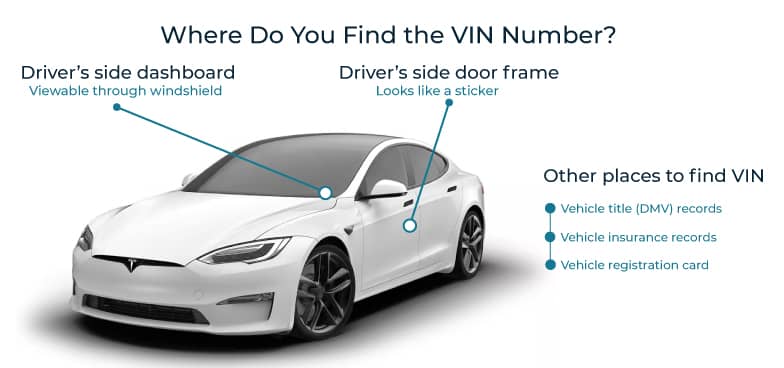
Check these common locations where Maserati places the VIN for easy identification and helpful vehicle verification
- Driver-side dashboard near the windshield: Visible through the glass from outside.
- Driver-side door jamb or door pillar: Sticker or metal plate area.
- Under the hood (engine bay/firewall area): Sometimes stamped or plated there.
- Vehicle paperwork (title/registration/insurance): VIN is commonly printed there.
- Older/classic VIN plates or serial numbers: May be shorter, and the format varies.
What Information Can You Get from a Maserati VIN Decoder?
A Maserati VIN is like the car’s passport number. On its own, it’s just letters and digits. But once you run a Maserati VIN lookup, it can point to a lot of useful details that help you buy smarter, sell cleaner, or just understand what you own.
Vehicle Specifications
This section is the “identity card” part. For a Maserati, it helps you confirm what the vehicle is supposed to be based on the VIN and related data. You may see basics like the model year, make, model line, body type, and other factory-style identifiers.
Theft Records
Theft records focus on whether the vehicle was reported stolen and whether it was recovered, when that information is available in the record trail tied to the VIN. This matters because nobody wants to buy a stolen vehicle by accident, even if the seller “seems nice.”
Warranty Status
Warranty status is about what coverage may still apply, if any, and what the timing might look like. With Maserati ownership, warranty questions come up fast because repairs can be costly. This section can help you understand whether the vehicle might still be within a warranty period or whether you should plan like an out-of-warranty owner.
Market Value
Market value is where you compare the asking price to a wider reality. A Maserati can be priced emotionally, especially in private listings. This section helps bring it back to earth by giving you a reference point, so you can decide whether the price looks fair, inflated, or oddly low.
Service & Maintenance Records
Service history will show you recorded patterns like regular maintenance, inspections, and consistent care. Long gaps may indicate off-record maintenance or neglect. For buyers, this aids in planning, and for owners, it maintains a clear timeline.
Vehicle Usage Record
Usage records can hint at how the Maserati was used over time. Was it a personal car, a fleet vehicle, a rental-style situation, or something else? Different usage patterns can affect wear. A rental-type life can mean lots of drivers and uneven care.
Ownership History
Ownership history is about how many hands the Maserati passed through. A clean, steady ownership trail can feel more trustworthy than a car that changes owners every few months. This matters for older luxury cars because frequent flips can sometimes hint at hidden problems, or just a vehicle that nobody kept long enough to care for.
Auction History
Auction history can show whether the Maserati appeared in auction channels with recorded dates or listing trails tied to that path. For buyers, this helps you spot “flip behavior,” where a car bounces through quick sales.
Sales History
With Sales history, you can see the recorded data of when the Maserati was listed, sold, or transferred, when that information is available. This helps you understand how often it changes hands and whether it was repeatedly marketed. A car that keeps coming back can mean picky buyers, unresolved issues, or just a seller who keeps changing their mind.
Mileage History
Mileage history is where you look for consistency. Instead of trusting one number on a dashboard photo, you’re looking at a timeline of mileage entries that may show how the Maserati’s odometer reading changed over time.
Accident Records
Accident records are meant to show reported accidents connected to the VIN. This can help you judge risk and value, because even a well-repaired accident can change the story of a luxury car.
Title Brand Records
Title brand records indicate any red flags associated with a vehicle’s title history. Common concerns include designations such as salvage, rebuilt, junk, flood, or other title branding categories, depending on what has been recorded. For a Maserati, a branded title can drastically change the resale value and the insurance situation, even if it drives fine today.
Why Use a Maserati VIN Decoder?
A Maserati VIN decoder by Instant VIN Reports gets you a solid baseline fast, so you know what questions are worth asking. Then, if something looks off, you can investigate with purpose. It’s not about fear. It’s about reducing surprises. And for classic Maserati projects, the ability to handle older VIN styles is a quiet win.
Who Can Benefit from Using a Maserati VIN Decoder?
A Maserati is not a casual purchase, even when it’s used. Buyers want certainty, sellers want clean trust, and dealers want fewer headaches after the sale.
For Buyers
- Confirm the listing matches the VIN identity
- Spot title brand red flags early
- Check for reported accidents before negotiating
- Review mileage patterns for odd jumps
- Build a smarter inspection checklist using report hints
For Sellers
- Prove you’re transparent without oversharing
- Answer buyer questions faster with report sections
- Support your asking price with market context
- Show a clean ownership timeline when possible
- Make your Maserati listing look more serious and prepared
For Dealers
- Screen trade-ins faster using VIN-based info
- Identify risk units before putting them on the lot
- Improve pricing decisions with market value context
- Catch title issues early, before paperwork stages
- Make buyer conversations smoother and faster
How to Use the Free Maserati VIN Decoder?
To use the Maserati VIN Decoder, you’ll need the VIN first. After that, it’s a simple three-step routine.
1) Find the VIN
Look at the driver-side dashboard near the windshield, then check the driver-side door jamb area.
2) Fill in the Form
Go to Instant VIN Reports and enter the VIN into the decoder form. Copy it carefully. One wrong character can change results.
3) Get the Report
You will see the vehicle specifications at no cost. If you need the full story, including the title records, mileage, recalls, service notes, or auction records, you can purchase the full history report.
Free Maserati VIN Decoder vs. Paid Maserati VIN Decoder
Confirm the basic details for the Maserati at no cost, and upgrade for the full history, and see the recorded history of mileage, ownership, title check, theft records, lien/loan records, and more. See the table below to see the difference:
| Feature | Free VIN Decoder | History Report (Paid) |
|---|---|---|
| VIN decoding for all vehicle types | ||
| Year, make, model, trim | ||
| Full vehicle specifications / detailed car specs | ||
| Market value snapshot | ||
| Sales listings (current/online ads) | ||
| Sales history (timeline of past listings/sales) | ||
| Auction records (when available) | ||
| Auction history with photos | ||
| Mileage during auction/sales (when available) | ||
| Odometer rollback checks | ||
| Ownership history | ||
| Vehicle usage type (personal, fleet, rental, commercial) | ||
| Title brand records (salvage, rebuilt, flood, lemon, etc.) | ||
| Lien & loan records | ||
| Accident & damage history | ||
| Theft / stolen records | ||
| Flood/hail/fire damage checks | ||
| Service/repair records | ||
| Warranty status & coverage | ||
| Recall information |
Decode VIN by Other Manufacturers
 Alfa romeo
AM general
Aston Martin
Audi
Austin Healey
Avanti Motors
Bentley
BMW
Bricklin
Bugatti
Buick
Cadillac
Chevrolet
Chrysler
Daewoo
Daihatsu
Datsun
Dodge
Eagle
Ferrari
Fiat
Fisker
Ford
Freightliner
Genesis
Geo
GMC
Harley Davidson
Hino
Honda
Hummer
Hyundai
Infiniti
Isuzu
Jaguar
Jeep
Kawasaki
Kenworth
Kia
Koenigsegg
Lamborghini
Land Rover
Lexus
Lincoln
Lotus
Maserati
Maybach
Mazda
McLaren
Mercedes Benz
Mercury
MG
MINI
Mitsubishi
Morgan
Nissan
Oldsmobile
Panoz
Peterbilt
Plymouth
Polestar
Pontiac
Porsche
Rolls-Royce
Ram
Saab
Saleen
Saturn
Scion
Shelby
Smart
Subaru
Suzuki
Tesla
Toyota
Triumph
Volkswagen
Volvo
Yamaha
Alfa romeo
AM general
Aston Martin
Audi
Austin Healey
Avanti Motors
Bentley
BMW
Bricklin
Bugatti
Buick
Cadillac
Chevrolet
Chrysler
Daewoo
Daihatsu
Datsun
Dodge
Eagle
Ferrari
Fiat
Fisker
Ford
Freightliner
Genesis
Geo
GMC
Harley Davidson
Hino
Honda
Hummer
Hyundai
Infiniti
Isuzu
Jaguar
Jeep
Kawasaki
Kenworth
Kia
Koenigsegg
Lamborghini
Land Rover
Lexus
Lincoln
Lotus
Maserati
Maybach
Mazda
McLaren
Mercedes Benz
Mercury
MG
MINI
Mitsubishi
Morgan
Nissan
Oldsmobile
Panoz
Peterbilt
Plymouth
Polestar
Pontiac
Porsche
Rolls-Royce
Ram
Saab
Saleen
Saturn
Scion
Shelby
Smart
Subaru
Suzuki
Tesla
Toyota
Triumph
Volkswagen
Volvo
Yamaha
Frequently Asked Questions about Maserati VIN Decoder
How do I decode my Maserati VIN for free?
You can decode it by entering the VIN into a free Maserati VIN decoder like Instant VIN Reports. With a free Maserati VIN Decoder, you get a quick read of the vehicle’s identity and basic specifications. However, for deeper insights like title checks, accident history, and lien records, you can choose a full report after you see the preview.
Where is the VIN located on a Maserati?
Most Maseratis place the VIN on the driver-side dashboard near the windshield and also on the driver-side door jamb area. If it’s an older or classic Maserati, you may find a plate under the hood, so take your time and check carefully.
What information can I get from a Maserati VIN decoder?
A Maserati VIN number decoder can help you confirm the vehicle’s identity and then organize useful report sections like specs, ownership, mileage patterns, title brand records, accident indicators, and more when available, before you spend real money.
What is a Maserati VIN lookup?
A Maserati VIN lookup is a tool that decode Maserati VIN into readable details. So you can confirm the car’s basics, and also scan record-based sections like liens, theft records, and title flags. It’s a practical step before buying or selling.
How do I use a Maserati VIN number decoder to check the year?
To use a Maserati VIN number decoder to check the year, run the VIN through Instant VIN Reports and check the vehicle specifications, so you don’t have to decode characters manually. It’s faster and helps avoid mistakes when you’re copying the VIN from a photo or paperwork.
Can I use a Maserati Quattroporte VIN decoder for any Quattroporte?
For most modern Quattroporte models with a 17-character VIN, our VIN decoder flow works normally. If you’re dealing with a much older Quattroporte (classic era), the VIN may be shorter. In that case, use the classic VIN decoding option, such as Instant VIN Reports VIN decoder, so the tool doesn’t force it into a modern format.
Can a Maserati GranTurismo VIN decoder help with collector buying?
Yes, it can help a lot as a first filter. A GranTurismo purchase often involves emotion, condition, and story. A VIN report helps you check the story. It won’t replace an inspection, but it can highlight where you should ask more questions, especially around mileage history, title branding, and accident indicators.
What if my Maserati VIN is shorter than 17 characters?
That usually happens with older vehicles, especially pre-1981 style VIN formats. It’s not automatically suspicious. It just means you need a tool that supports classic VIN decoding. Instant VIN Reports can handle that kind of lookup, so you can still get a useful baseline before you restore, buy, or sell.