
Check Car Value by VIN: Instantly Get Accurate Market Value
Do not guess what a car is worth – know it. A car value check by VIN gives buyers and sellers an accurate, data-backed market value estimate before any money changes hands. Enter the VIN to check for free.
Key Market Value Insights for Used Car Buyers & Sellers
Used car prices shift constantly, and knowing the real market value of a vehicle before buying or selling has never been more important than it is. Here’s what you need to know:
Asking Price Is Not Always Market Value
A seller’s listed price is an opinion. Actual market value is backed by data, and the two rarely match perfectly.
A Vehicle History Has a Major Impact on Its Value
Accidents, title brands, mileage, and ownership records can significantly reduce what a car is actually worth on the open market.
Mileage Is One of the Biggest Price Factors
Every extra mile a car carries chips away at its value. High-mileage vehicles consistently sell for less than low-mileage ones.
Options and Trim Package Matter
A higher trim with factory-installed options is worth more than a base model of the same year, make, and model.
Why Vehicle Market Value Matters to Buyers & Sellers
A car’s market value is what a buyer is realistically willing to pay for it based on its condition, history, mileage, and comparable sales. Checking car value by VIN is the use of the vehicle’s unique VIN (Vehicle Identification Number to pull accurate market value estimates based on real data.
For used car buyers and sellers, this check removes the guesswork and gives both sides a fair, informed starting point for any transaction.
What is a Car Value Check by VIN?
Whether you are on the buying or selling side of a car deal, knowing the real market value of a vehicle protects your interests and keeps negotiations grounded in facts.
Buyers
Buyers who check vehicle value by VIN before making an offer walk into negotiations with the upper hand and real data on their side.
Avoid Overpaying for a Used Car
Knowing the market value before negotiating means you can push back confidently when a seller’s asking price is clearly above what the car is actually worth.
Compare Value Across Similar Listings
A car value estimate by VIN gives you a reliable benchmark to measure against other listings and determine which deal genuinely offers the best value.
Factor Value Into Your Total Budget
Understanding what a car is worth helps buyers plan financing, insurance costs, and future resale potential more accurately from the very beginning.
How to Check Vehicle Market Value for Free
Checking a vehicle’s market value takes just a few seconds with our car value check by VIN tool. Follow these easy steps to get your free estimate instantly:
Step 1: Enter the VIN
Type the vehicle's VIN into our search tool — you can also search by US license plate number if you prefer.
Step 2: Find Market Value by VIN
Get a free instant preview of the vehicle's specs and market values across four different condition levels.
Step 3: Get the Vehicle History Report
If buying a used car, it’s crucial to access the complete vehicle history report, which reveals mileage records, accidents, title brands, and other factors that directly affect true market value.
What Market Value Information Can I Check for Free?
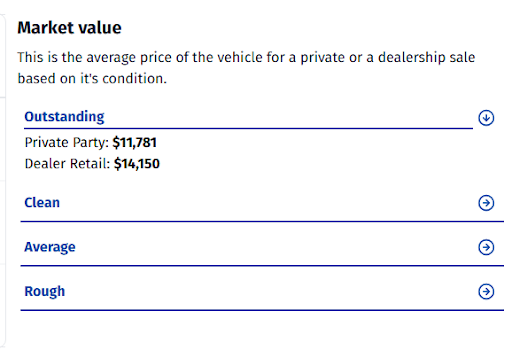
Our free car value check by VIN gives you instant access to market value estimates broken down by condition and sale type. Here is exactly what you get at no cost.
Car Condition
Market value is provided across four condition levels, including outstanding, clean, average, and rough, so you can see how the vehicle’s current state affects its price at each level.
Sales Type & Value
For each condition level, you get both the private party value and the dealer retail value, giving you a realistic price range whether you are selling privately or through a dealership.
Other Records in the VIN Report That Affect Value
A free value estimate is a great starting point, but the vehicle history report takes it further by revealing the specific factors that push a car’s value up or down. Here are the records to access in the report:
Ownership History
A car with fewer owners and longer ownership periods signals better care, which supports a higher market value when buying or selling.
Title Brands
Salvage, rebuilt, or flood title brands significantly reduce a vehicle’s market value and can make it harder to insure or finance afterward.
Accident Records
Even minor reported accidents can lower a vehicle’s market value because they raise questions about the quality of repairs and long-term reliability.
Theft Records
A prior theft status on a vehicle’s record can reduce buyer confidence and lower the price buyers are willing to offer for it.
Lien Records
An active lien on a vehicle complicates the sale and can reduce the effective value of the car until the debt is resolved.
Damage Records
Documented structural or flood damage beyond standard accidents lowers a vehicle’s market value significantly, especially for buyers concerned about long-term safety and reliability.
Sales History
Previous recorded sale prices give both buyers and sellers a real-world reference point for what the vehicle has actually been worth historically.
Warranty Information
A vehicle still covered under an active manufacturer warranty carries more value than one where the warranty has already fully expired.
Auction Records
Auction sale prices and up to 10 auction photos give buyers and sellers a transparent look at what the market has actually paid for the vehicle.
What are the Different Types of Car Market Value?
Not every car value estimate means the same thing. Here is a breakdown of the four main value types and what each one actually represents.
Trade-In Value
Trade-in value is what a dealership will offer you for your current vehicle when you are buying a new one from them, typically the lowest value type.
Private-Party Value
Private-party value is what a car actually sells for between two individuals without a dealership involved, usually sits between trade-in and dealer retail values.
Dealer Retail Price
Dealer retail price is what a licensed dealership charges customers for a used vehicle on its lot, usually the highest of the four value types.
Auction Value
Auction value is what a vehicle actually fetches when sold through a public auction. The prices can vary depending on the day, audience, and the vehicle’s condition.
What Factors Affect a Car's Value? A Complete Checklist
A lot of factors can push a car’s value up or down beyond just the make and model. Here is a checklist of the key factors that influence what any vehicle is worth.
Year, make, model, and trim level
Mileage and odometer accuracy
Accident and damage history
Number of previous owners
Factory-installed options and packages
Title brands (salvage, rebuilt, flood, etc.)
Current mechanical condition
Geographic location and local demand
Active warranty coverage remaining
Interior and exterior condition
Availability of service and maintenance records
Seasonal market trends
Why Choose Our Car Market Value Check Tool?
There are plenty of valuation tools out there, but here is what makes our car value check by VIN more reliable and useful than the rest.
Market Value Across Four Condition Levels
We provide market value estimates in outstanding, clean, average, and rough condition so you get a full picture of what the car is worth at every level.
Private Party and Dealer Retail prices
Our tool gives you both value types for each condition level, making it useful whether you are buying privately or through a dealership.
Accurate Value Based on Specs and Mileage
We factor in the specific details of each vehicle, not just the model, to deliver value estimates that actually reflect real market conditions accurately.
Access the Full VIN Report
Our tool lets you purchase the complete vehicle history report to understand all the factors affecting the car’s true value beyond just the base estimate.
Check Car Value Before You Buy or Sell
Do not walk into a car deal without knowing what the vehicle is truly worth. A car value check by VIN takes seconds and could save you thousands on your next transaction.
Frequently Asked Questions About Car Value Check by VIN
What's my car worth?
Your car's worth depends on its year, make, model, trim, mileage, condition, current market trends, and history. Running a car value check by VIN gives you an accurate market estimate across multiple condition levels and sale types based on real current market data.
Can I check car value by VIN for free?
Yes, you can check a car's value for free using our car valuation tool. Enter the VIN and instantly get market value estimates, including both private party and dealer retail values, at absolutely no cost.
What is trade-in value vs. private party value?
Trade-in value is what a dealer offers for your car when buying a new one, typically the lowest estimate. Private party value is what the car really sells for between individuals, which is usually higher than a trade-in but lower than dealer retail.
How accurate are VIN-based car valuations?
VIN-based car valuations are generally very accurate because they factor in the vehicle's specific year, make, model, trim, and mileage. Accuracy improves further when combined with a full vehicle history report that accounts for title brands, accidents, mileage, and other factors that affect value.
Does accident history lower my car's value?
Yes, accident history typically lowers a car's value because it raises concerns about repair quality and long-term reliability. Even minor reported accidents can reduce market value, and more serious structural damage can significantly impact what buyers are willing to pay for the vehicle.