

Looking up your license plate number is simple. You can find it through the vehicle's registration details or by visiting your state's Department of Motor Vehicles (DMV) website. Alternatively, a trusted online license plate lookup tool can decode the license plate number and provide you with a vehicle history report.
Key Takeaways
- A license plate lookup is an excellent first step to confirm basic vehicle details like the make, model, and year, and to check the vehicle's records.
- Federal laws, specifically the Driver's Privacy Protection Act (DPPA), strictly limit access to personal owner information (name, address, and contact information).
- To look up the license plate, you can use an online license plate lookup, visit your local DMV, or go through the vehicle registration details.
What Does License Plate Lookup Mean?
A license plate lookup is simply the process of using a vehicle's unique license plate number and its state of registration to retrieve publicly accessible information about that specific vehicle. Think of it as a quick identification check.
What is the Difference Between a License Plate Lookup and a VIN Check?
It's easy to confuse a license plate lookup with a VIN check, but we need to draw a clear line between the two; they're not the same.
What is a License Plate Lookup?
The license plate is an identifier for the vehicle's registration in a specific state. Plates can be transferred from one vehicle to another, changed, or replaced over time, meaning the plate number doesn't stay with the car for its whole life. A license plate lookup is a service where you can check the license plate number and get the vehicle history report.
Also, What is a VIN Check?
The VIN (Vehicle Identification Number), on the other hand, is the vehicle's permanent 17-character serial number. The VIN is often visible through the windshield, and is unique to that specific vehicle from the moment it leaves the assembly line until it's retired.
The VIN check is the same as the license plate lookup; it helps you get the vehicle history report that details the vehicle's specifications and past records. This tool is an alternative if you do not have the VIN.
Why Do People Usually Perform a License Plate Check?
There are a handful of legitimate reasons why you might want to perform a license plate check. We've seen buyers skip this and regret it every time, but here are the most common and responsible uses:
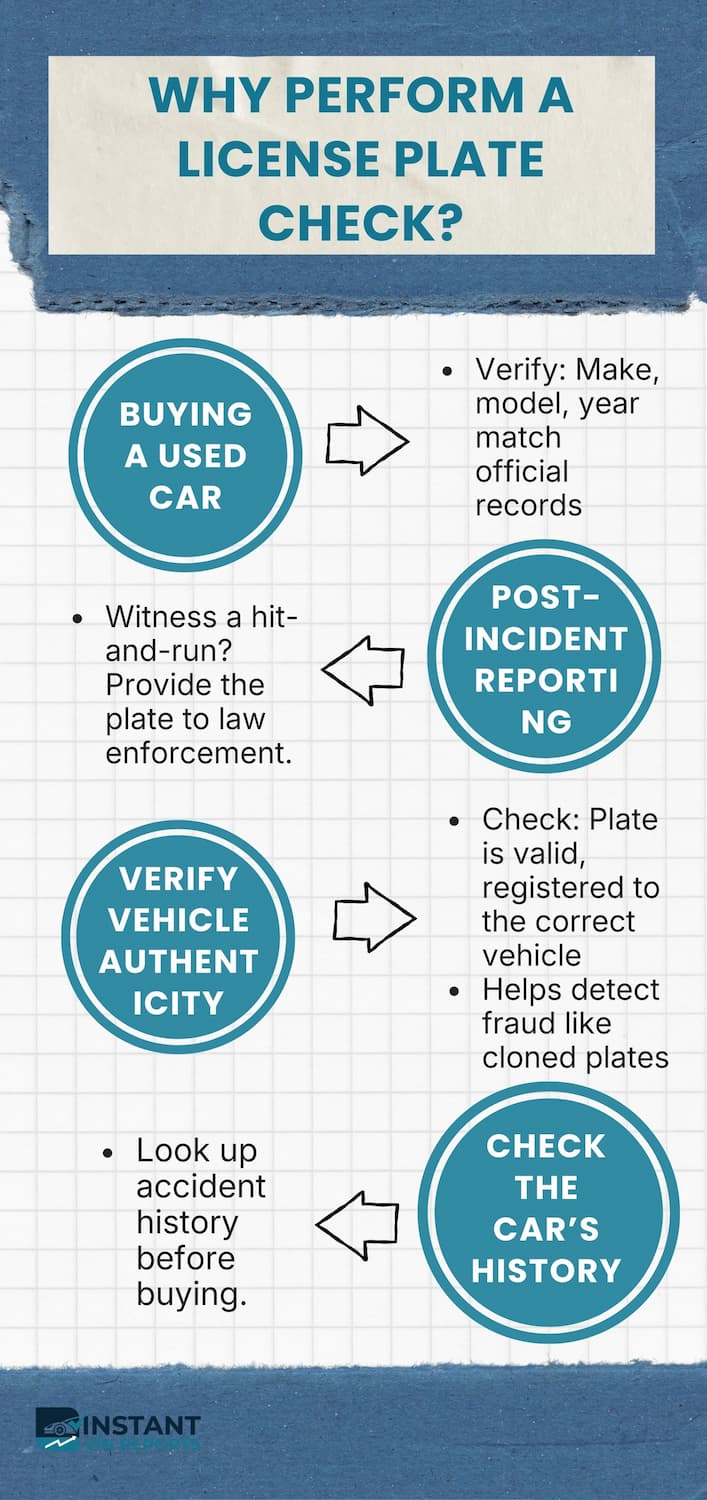
Buying a Used Car
The most frequent reason. You're verifying that the car the seller is showing you (make, model, year) matches the official registration records.
Post-Incident Reporting
If you witness a hit-and-run or someone damages your property and drives off, you'd provide the plate number to law enforcement to help them identify the vehicle.
Verifying Vehicle Authenticity
Checking that the plate is current, valid, and registered to the type of vehicle it's on, which helps detect possible fraud like a cloned plate.
Check the Car's History
With a license plate lookup, you can examine if the vehicle that you are about to purchase has no bad history, like being involved in an accident
What Information Can You Find from a License Plate
The information you can retrieve through a license plate is highly dependent on the service you use, a private authorized provider versus a simple free search, and, more critically, what your state allows under privacy laws.
You won't be finding someone's home address from a standard public search. What you can find, however, is substantial for vehicle assessment.
- Basic Vehicle Specifications: A good lookup will immediately confirm the make, model, and year of the vehicle. This is your first validation step.
- Current Registration Status: Find out if the plate and vehicle registration are current, expired, or have any flags or holds on them.
- Potential Accident or Damage History: Authorized providers can often pull in data from insurance and salvage databases that are tied to the vehicle, regardless of whether you have the full VIN yet.
- Title Status and Brands: This is critical. You might find out right away if the vehicle has a salvage, rebuilt, flood, or fire title brand. Ever notice how a seemingly clean title can hide bigger issues? A good check helps weed those out fast.
- Odometer Records (Where Available): While less common without the VIN, some state records tied to registration renewals will show mileage entries, helping you spot a potential rollback early on.
- Outstanding Liens or Loans: If a lienholder has an interest in the vehicle and it has been reported correctly, this can often appear in the registration records.
- Past Ownership Count: You can usually see how many times the vehicle has been titled, which gives you an idea of its ownership history, without disclosing any personal owner names.
Read also:Everything You Need to Know About Vehicle Condition Reports
Vehicle Data Available via Plate Lookup
| Data Category | Typically Available? | Requires Full VIN for Best Detail? |
|---|---|---|
| Make, Model, Year | Yes, reliably. | No. |
| Title Status (Brands) | Yes, via paid services. | Yes, for all history. |
| Owner Name/Address | No, highly restricted by law. | No, restricted. |
| Accident History | Yes. | Yes, for full reporting. |
| Open Recalls & Service Data | Yes, fully reported. | Yes, the report is available on the vehicle report. |
Is It Legal to Look Up a License Plate?
This is the big question, and the answer is a firm, qualified yes, with a massive emphasis on the qualifications. We've had to untangle this for worried buyers countless times, so let's be crystal clear about the law.
The Drivers' Privacy Protection Act (DPPA)
The legal landscape in the United States is dominated by a federal law: the Driver's Privacy Protection Act (DPPA). This law, enacted in 1994, strictly prohibits the release or use of personal information, like a driver's name, address, phone number, and Social Security Numberobtained from a state Department of Motor Vehicles (DMV) record.
When is it Legal to Get Vehicle Data?
You are generally operating within the law when your search is focused on the vehicle itself, not the person who owns it. Permissible uses include:
Vehicle Safety and Recalls
Checking a car for open safety recalls from the manufacturer.
Used Car Transactions
Verifying the accuracy of information provided by a seller.
Market Research
For a business, doing statistical reports where personal data isn't disclosed.
Insurance and Claims
Use by insurance companies in connection with policy and claim processing.
When Does it Become Illegal?
The line you cannot cross is trying to access personally identifiable information (PII) for non-permissible use. You do not have the right to look up someone's name, address, or phone number simply because you have their license plate number.
This is the difference between a vehicle history check and what amounts to personal data stalking. Trusted third-party services that you pay for vehicle history are all required to comply with the DPPA and will only release non-personal, vehicle-specific data. If a service promises you a name and address for a few dollars, we recommend that you walk away.
How to Check a License Plate
The process is simple, but it requires using a reliable service that operates within the legal framework we just discussed. Here is the step-by-step approach we recommend.
Easy Steps to Run License Plate Lookup
Running a license plate lookup is easy; all you need to have is the vehicle's license plate and to fill out the form.
Identify the State of Registration
This is non-negotiable. License plate formats and records are state-specific. You need the plate number and the state it was issued in. Without the state, your search will not be reliable, if it runs at all.
Use a Trusted License Plate Lookup Service
Opt for a reputable vehicle history provider, one that explicitly mentions its compliance with the DPPA. Free sites can be a gamble regarding accuracy, and frankly, they often try to pull a little information on the vehicle.
Enter Plate Number and State
Double-check the plate entry. Typos or incorrect statements can throw off your search completely. Enter the exact characters you see on the form. Then, click on the button and wait for a few seconds to get the report.
Review the Report Details
Check on the preview page, then proceed to payment to get the full vehicle history report. Once it's done, don't forget to download the vehicle history report.
Read also: How to Find the Owner of a Car in Texas?
License Plate Design and Types
While the primary function is identification, a plate can also tell you a bit more about the vehicle's intended use just by its type and appearance. Most states offer a range of specialized tags, and it helps to know what you're looking at.
Common Plate Types
Here's the list of the common types of license plates you can find in the United States:
Standard Plates
The basic plate is issued for passenger vehicles. They usually feature the state motto and a standard color scheme.
Specialty/Organizational Tags
These are purchased by the owner to support a cause (like a college, a veteran's group, or a wildlife fund). These are just for visual preference, but they mean the vehicle owner paid an extra registration fee.
Personalized/Vanity Plates
The custom tags, where the owner selects the letters and numbers. Again, these are purely cosmetic, but they often cost more and require special permission from the DMV.
Disability Tags
Plates or placards indicating the driver or passenger has a physical disability, granting specific parking privileges.
Temporary Plates
Usually paper or cardboard, issued by a dealer or the DMV upon sale. These have a short expiration date, after which the metal plate must be displayed.
Sources of License Plate Data
The data feeding these lookups doesn't come from a single source; it's aggregated from various entities that legally track vehicles and their statuses. It's a complex web, but understanding the key players helps you appreciate the report's detail.
DMV Records (Indirect Access)
The state Department of Motor Vehicles is the official holder of registration, title, and sometimes lien data. Authorized third-party providers, like those that offer vehicle history reports, have legal, limited access to this data under DPPA guidelines.
Insurance & Salvage Databases
Major insurance carriers and salvage yards report total loss and severe damage data. These records are vital for flagging salvage, flood, or fire-damaged titles.
Law Enforcement Data (Restricted)
Police databases hold information on stolen vehicles and active criminal investigations. This data is strictly restricted to government and law enforcement use, but a legitimate lookup service can flag a stolen vehicle without revealing the police record itself.
Public Vehicle Sales & Recall Systems
The National Highway Traffic Safety Administration (NHTSA) and manufacturers maintain records of all open recalls, which are tied directly to the VIN and thus accessible once you convert the plate to the VIN.
License Plate Lookup vs. VIN Lookup
These two services may seem different, but they are essentially the same; the primary difference is that a VIN lookup uses the vehicle's VIN rather than its license plate. However, these look-up service yields the same result: a vehicle history report.
What Should You Pay Attention to in the Report?
A license plate lookup and VIN check a crucial tools that you can use to check the vehicle's detailed specifications and its history, which could affect its safety and comfort.
Check the Accident Records
It is important to check if the vehicle was ever involved in an accident. The report will also show you the damage severity. Ensure that the vehicle is fixed thoroughly so you do not end up with an unfixed vehicle, as it could result in another accident if it isn't fixed properly.
Examine Service and Maintenance
Many reports linked to the VIN include service records reported by dealerships and authorised repair shops. When you are examining the vehicle history report, check the service and maintenance records to ensure that the vehicle was properly serviced and taken care of.
Warranty Status
In the report, you'll find the warranty information of the vehicle. Check if it's still covered by the manufacturer's warranty, corrosion protection, or roadside assistance. If there is no more warranty, it is a good idea to purchase an extended warranty.
Read also:Is It Safe to Share VIN Number
Final Tips & Recommendations
We always recommend securing the vehicle history report before you purchase a used vehicle, be it from a dealership or private seller. Here are the tips and recommendations before you purchase a used vehicle.
- Always Verify State Rules: While the DPPA is federal, states can and do have their own additional layers of privacy protection. Be mindful of your local regulations.
- Use the Report Only for Legal Purposes: Do not, under any circumstances, use a license plate lookup service to try and find a driver for personal, emotional, or non-permissible reasons.
- Keep Records: Print or save a PDF of any report you run. This is important for disputes, insurance claims, or if you ever need to sell the vehicle later.
Why is Checking the License Plate Crucial?
Checking a license plate is one of the quickest, easiest ways to start your due diligence on a used car. It's your immediate verification tool, giving you the car's fundamental identity, the make, model, and the crucial VIN, without having to crawl around the car lot. Just remember the core principle: we check the plate to learn about the vehicle, not the owner.
Stay on the right side of the DPPA, use a trusted, reputable provider, to receive the most accurate information about the vehicle. Remember to always run a background check before buying a used vehicle to avoid getting a vehicle that has been in an accident or was sold at an auction.
FAQs About How to Lookup a License Plate
Can I look up someone's license plate?
You can look up a vehicle's history based on the license plate, but federal law (DPPA) strictly prohibits access to an individual's personal information (name, address, etc.) for non-permissible reasons.
Do I need a VIN to get a full report?
Yes, you do. The license plate provides a great start and can lead you to the VIN, but the full, detailed history report, including comprehensive accident and title brand data, is only available via the VIN.
Can a license plate lookup show accident history?
It might provide a flag for severe damage or a total loss, but for a detailed accident report with specifics on severity, date, and damage location, you need the full VIN check.
Can plate lookup reveal owner information?
No. Reputable services comply with the DPPA and only release non-personal, vehicle-specific data. Only law enforcement or parties with a permissible use (like an insurer processing a claim) can typically access PII.
Is there a way to track a car by license plate?
You can't track a car's real-time physical location using a license plate lookup. That kind of information is restricted to law enforcement with a warrant, not the general public.