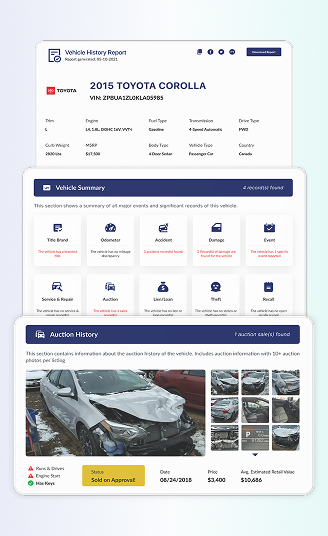


A rebuilt title isn’t automatically a deal-breaker, but it is a serious warning sign. It means a vehicle was once declared a total loss, then repaired, inspected, and legally approved to return to the road.
Below, we’ll break down exactly what a rebuilt title really means, how it affects value, insurance, and resale, and when it might (or might not) make sense to help you avoid costly mistakes when buying a used car.
Key Takeaways:
- A rebuilt title means the car was previously a total loss (salvage) but has been fixed and passed a state safety inspection.
- Expect to pay and resell for 20% to 40% less than a clean title car; banks and insurers often make financing these vehicles difficult.
- Never buy based on the seller’s word alone. Verify it with the VIN decoder history report and a physical inspection.
What is a Rebuilt Title on a Car?
When you are buying a car and see “rebuilt title” on a car ad, it’s a warning label and a green light at the same time.
A rebuilt title means the car was once declared a total loss or given a salvage title after serious damage, then later repaired and approved by the state as safe to drive again. Insurance companies and state agencies usually call a vehicle a total loss when the cost to fix it gets close to, or even exceeds, its actual value.
The damage could have been anything. We’re talking collision, flood, fire, or even theft recovery, where the car was stripped of parts. The key thing to remember? That brand is permanent. No matter how perfect the repairs are, that car will always carry the history of being totaled.
Legal definition of “rebuilt” on a vehicle
Legally, the definition of “rebuilt” varies slightly by state, but the core concept is the same: it is a vehicle that has transitioned from “unroadworthy” (salvage) back to “roadworthy” status. State laws are strict here. It is generally illegal to sell a rebuilt vehicle without disclosing its status to the buyer.
If a seller tries to “wash” the title (moving it to a state with looser laws to get a clean title), that’s a felony in many jurisdictions. We’ve seen buyers get stuck with cars they can’t legally register because the paperwork didn’t match the car’s actual legal status.
What does a rebuilt title look like?
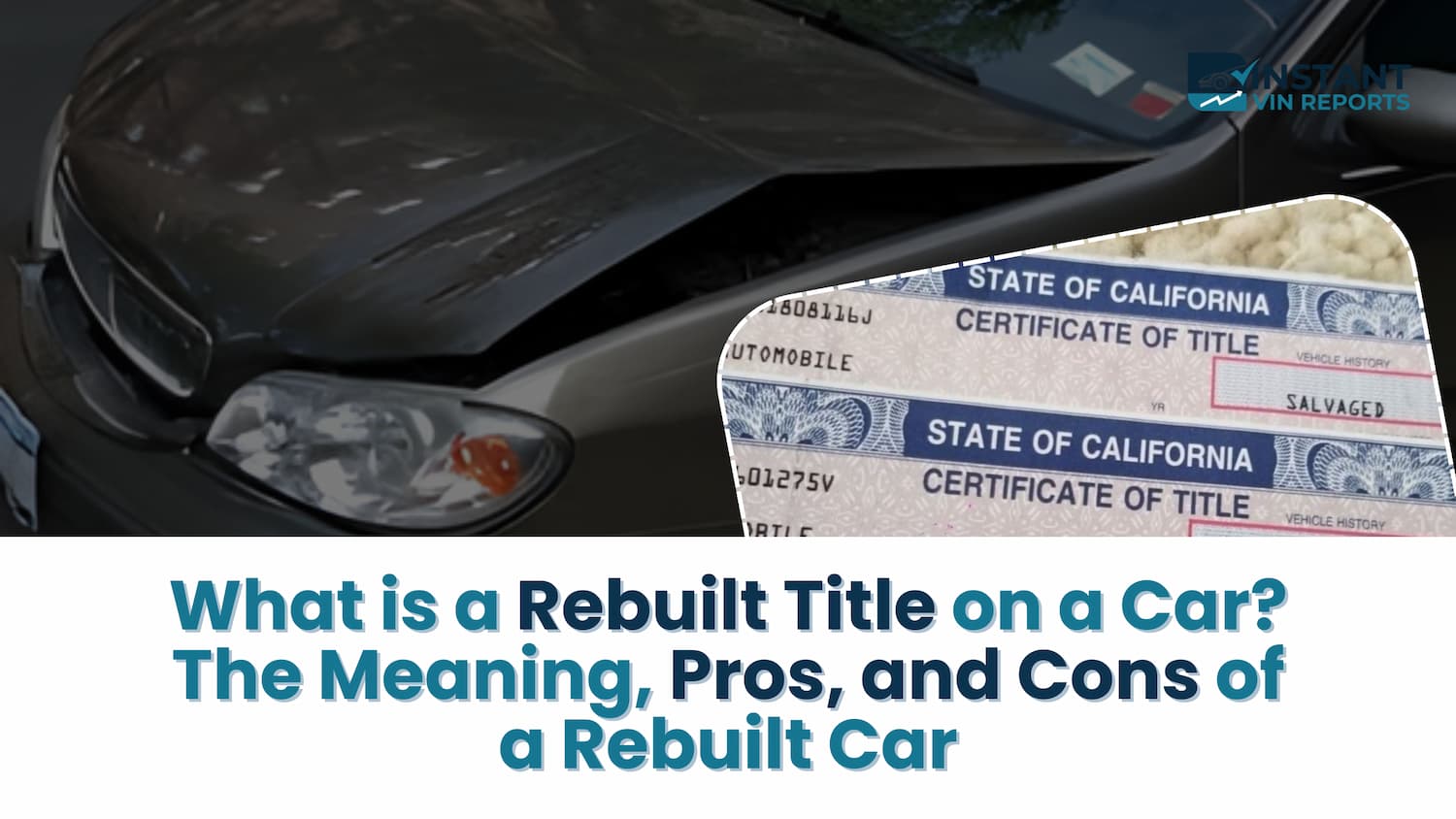
You need to know what a rebuilt title looks like so you don’t get fooled. It looks like a standard state Certificate of Title, but it will have a distinct “brand” printed on it. Depending on your state, you might see words like
- Rebuilt
- Reconstructed
- Prior salvage
- Salvage repaired
The font, color, or placement changes from Texas to California to New York. That’s why you can’t just glance at it. You have to read the “Status” or “Brand” section carefully. Better yet, match the VIN on the paper to the VIN on the dashboard to ensure you aren’t looking at a title for a different car.
Rebuilt Title vs Clean vs Salvage Titles
A clean title, a salvage title, and a rebuilt title each tell a different story about a vehicle’s past, its safety, and its value. Understanding how these three play off each other is the key to judging whether that “too good to be true” price actually makes sense.
Clean title
A clean title is what most people picture when they think of a “normal used car.” It means the vehicle has not been declared a total loss by an insurance company and doesn’t carry a major brand like salvage, rebuilt, or flood. That’s why clean-title cars usually hold the highest resale value and are the easiest to insure and finance.
Insurers and lenders see a clean title as a sign that the car’s past damage, if any, has been minor or at least not severe enough to trigger a total loss. For a buyer, that typically translates to fewer unknowns and more predictable ownership.
Salvage title
A salvage title tells a very different story. Here, the car has suffered significant damage or loss (often from a serious crash, flood, fire, or major theft), and an insurer has written it off as a total loss. At that point, the vehicle is usually not legal to drive on public roads until it has been rebuilt and inspected.
Salvage cars tend to be sold at steep discounts, often closer to 20–50% of their usual market value, because they’re seen mainly as sources of parts or as projects for experienced rebuilders. For most everyday buyers, a straight salvage title is a “look but don’t touch” situation unless they have the skills, time, and budget to manage a full rebuild.
Rebuilt title
A rebuilt title indicates that a former salvage car has been repaired and passed state inspections. Officially, a rebuilt or “prior salvage” vehicle was once branded salvage but is now deemed roadworthy.
However, it doesn’t mean the car is like new; it has only met minimum safety and anti-theft standards. The rebuilt brand remains in records permanently, leading insurers and buyers to treat it differently from clean-title cars. Typically, rebuilt vehicles sell for about 20–40% less than comparable clean-title models due to stigma and added risk.
This is where a VIN check becomes useful in practice. A proper history report pulls the title brands on record – clean, salvage, rebuilt, flood, and more – so you can confirm whether a “great deal” is really a lightly used car or a former total loss that’s been brought back to life.
The difference between a rebuilt and a salvage title
The main difference between rebuilt and salvage titles is roadworthiness. A salvage title is a red light. It means stop, do not drive. A rebuilt title is a yellow light. That means proceed but with caution.
Think of it this way: a salvage car is still broken in the eyes of the law. A rebuilt car has proven to the state that it’s fixed. Value-wise, a rebuilt car sits higher than a salvage one because it’s actually usable.
However, both will trade significantly lower than a clean title vehicle. If you see a listing that says “Salvage title, runs great, just needs a bumper,” walk away. If it hasn’t been inspected and rebranded as rebuilt, you can’t legally put plates on it.
How Much Does a Rebuilt Title Affect Value?
This is the big question. Generally, how much a rebuilt title affects value comes down to a 20% to 40% deduction compared to a clean title car. We’ve seen it dip to 50% for luxury cars or vehicles with complex electronics.
Why the drop? Stigma and risk. Most buyers don’t know who fixed the car or how well they did it. Was the frame straightened properly? Were the airbags actually replaced, or just the sensors bypassed? That uncertainty kills market value. That said, newer cars (under 5 years old) with rebuilt titles tend to hold value a bit better than older ones, simply because there’s more life left in them.
Other money factors – insurance, financing, and long-term costs
The sticker price is only the first chapter. A rebuilt title can touch your wallet in several other ways that don’t show up on the windshield.
Insurance:
Many insurance companies treat rebuilt title vehicles cautiously. Some will only offer liability coverage, avoiding comprehensive and collision, because it’s harder to judge what the car is really worth after a major repair.
Others may still offer broader coverage, but with stricter conditions or higher premiums. That matters if you’re financing the car, since lenders often require full coverage as part of the loan agreement.
Financing:
Banks and finance companies are generally most comfortable with clean-title cars. Rebuilt title vehicles fall into a gray area. Some lenders won’t touch them at all. Others might approve a loan but ask for a bigger down payment, shorter terms, or higher interest because the car is harder to resell if you default. In practice, that can eat into the “bargain” you thought you were getting.
Long-Term Costs:
If the initial repairs were performed poorly, such as improper frame straightening or inadequate electrical work, the vehicle can accrue higher maintenance costs over time. You are inheriting the risk of someone else’s rushed job.
That’s why pairing a VIN check with a thorough mechanical inspection is crucial. A history report reveals repeated damage, salvage auctions, or patterns of quick reselling. An experienced mechanic can detect uneven paint, misaligned panels, and other signs of deeper issues. Together, they help you assess if the lower price will result in higher maintenance costs.
When A Rebuilt Title Might Still Make Financial Sense
Despite the downsides, there are situations where a rebuilt title can work in your favour. It comes down to matching the car and its history to your plans.
A rebuilt title might make sense if:
- You plan to keep the car for several years, not flip it in a hurry. The longer you keep it, the less resale value matters day to day.
- The damage history is clear and limited. For example, a one-time collision with detailed repair photos and invoices is easier to trust than multiple totals or flood damage.
- You’ve confirmed the repairs with an independent inspection, not just the seller’s word.
- You’re comfortable with insurance limitations and have checked what local insurers are willing to offer before you buy.
In this kind of scenario, the lower price can give you room to get a better trim, newer year, or fewer miles than you could with a clean title. The key is to remember that a rebuilt title discount is not “free money.” It’s payment for taking on extra uncertainty.
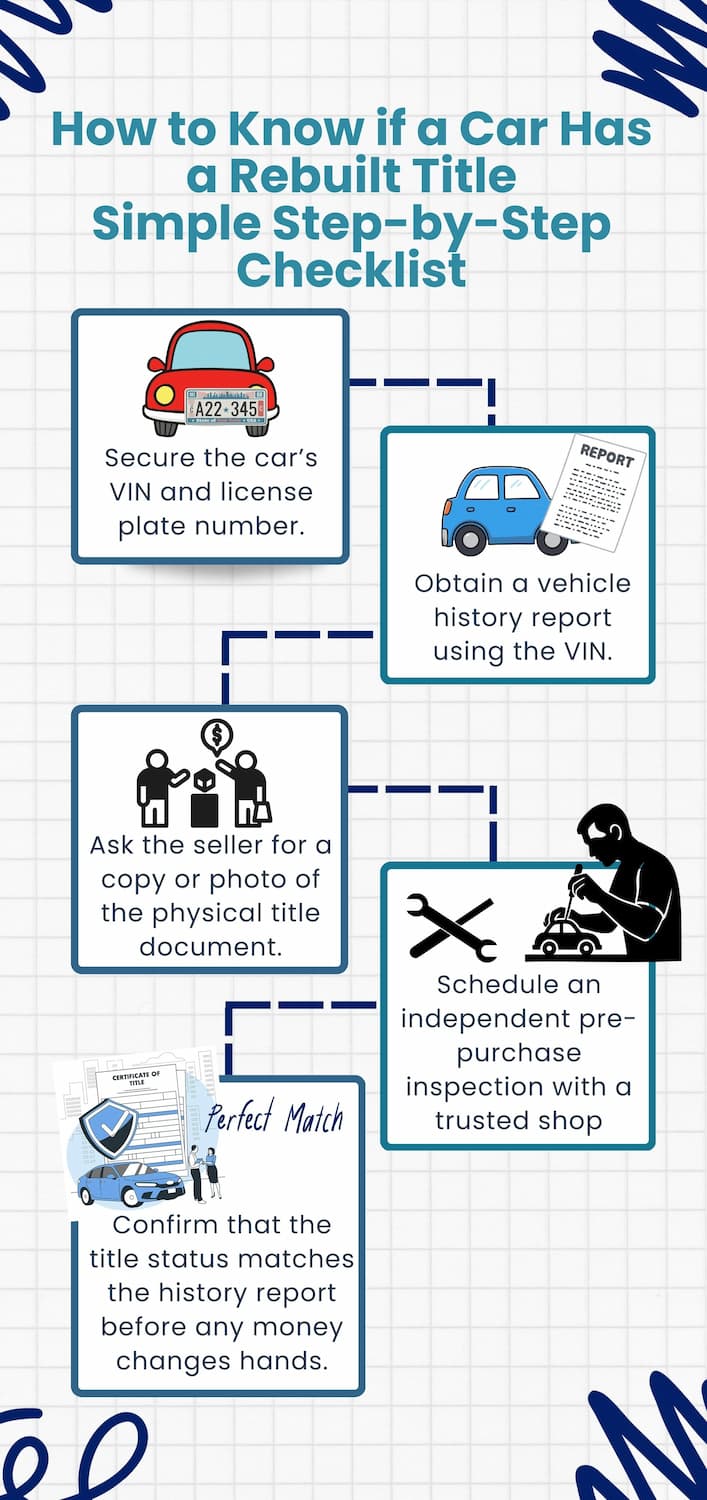
How to Know if a Car Has a Rebuilt Title
Trust is good, but verification is better, especially when thousands of dollars are on the line. Sellers might “forget” to mention the title brand or tape over the warning on the certificate. You need to know the detective work required to spot a branded title before you fall in love with the car.
Start with the paperwork
Your first line of defense is simple: the title and registration.
Most states use a title brand to flag vehicles that have been seriously damaged or written off. That brand is short wording printed on the certificate of title or sometimes on the registration card, such as “Rebuilt,” “Rebuilt Salvage,” “Reconstructed,” or “Prior Salvage.”
State DMVs like California explain that brands appear directly on the title in a clearly marked area (for example, in a “Vehicle History” box), and that wording is set by the government, not by the seller.
Run the VIN – The Easiest Way to Check
Paper documents can be lost, “washed,” or replaced across state lines. The VIN, on the other hand, follows the vehicle wherever it goes. That makes decoding a VIN the easiest and most reliable way to see if a car has ever carried a salvage or rebuilt title.
It confirms the specs of the used vehicle in the market, so you know the engine hasn’t been swapped for a cheaper one and shows you the hidden history of the vehicle. If you’re looking at older muscle cars, it’s essential to check on the classic VIN decoder, because the title history can get murky.
Inspect the car and its repairs
Once the data checks out, look at the metal. You don’t need to be a mechanic to spot the obvious stuff.
- Paint: Does the hood shade match the fenders?
- Gaps: Can you fit your pinky finger in the door gap on the left, but not on the right?
- Weld marks: Look under the hood or in the trunk for fresh, messy welds.
- Smell: A heavy scent of air freshener often masks the musty odor of flood damage.
Verify disclosure and state rules
In most jurisdictions, the seller is legally obligated to disclose the rebuilt status in writing. This protects you, the consumer. If you suspect a car should be branded but isn’t, or if the seller is vague about the details, you have the right to investigate. Knowledgeable mechanics and state regulatory bodies will confirm that evasiveness from a seller is a universal red flag.
Pros and Cons of Buying a Car with a Rebuilt Title
There’s a reason rebuilt title cars keep showing up in search results. For some people, a rebuilt title is an instant no. For others, it’s an opportunity to get more car for the money. Here, we’ll look honestly at the advantages and disadvantages of rebuilt vehicles, from lower upfront cost to potential safety concerns.
Advantages of rebuilt title cars
Buying a car with a rebuilt title isn’t automatically a bad decision. For the right buyer, the lower price can outweigh the downsides, especially if the vehicle is well-documented and intended for long-term ownership. The advantages include
- Lower purchase price: Often 20–40% cheaper than comparable clean-title cars
- Slower depreciation: Much of the value drop already happened when the car was totaled
- More car for the money: Access to better trims, newer model years, or added features
This can appeal to buyers who plan to keep the car for several years and aren’t focused on resale value.
Disadvantages and risks
The savings come with trade-offs. Rebuilt title vehicles carry added uncertainty, which affects insurance, financing, and long-term ownership. Common drawbacks include:
- Insurance limitations: Some insurers offer liability-only coverage or charge higher premiums
- Financing challenges: Many lenders avoid rebuilt titles or require higher interest rates
- Unknown repair quality: State inspections confirm roadworthiness, not long-term durability
- Lower resale demand: Fewer buyers are willing to take on the risk later
The price discount exists because the market factors in these added risks.
Red Flags to Walk Away From
Some rebuilt cars can make sense with enough homework. Others should be avoided completely. A few warning signs are strong enough that you’re usually better off stepping back, no matter how appealing the price looks:
- Flood history or unclear water damage
- No documentation of the repairs
- VIN history and paperwork don’t match
- Trouble getting insurance quotes before buying
A VIN decode and a thorough inspection can help you filter out many of these problems before you fall in love with a price. Our services pull title records, total-loss events and other key data together in one place, which you can then hand to your mechanic.
When the story in the report, the title in your hand, and the car in front of you all line up, you’re much closer to a confident yes or a smart no.
Conclusion: Should You Buy a Car with a Rebuilt Title?
Buying a car with a rebuilt title isn’t necessarily a mistake, but it is a gamble. If you know what is a rebuilt title on a car is, understand the 30% discount is there for a reason, and you’ve verified the repairs, you can score a fantastic deal. We’ve seen plenty of rebuilt trucks run for 200,000 miles without a hiccup.
But if you’re looking for an easy ownership experience (e.g., easy insurance, easy financing, and easy resale), stick to clean titles. If you decide to take the plunge, do it with your eyes open. Verify the repairs, inspect the frame, and always run the VIN.
FAQs About the Rebuilt Titles
What does a rebuilt title mean?
A rebuilt title means the car was once declared a total loss (usually given a salvage title) after serious damage from a crash, flood, fire, or major theft, then repaired and inspected so it can legally go back on the road.
In most states, the vehicle first receives a salvage brand when an insurer decides the repair cost is close to or above the car’s value. After the car is rebuilt and passes state inspections focused on safety and sometimes anti-theft checks, the DMV issues a rebuilt or “prior salvage” title. The brand stays in the record for life, even if the car is sold or moved to another state.
How badly does a rebuilt title affect value?
Most rebuilt title vehicles sell for 20–40% less than similar clean-title cars. In higher-risk cases, such as flood damage or luxury vehicles, the gap can reach 50%. The price drop reflects buyer hesitation, stricter insurance rules, limited financing, and long-term uncertainty. The discount is usually significant, not minor.
Why are cars with rebuilt titles so cheap?
Rebuilt title cars are priced lower to offset risk. The vehicle was already totaled once, and buyers may face insurance limits, financing hurdles, or hidden repair issues. Because fewer buyers are willing to take that risk, sellers lower prices to attract interest.
Is buying a car with a rebuilt title worth it, or should I avoid rebuilt cars?
It can be worth it if the damage was clearly documented, repairs were done properly, and the car passes a trusted inspection. Buyers should also confirm insurance options before purchasing. If the history is vague or paperwork is missing, the risk often outweighs the savings.
Do dealerships buy rebuilt title cars?
It can be worth it if the damage was clearly documented, repairs were done properly, and the car passes a trusted inspection. Buyers should also confirm insurance options before purchasing. If the history is vague or paperwork is missing, the risk often outweighs the savings.